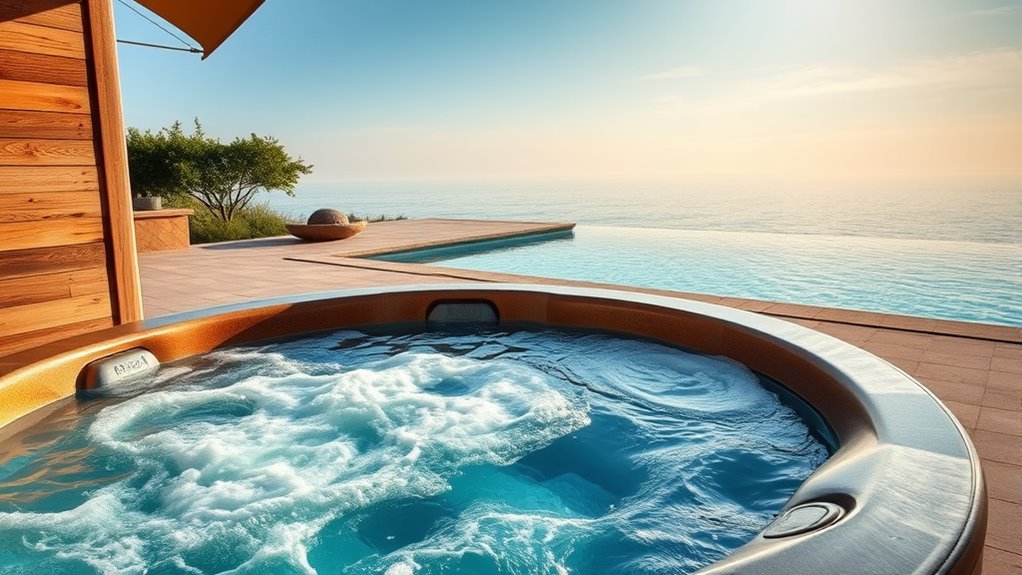

Hot tubs are smaller, seating 2-8 people with around 300-500 gallons, ideal for relaxation and socializing, and they heat quickly at high temperatures. Pool spas are larger, often over 1,500 gallons, and focus on hydrotherapy with more advanced features. Maintenance differs—hot tubs need frequent testing and draining, while pool spas require less upkeep. Costs and energy use vary too. Keep exploring to discover how to choose and care for the right option for you.
Key Takeaways
- Hot tubs are smaller, typically seating 2-8 people, with 300-500 gallons, and focus on relaxation and hydrotherapy.
- Pool spas are larger, over 1,500 gallons, offering both therapeutic jets and options like aromatherapy and exercise features.
- Hot tubs require frequent water testing and maintenance due to smaller volume and higher temperature operation.
- Pool spas generally need less frequent chemical adjustments thanks to larger water volume, but consume more energy for heating and jets.
- Proper care includes regular water testing, cleaning, and draining (hot tubs) or chemical balance checks (pool spas) for longevity and optimal use.
Size and Capacity Differences
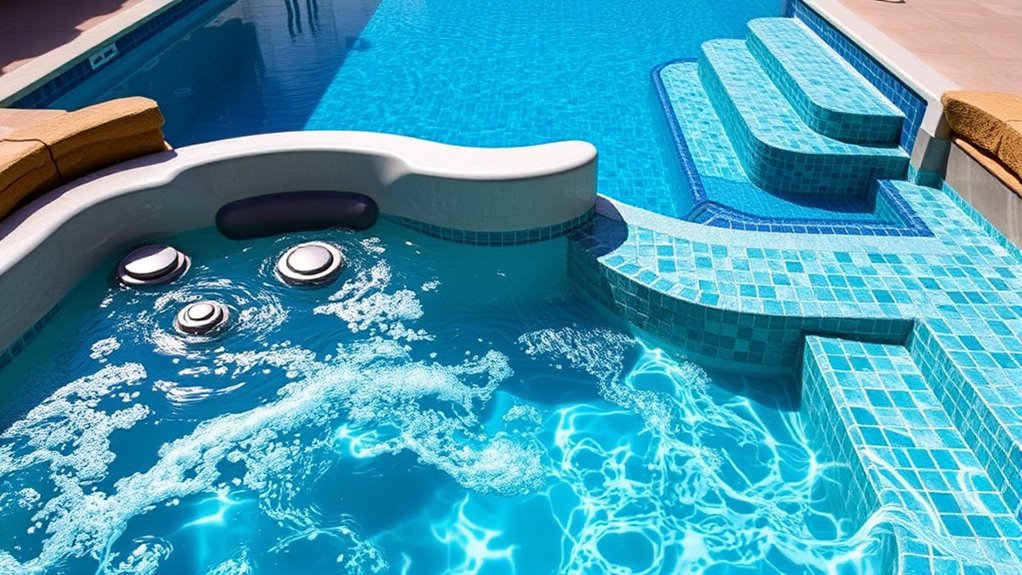
When comparing hot tubs and pools, size and capacity are key differences that influence your choice. Hot tubs typically seat 2 to 8 people and measure around 6.5 feet square, making them compact and easy to fit in smaller spaces. They hold about 300 to 500 gallons of water, perfect for relaxing alone or with a small group. Swim spas are larger, often 10 feet long and 7 feet wide, with water capacities exceeding 1,500 gallons, suitable for swimming and exercise. Plunge pools and built-in spas vary in size but generally offer more space, with capacities reaching several thousand gallons. Standard pools are much bigger—often over 15,000 gallons—designed to accommodate many users and serve as a primary backyard feature. Proper installation and regular maintenance can help ensure these features operate efficiently and last longer.
Features and Therapeutic Benefits

Hot tubs and pool spas each offer unique features that enhance relaxation and promote health benefits. Hot tubs typically have massage jets with adjustable intensity, designed for social relaxation, while pool spas focus on therapeutic jets targeting muscle tension and pain relief. Pool spas maintain water temperatures around 95-100°F, supporting sustained muscle relaxation, whereas hot tubs reach up to 102°F for comfort and leisure. Additionally, the user-friendly operation of both types ensures that users can easily customize their experience according to their needs.
| Feature | Hot Tubs | Pool Spas |
|---|---|---|
| Jets | Powerful, adjustable jets for social relaxation | Strategically placed jets for hydrotherapy |
| Temperature | Up to 102°F | 95-100°F for muscle relaxation |
| Additional features | Fewer wellness amenities | Aromatherapy, chromotherapy, exercise equipment |
These features support different therapeutic needs, from stress relief to targeted pain management.
Maintenance and Chemical Management
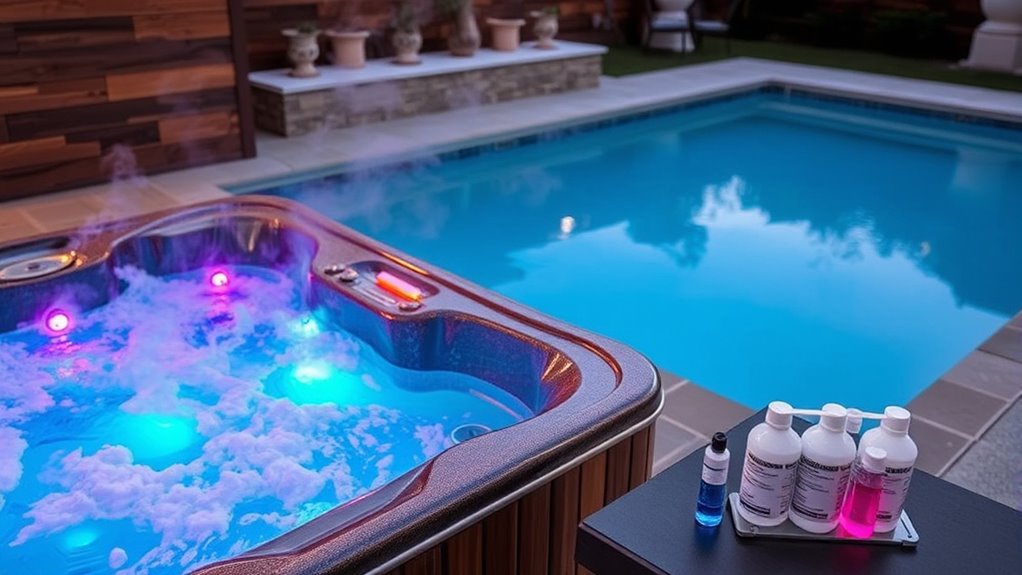
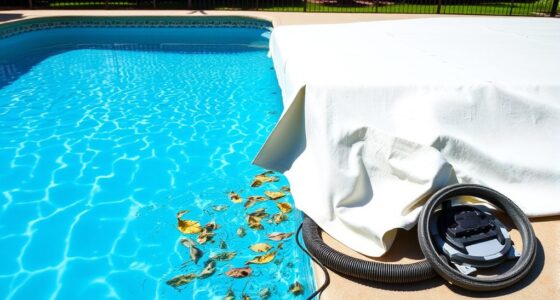
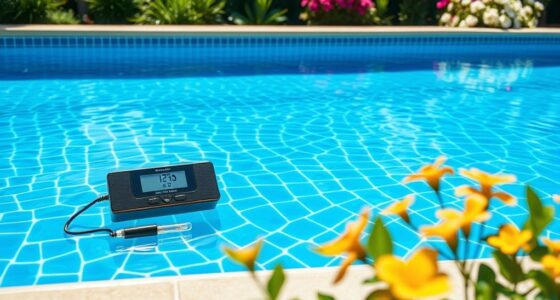
Maintenance and chemical management vary considerably between hot tubs and pool spas due to differences in water volume and temperature. Hot tubs hold about 300-500 gallons, so each bather impacts water chemistry more, causing faster sanitizer depletion and requiring frequent testing. In contrast, pools contain thousands of gallons, which buffer chemical fluctuations, allowing longer intervals between adjustments. Hot tubs operate at higher temperatures (100-104°F), accelerating chemical reactions and sanitizer breakdown, so you often need bromine instead of chlorine and more frequent dosing. Testing in hot tubs should be daily or every other day, focusing on sanitizer, pH, and alkalinity. Regular draining every few months helps maintain water quality, while pools are rarely drained, thanks to their larger volume and structural considerations. Additionally, understanding the contrast ratio of your projector can significantly impact your viewing experience by providing deeper blacks and brighter whites.
Cost and Energy Consumption
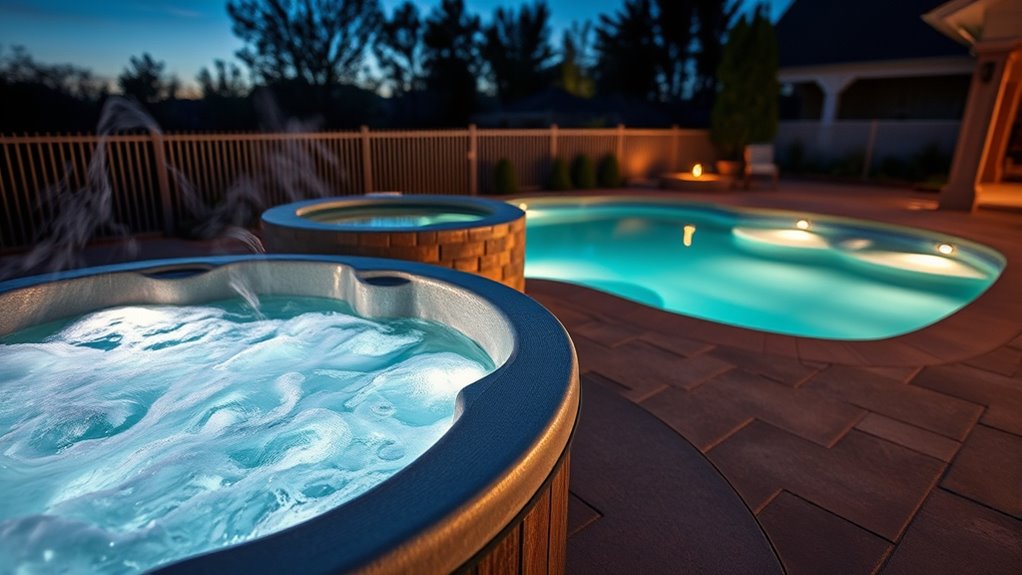
Cost and energy consumption differ considerably between hot tubs, pool spas, and traditional pools, impacting your long-term expenses. Hot tubs are cheaper upfront and cost less to operate thanks to smaller water volume and better insulation. Swim spas cost more initially and use more energy for heating and jets, but still less than in-ground pools, which have high installation and maintenance costs. Here’s a quick comparison:
| Feature | Hot Tubs | Pool Spas | In-Ground Pools |
|---|---|---|---|
| Initial Cost | $3,000–$15,000 | $10,000–$50,000 | $25,000–$50,000 |
| Operating Costs | Lower, up to $5,000 over 5 yrs | Moderate, $5,000–$10,000 | Highest, over $10,000 |
| Energy Use | Less, efficient insulation | Higher, larger size | Highest, pumps & heating |
Your long-term costs depend on size, features, and energy efficiency.
Usage and Lifestyle Considerations
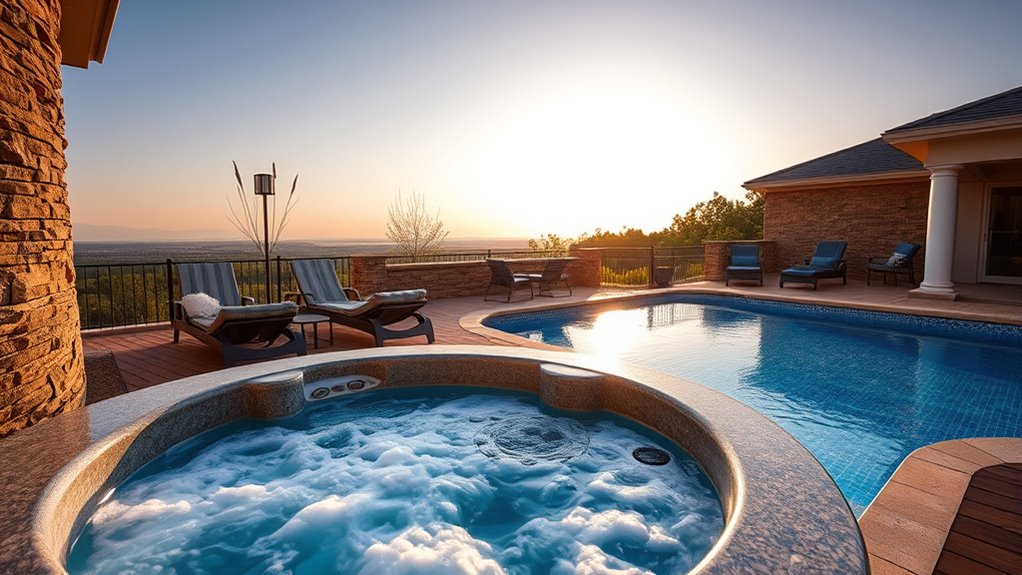
Your lifestyle and how you plan to use your outdoor water feature play a crucial role in choosing between a hot tub, pool, or swim spa. If relaxation and socializing are your main goals, a hot tub offers cozy, year-round comfort for intimate gatherings. For active families or fitness enthusiasts, a pool provides space for swimming, games, and outdoor fun during warmer months. A swim spa offers versatility, supporting both exercise and relaxation, making it ideal if you want a balance of fitness and leisure. Consider your available space and maintenance preferences as well. Hot tubs are compact and easy to install, while pools and swim spas require more room and professional setup. Your choice should align with your lifestyle, usage habits, and the experiences you seek outdoors. Additionally, hot tubs typically require less space and are easier to maintain than pools, making them a popular choice for smaller backyards with limited room. Moreover, ensuring proper water care and maintenance can extend the lifespan of your outdoor water feature and improve your overall experience.
Frequently Asked Questions
How Long Does It Take to Heat a Hot Tub Versus a Pool Spa?
You’ll typically spend 4–8 hours heating a hot tub to reach 100–104°F, depending on the heater and starting temperature. In contrast, pool spas usually take longer because of their larger volume and shared heating systems, often requiring more energy and time. Factors like insulation, outdoor temperature, and heater power influence both, but hot tubs generally heat faster due to their smaller size and dedicated heaters.
Can Hot Tubs or Pool Spas Be Used Year-Round in Colder Climates?
In colder climates, your hot tub or pool spa can be a beacon of warmth all year long if you play your cards right. By keeping the water heated consistently, using premium insulation, and ensuring proper cover maintenance, you prevent winter’s chill from seeping in. Regular checks on your equipment, removing snow, and safeguarding against power outages make sure your spa remains inviting, no matter the season’s icy grip.
What Are the Safety Considerations Specific to Hot Tubs and Pool Spas?
When using hot tubs and pool spas, you need to prioritize safety. Always check for electrical hazards like exposed wires, guarantee the water temperature stays below 104°F to prevent heat stress, and supervise children at all times. Keep the area slip-resistant, use secure covers and barriers, and avoid overcrowding. Regularly test and balance chemicals, maintain proper filtration, and learn CPR to handle emergencies effectively.
How Often Should Filters Be Replaced in Hot Tubs and Pool Spas?
You should replace hot tub filters annually to maintain ideal performance, though high-quality filters may last up to three years with proper care. For pool spas, replacement generally occurs every 1–3 years, depending on usage and condition. Regularly inspect your filters for tears, discoloration, or damage, and replace them immediately if they show signs of wear. Consistent cleaning and timely replacement ensure clear water and efficient filtration.
Are There Eco-Friendly Options for Maintaining Hot Tubs and Pool Spas?
Yes, you can choose eco-friendly options for maintaining your hot tub or pool spa. Use solar heating systems, solar blankets, and energy-efficient pumps to cut electricity use. Opt for water treatment methods like ozone generators, UV-C purifiers, and enzyme-based cleaners to reduce chemical consumption. Regular maintenance with eco-friendly materials and smart controls helps conserve water and energy, making your hot tub or pool spa more sustainable and environmentally friendly.
Conclusion
Whether you’re drawn to the bubbly bliss of a hot tub or the invigorating ripple of a pool spa, understanding their differences helps you decide. Consider size, features, and your budget, then choose the one that best suits your lifestyle. With proper care and attention, both promise peaceful, pleasurable escapes. Remember, making mindful maintenance manageable transforms your tranquil retreat into a perfect paradise—bringing balance, bliss, and beauty to your backyard haven.