
To clear a green pool quickly and safely, start by testing and balancing your water chemistry—aim for proper pH, alkalinity, and sanitizer levels. Remove debris and brush all surfaces thoroughly. Shock your pool with an appropriate amount of chlorine to kill algae, then add a quality algaecide. Continuously run your filter and vacuum to remove dead algae. Maintaining proper chemical balance and filtration is key—continue with these steps to see clear, safe water restored efficiently.
Key Takeaways
- Test and balance water chemistry, focusing on chlorine, pH, alkalinity, and calcium hardness, for effective sanitation.
- Brush all surfaces thoroughly to loosen algae and remove debris before shocking the pool.
- Shock the pool with high-chlorine chemicals at dusk, then run the filter continuously to eliminate algae.
- Add an algaecide suitable for green algae, following manufacturer instructions, and maintain water circulation.
- Regularly vacuum, brush, and monitor water chemistry to prevent re-growth and achieve clear, safe water quickly.
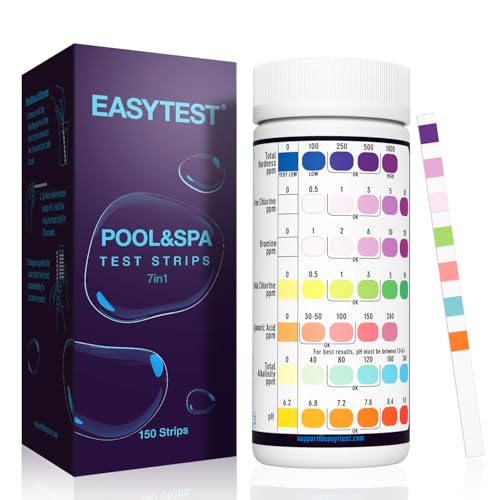
EASYTEST 7-Way Pool Test Strips, 150 Strips Water Chemical Testing for Hot tub and Spa, Accurate Test Bromine, Total Alkalinity, pH, Free Chlorine, Total Hardness, Cyanuric Acid, and Total Chlorine
AFFORDABLE 150 STRIPS: This water chemical testing kit contains 150 test strips. Enough balanced for your swimming pool,…
As an affiliate, we earn on qualifying purchases.
As an affiliate, we earn on qualifying purchases.
Assess and Balance Your Pool’s Chemistry
To effectively clear a green pool, you first need to assess and balance its chemistry. Start by testing free and total chlorine levels to ensure proper disinfection. Check the pH, aiming for 7.2–7.8, and adjust if necessary. Next, measure total alkalinity, with a target range of 80–120 ppm, since it stabilizes pH. Then, test calcium hardness, aiming for 200–400 ppm to prevent corrosion or scaling. Also, evaluate cyanuric acid levels, ideally between 30–50 ppm, to protect chlorine from sunlight. Use test strips for quick results or liquid kits for accuracy. Remember, test total alkalinity first, then pH, calcium hardness, cyanuric acid, and chlorine levels last. Proper assessment guarantees your chemicals are balanced before proceeding with cleaning steps. Regular testing ensures accurate readings to maintain safe and clear pool water. Additionally, water chemistry plays a crucial role in effective algae removal and pool clarity.
pool algae brush
As an affiliate, we earn on qualifying purchases.
As an affiliate, we earn on qualifying purchases.
Prepare the Pool for Treatment
Before adding chemicals, you need to clear the pool of debris and make certain all equipment works properly. Next, brush all surfaces to loosen algae and improve treatment effectiveness. Finally, verify circulation by vacuuming the pool and running the pump continuously to distribute chemicals evenly. Additionally, ensure proper water chemistry to optimize filtration and treatment results.
Remove Obstructions and Debris
Clearing a green pool starts with removing obstructions and debris that can hinder treatment. To do this effectively, start by performing surface skimming to lift floating leaves and insects. Next, use a deep net or leaf rake to gather large debris like pine needles or frogs from the pool floor. Lastly, utilize debris removal tools designed for efficiency, such as specialized leaf rakes, to collect stubborn debris. Ensuring the pool is free of large obstructions prevents clogging during vacuuming and chemical application. Always wear protective gear when handling debris to stay safe. Removing debris thoroughly creates a clean surface, allowing chemicals to work more effectively and speeding up the overall clearing process. This step is essential before moving on to brushing and chemical treatment. Removing debris reduces organic material, which helps maintain proper chemical balance and prevents algae from re-establishing quickly. Additionally, clearing debris reduces the amount of organic matter in the water, which can contribute to algae growth if left untreated.
Brush All Surfaces Thoroughly
Thoroughly brushing all pool surfaces is essential for preparing your pool for chemical treatment and ensuring effective algae control. You should brush at least once a week, especially in areas prone to algae growth, to prevent buildup and stains. After adding chemicals, brushing helps disperse them evenly across surfaces. Use a sturdy curved brush to clean walls and floors thoroughly, working in sections for complete coverage. Be gentle on delicate surfaces to avoid damage. Regular brushing not only prevents algae attachment but also reduces etching and maintains a smooth finish. It also enhances the effectiveness of your chemical treatments. Remember to wear gloves and goggles for safety, and always brush before testing water chemistry or applying other maintenance tasks. Incorporating proper cleaning techniques can further improve your pool maintenance routine.
Vacuum and Circulate Water
Effective vacuuming and water circulation are key steps in clearing a green pool quickly. First, set up your vacuum by placing the head in the deep end to target algae buildup. Make certain to vacuum all surfaces thoroughly, removing debris from the floor and walls to prevent recontamination. Use either a manual or automatic vacuum based on your pool size and preference. Additionally, proper water circulation is essential for dispersing chemicals evenly and preventing dead spots where algae can thrive. Second, focus on circulating the water effectively: adjust return jets at a 45-degree angle to create a spiral flow, and run the pump continuously for 8-24 hours. Finally, check that the filter system is clean and functioning properly. Proper vacuuming and circulation ensure even chemical distribution and help remove algae, speeding up the clarity process and preparing your pool for treatment. Regularly cleaning your filter system enhances overall circulation and prevents dead spots, further aiding in clearing your pool efficiently.

HTH 52037R Pool Care Shock Advanced, Swimming Pool Chemical – Cal Hypo Formula, Prevents Bacteria & Algae, Restores Crystal Clear Water – Shock Treatment, 1lb (12 Pack)
BENEFITS: Stay all clear for cannonballs; This fast-dissolving, convenient 4-in-1 formula kills bacteria and algae, reduces chlorine odor…
As an affiliate, we earn on qualifying purchases.
As an affiliate, we earn on qualifying purchases.
Shock the Pool to Kill Algae
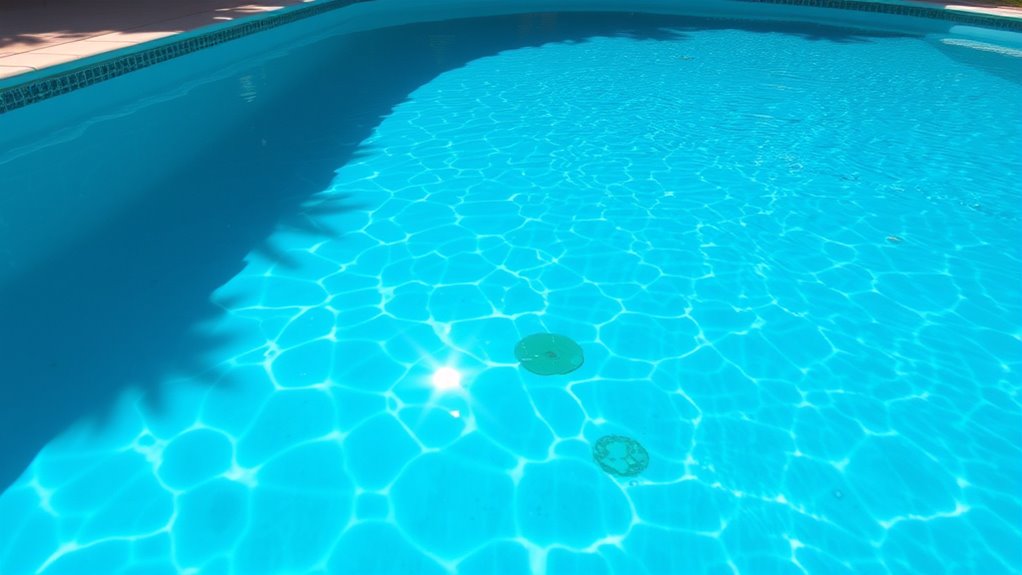
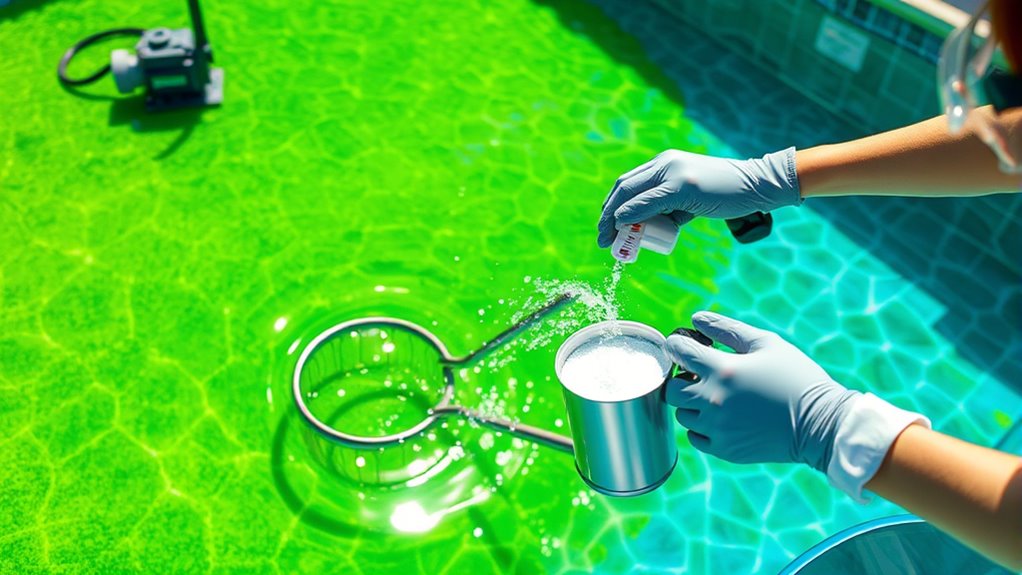
Shocking your pool is a crucial step in eliminating algae and restoring clear water. You’ll need chemicals like calcium hypochlorite, sodium di-chlor, or potassium monopersulfate to do this. The goal is to destroy bacteria, combined chlorine, and algae, helping balance your water chemistry. For best results, shock your pool at dusk or night, preventing sunlight from reducing chlorine effectiveness. Use about a pound of shock for every 15,000 gallons, increasing the dose for more stubborn algae—double for green, triple for yellow or dark green, and quadruple for black algae. Run your filter for 8 to 24 hours afterward to circulate chemicals properly. Make sure to brush all surfaces before shocking, and keep safety in mind by wearing protective gear and avoiding swimming until chlorine levels drop below 3 ppm. Proper water chemistry management is essential for preventing future algae growth and maintaining a clear pool.

Clorox® Pool&Spa™ Swimming Pool Algaecide and Clarifier, Prevents and Treats Pool Algae, Clears Water, 128 Fl Oz (Pack of 1)
Pool Algae Treatment: Our Pool Algaecide and Clarifier is specially formulated to treat existing algae while providing long-lasting…
As an affiliate, we earn on qualifying purchases.
As an affiliate, we earn on qualifying purchases.
Use Algaecide and Additional Sanitizers
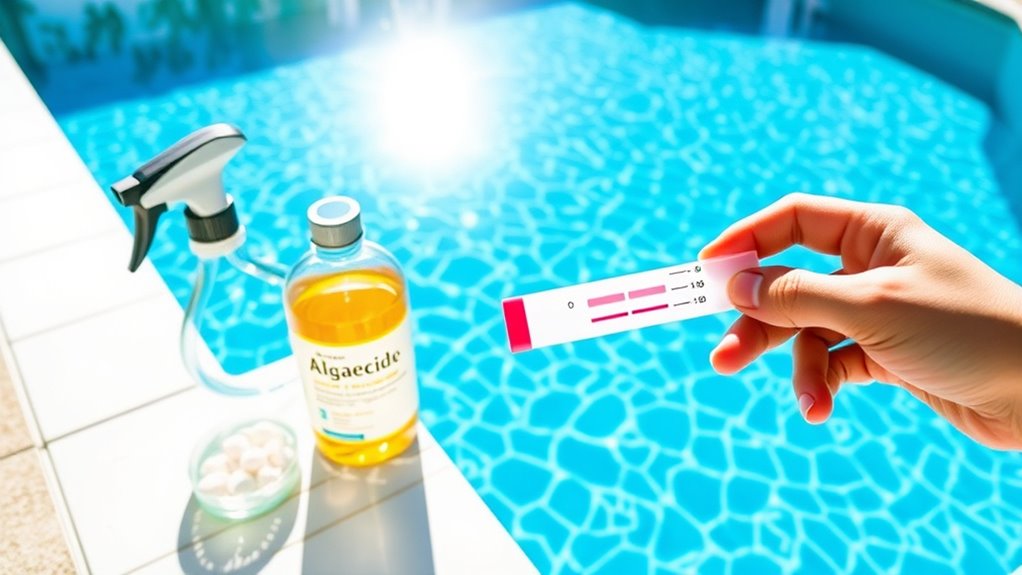
To clear your green pool quickly, you need to choose the right algaecide and use it properly. Applying the correct type and following instructions guarantees effectiveness without upsetting your water balance. Remember, algaecides work best when combined with consistent sanitizer levels for thorough algae control. Understanding Algae in Pools Proper application and maintaining balanced water chemistry are essential for the algaecide to work effectively and prevent future growth. Using the appropriate essential oils can also support water clarity when used safely in conjunction with proper pool maintenance.
Choosing Effective Algaecides
Choosing the right algaecide is essential for quickly clearing a green pool, but knowing which type to use can be confusing. To make the best choice, consider these options:
- Quat algaecides: Great for green algae, cost-effective, but may cause foaming.
- Poly-quat algaecides: Work faster, last longer, and don’t foam or stain.
- Copper-based algaecides: Target yellow and black algae, but can stain surfaces.
- Effective algaecides like Suncoast All In One Algaecide treat multiple algae types and have clarifying properties, making them versatile options. Algaecide types can be matched to your specific algae problem for the best results. Combining an appropriate algaecide with sanitizers like chlorine shock boosts effectiveness, helping you clear your pool faster and safely. Always match the algaecide to your specific algae problem for the best results.
Proper Application Techniques
Proper application of algaecide and sanitizers is essential for effectively clearing a green pool. First, shock the pool with a sanitizer to oxidize algae cells. Apply algaecide afterward to prevent regrowth, following manufacturer instructions for dosage. Use it evenly across the surface, whether liquid, granular, or tablets. After application, run the filter continuously for at least 24 hours to circulate chemicals and trap debris. Regular brushing helps remove dead algae, while thorough filter cleaning prevents recontamination. Maintain proper water chemistry by balancing pH, alkalinity, and sanitizer levels for ideal effectiveness. Additionally, understanding proper water chemistry can significantly enhance the overall cleaning process.
Complementary Sanitizer Use
Using algaecide alongside chlorine enhances your pool’s defenses against algae. This combo helps prevent algae from returning after shocking and keeps your water clearer longer. To maximize effectiveness, follow these steps:
- Apply algaecide after shocking the pool to prevent algae regrowth.
- Use algaecide regularly as part of your maintenance routine to keep algae at bay.
- Choose the right type of algaecide—copper-based, polyquat, or silver—for your pool’s needs. Proper chemical balance
Proper chemical balance and regular testing prevent algae growth, making algaecide more effective. Regularly testing your water chemistry helps maintain optimal pH and chlorine levels, which are crucial for effective sanitation and algae prevention.
Combining sanitizers boosts algae resistance, accelerates clearing, and improves water clarity. Regular use ensures a healthy, algae-free environment and reduces the chance of resistant algae developing. Proper timing and consistent application are key to maintaining a clean, green-free pool.
Brush and Vacuum to Remove Dead Algae
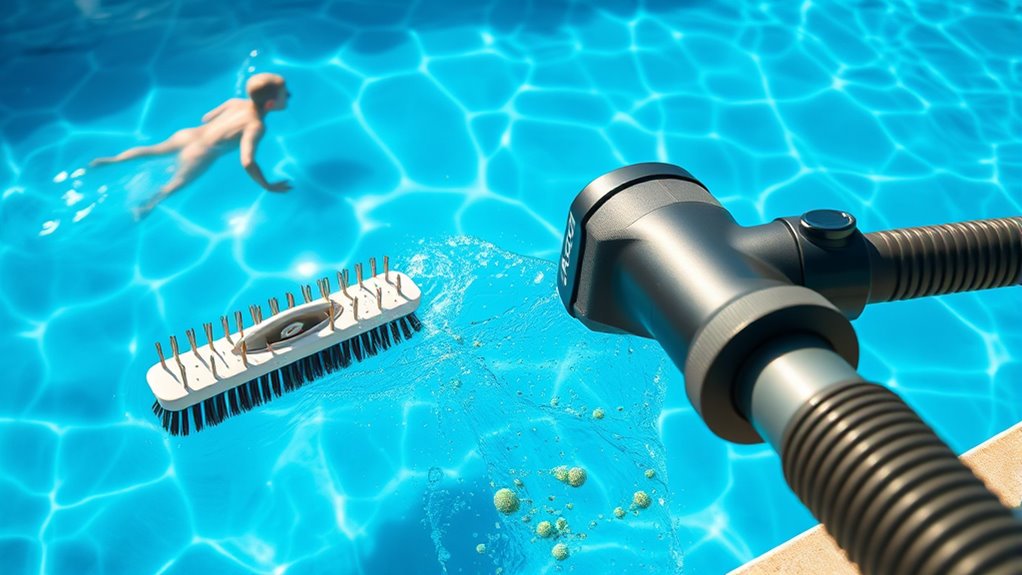
After algae is killed and turns the water cloudy blue, it’s essential to physically remove the dead debris to prevent it from regrowing. Vacuuming and brushing work best together: brushing dislodges algae from surfaces, especially in tight spots and crevices, while vacuuming picks up the loosened debris. Skipping brushing can leave algae behind, particularly black algae that cling tightly and need aggressive scrubbing. Use a stiff-bristled brush to scrub walls, floors, and fittings thoroughly before vacuuming. Start vacuuming from the shallow end, using slow, overlapping strokes to cover the entire pool, including steps and corners. Afterward, clean the pump strainer basket to maintain proper filtration. Regular brushing and vacuuming prevent algae from returning and reduce the strain on your pool’s filtration and chemical systems. Consistent maintenance is crucial for keeping your pool algae-free over the long term. Incorporating effective pool cleaning techniques can further enhance your results and keep your water crystal clear.
Clean and Maintain Filtration System
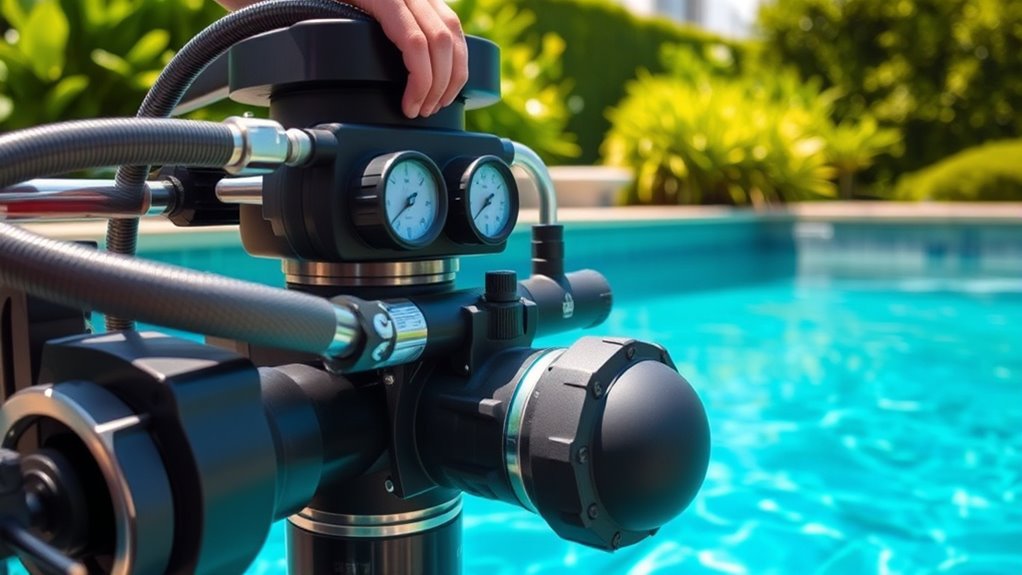
Regularly inspecting and preparing your pool’s filtration system guarantees it works efficiently when needed. To keep it in top shape, focus on these key steps:
- Check all components, including pump, filters, and O-rings, for signs of wear or damage, especially at season start.
- Examine pressure gauges; replace or recalibrate if readings are inaccurate or if pressure rises 8-10 psi above normal.
- Clean or replace filter elements—sand, cartridges, or grids—based on manufacturer recommendations, ensuring proper alignment and sealing during reassembly.
- Proper maintenance of your filtration system not only extends its lifespan but also helps prevent costly repairs and ensures optimal water clarity.
- Regularly monitor water chemistry to prevent algae growth and maintain a healthy swimming environment.
Maintaining your filtration system prevents clogging, leaks, and inefficiency. Regular care ensures debris gets filtered properly, which is crucial for clearing a green pool quickly and safely.
Monitor Water Chemistry During Treatment
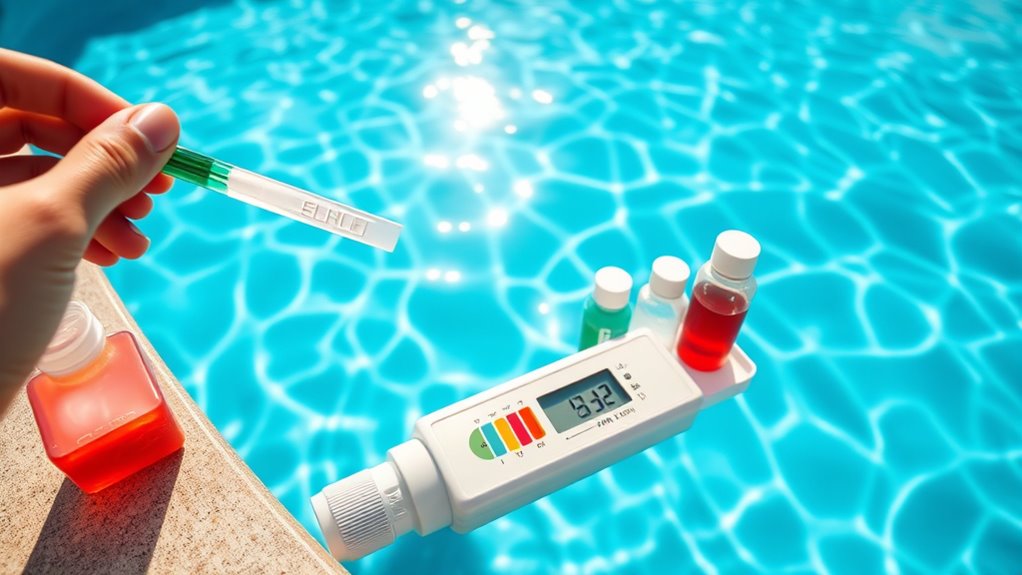
Monitoring your water chemistry throughout green pool treatment is essential to guarantee the chemicals work effectively and your pool remains safe for swimmers. You should test pH levels at least twice daily, aiming for 7.2–7.8, to ensure ideal chemical performance and comfort. Keep free chlorine between 1–3 ppm to kill algae and bacteria effectively. Check total alkalinity every 2–3 days, maintaining 80–120 ppm to stabilize pH. Monitor calcium hardness at 200–400 ppm to prevent corrosion or scaling. Weekly testing of cyanuric acid at 30–50 ppm protects chlorine from UV damage. Use reliable testing tools like liquid kits or digital testers for accuracy. Always retest after any chemical adjustments or heavy use before adding more chemicals, ensuring safe, balanced water during your treatment process. Digital testers can provide quick and precise readings, helping you maintain proper water chemistry more efficiently. Additionally, understanding water balance is crucial to prevent future algae growth and maintain clear water.
Implement Preventive Measures for Future Clarity
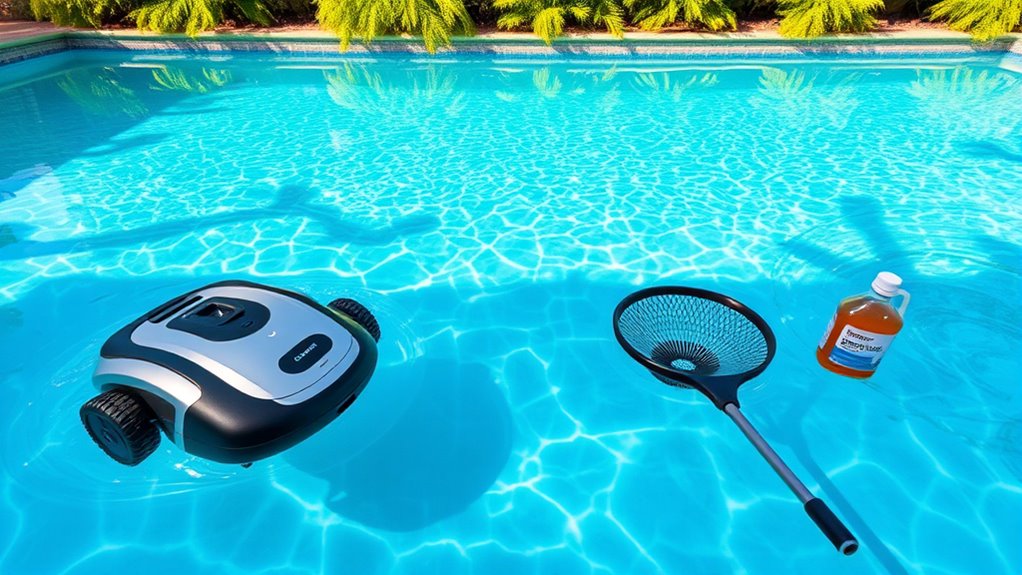
Maintaining a proper filtration system is essential for preventing future green pools. It keeps water moving, discouraging algae growth. To guarantee effectiveness, do these three key steps:
Keep your pool clear by ensuring proper filtration, regular cleaning, and effective chemical treatments.
- Run your filter for 8–12 hours daily during warm months, providing continuous circulation.
- Regularly clean or backwash the filter according to manufacturer instructions to maintain clarity and flow.
- Replace filter media when water clarity or flow declines, ensuring ideal filtration.
- Proper filtration also removes contaminants that can serve as nutrients for algae, further supporting a clear pool.
Additionally, keep the pump running overnight after shock treatments for thorough circulation. Using chemical treatments strategically—like maintaining chlorine at 1–3 ppm and phosphates below 100 ppm—further prevents algae. Combining these measures with physical barriers, such as pool covers, and routine cleaning will help sustain clear, algae-free water for the long term. Implementing automated pool monitoring systems can also help maintain optimal water conditions and prevent green water issues proactively.
Frequently Asked Questions
How Long Does It Typically Take to Clear a Green Pool?
Clearing a green pool usually takes about 4 to 5 days with proper treatment. If you shock daily and run your filter constantly, you can see visible improvements within 3 to 4 days. In some cases, it might take up to a week, especially if algae are stubborn or your filtration system isn’t ideal. Act quickly, brush, vacuum, and keep the chemicals balanced to speed up the process.
Can I Swim in the Pool During Treatment?
You shouldn’t swim in the pool during treatment. The water contains harmful algae, bacteria, and chemicals that can cause skin rashes, eye irritation, or gastrointestinal issues. Wait until the water is clear, chlorine levels are stable between 1-5 ppm, pH is balanced, and tests confirm the absence of bacteria and algae. This guarantees your safety and prevents health risks associated with swimming in untreated or partially treated green water.
What Safety Precautions Should I Take With Chemicals?
You should always wear safety glasses or goggles to protect your eyes from splashes and dust. Use chemical-resistant gloves to prevent skin contact, and consider face shields or masks for respiratory protection. Wear long sleeves and shoes to minimize skin exposure. Always add chemicals to water, not vice versa, and store chemicals properly in a cool, dry, ventilated space away from incompatible substances. Follow label instructions carefully.
How Often Should I Test My Pool Water?
You should test your pool water at least 2-3 times a week during heavy usage or peak seasons to keep chemicals balanced. If your pool gets light use, testing once a week usually suffices. For new pools, test daily initially, then reduce to weekly. Always test after heavy swimming, weather changes, or chemical additions to guarantee safe, clear, and healthy water.
What Are Natural Alternatives to Chemical Treatments?
You can opt for natural alternatives like biological filters with plants such as water lilies and reeds, which keep your pool clean without chemicals. Mineral-based systems using copper and silver ions also help inhibit bacteria and algae growth. Enzyme-based products break down contaminants naturally, reducing the need for harsh chemicals. These options are eco-friendly, gentle on skin, and promote a healthier swimming environment, making them great choices to maintain a clear, chemical-free pool.
Conclusion
By following these steps, you’ll transform your murky green pool into a crystal-clear oasis faster than you ever thought possible. With a little effort, you’ll wield the power to banish algae armies and restore pristine water in no time. Don’t let that green menace take over your backyard—take action now, and watch your pool shine brighter than a diamond! Before you know it, you’ll be swimming in perfection, wonderstruck at how quickly you tamed the green chaos.