
TL;DR

Get pool and patio gear delivered free with Prime
- Fast, free delivery on millions of items
- Prime Video, Amazon Music and more included
- Member-only deals all year
A House Beautiful report recommends changing houseplant care as autumn and winter bring less daylight, cooler conditions and drier indoor air. B&Q horticulture expert Mark Sage advises moving plants toward brighter windows while avoiding drafts and radiators, watering and feeding less, grouping plants to raise local humidity, and wiping dust from leaves every one to two weeks.
House Beautiful has published four recommended changes to houseplant care for autumn and winter, when reduced daylight, cooler temperatures and drier indoor air can affect plants. Mark Sage, B&Q’s horticulture expert, advises adjusting light, water and feeding, grouping plants to help maintain humidity, and cleaning leaves so they can make better use of limited daylight.
Sage says plants can be moved closer to a bright window as days get darker, but they should be kept away from cold drafts and radiators. He warns that drafts and dry heat can harm plants. Where natural light is limited, he suggests considering a plant light. Rotating larger plants can also help prevent uneven, stretched growth as they reach toward light.
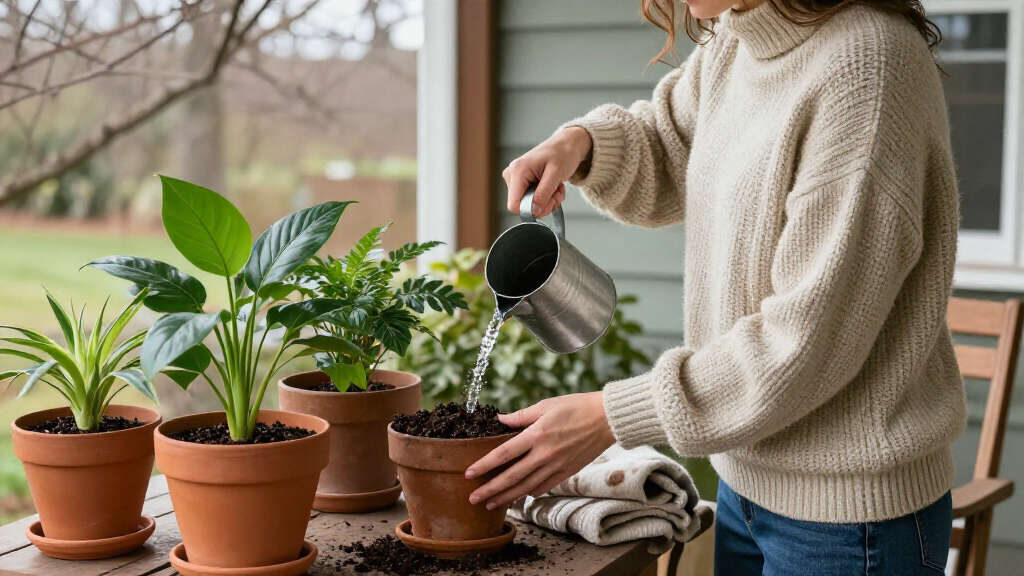
The second habit is to reduce watering and feeding as growth slows. Sage recommends allowing soil to dry between waterings to help prevent root rot, and says winter is not the time for regular repotting. He advises giving plants a final feed at the end of autumn, adding that “a little goes a long way.”
For humidity, Sage recommends grouping plants together during the colder months, particularly when central heating dries indoor air. He also advises wiping leaves with a microfibre cloth every one to two weeks to remove dust. A gentle shower with lukewarm water can clean foliage and help remove pests, but water that is too cold or too hot may harm plants, he says.
Four Adjustments for Winter Conditions
The advice matters because summer routines may not suit slower-growing plants in winter. Less light can mean less growth and lower water needs; continuing to water or feed at the same pace may leave soil too wet and raise the risk of root problems, according to Sage. Meanwhile, central heating can dry the air, and dust on leaves may limit their exposure to already scarce daylight.
The recommendations focus on small changes rather than intensive care: check light and soil conditions, avoid placing plants near heat or drafts, and clean leaves regularly. Their effects will vary by plant and home, so the report does not present the habits as a guarantee of healthy growth for every houseplant.
Products Worth Considering

Kindle Paperwhite Signature Edition 32GB (2024) – Auto-adjusting front light, wireless charging, weeks of battery life – Metallic Black

Apple AirPods Pro 3 Wireless Earbuds with Active Noise Cancellation

Travelpro Maxlite 5 Softside Carry-On Luggage, 21-Inch, Black
As an affiliate, we earn on qualifying purchases.
Why Plant Care Shifts in Winter
The source report frames winter care as a response to shorter days, cooler temperatures and drier indoor air. These conditions differ from the brighter, warmer months, when many houseplants are actively growing and may need more frequent watering and feeding. Plants kept indoors are still affected by where they sit: window light, cold air leaks and nearby radiators can create different conditions within the same home.
Sage’s recommendations, as reported by House Beautiful, cover four areas: light placement, watering and feeding, humidity, and leaf cleaning. The report provides general guidance, not a plant-by-plant schedule, and does not specify a particular winter care routine for individual species such as spider plants, peace lilies or monsteras.
““It’s always a good idea to move them closer to a bright window as darker days hit, but make sure to avoid cold drafts and radiators.””
— Mark Sage, B&Q horticulture expert, quoted by House Beautiful
How Advice Varies by Plant
The report does not give species-specific watering amounts, ideal room temperatures, or precise light requirements. It also does not cite a study or explain how much grouping plants changes humidity; that recommendation is attributed to Sage as general horticultural advice. The effects of winter conditions can vary with plant type, room temperature, window direction and heating use.
Readers should treat the four habits as broad guidance, not a fixed calendar. The source does not establish that every plant should be watered or fed on the same schedule, or that a plant light is necessary in every home.
Check Conditions Through the Season
As winter progresses, the practical next step is to observe each plant and its surroundings: check soil before watering, note whether it is receiving enough light, and keep it clear of drafts and radiator heat. Clean dusty leaves regularly and watch for changes in growth or leaf condition. The report does not announce a follow-up date or additional guidance; its advice is to adjust care as seasonal conditions change.
Key Questions
How often should I water houseplants in winter?
The report gives no universal timetable. Sage recommends watering less as growth slows and allowing the soil to dry between waterings to help prevent root rot. Check the soil and the needs of the specific plant rather than following a fixed schedule.
Where should houseplants go during winter?
Sage recommends moving plants closer to a bright window when daylight declines, while keeping them away from cold drafts and radiators. If natural light is limited, he suggests considering a plant light.
Should I feed or repot houseplants in winter?
Sage says plants generally need less feeding during slower growth and advises against regular winter repotting. He recommends a final feed at the end of autumn, with a light hand.
Why group houseplants together?
The report says grouping plants can help create a more humid microclimate, which may be useful when indoor heating makes the air drier. It does not quantify how much humidity this creates.
How should I clean leaves in winter?
Sage recommends wiping leaves with a microfibre cloth every one to two weeks. A gentle shower with lukewarm water is another option, but avoid water that is too cold or too hot, which he says can shock roots or scald leaves.
Source: housebeautiful.com