
TL;DR

Get pool and patio gear delivered free with Prime
- Fast, free delivery on millions of items
- Prime Video, Amazon Music and more included
- Member-only deals all year
An Ideal Home report recommends six practices to reduce moisture buildup when drying laundry indoors: use an extra spin cycle, space garments apart, consider a heated airer, pair it with a dehumidifier, position the airer for airflow and ventilate the room. The advice is practical guidance, not a report of new research; results depend on the home, weather and equipment.
Ideal Home has outlined six ways to reduce moisture buildup when drying clothes indoors, including removing more water during the wash, leaving room for air to circulate and ventilating the drying space. The advice matters as outdoor drying becomes less practical in colder, wetter weather, when wet laundry can add moisture to indoor air.
The report recommends running an extra spin cycle before hanging laundry, provided the selected speed is suitable for the items. Clothes that retain less water should dry sooner and release less moisture as they dry, the article says. It singles out heavier garments such as towels, jeans and bedding, which can hold more water.
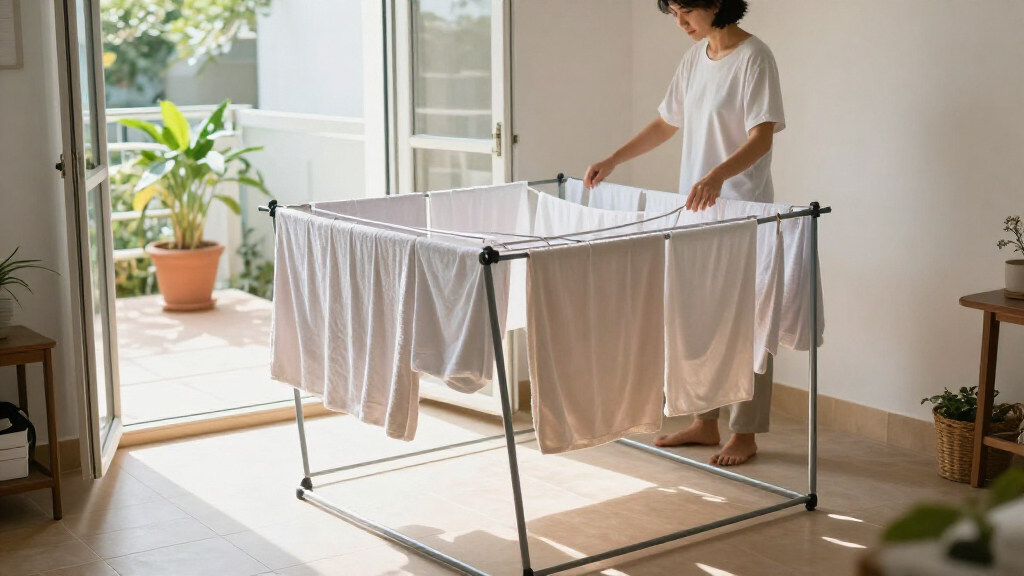
It also advises leaving space between garments on the rack rather than packing it tightly. Spread sleeves and open shirts, and avoid folding trouser legs over one another. Lauren Roelofs, a laundry expert at Brabantia, says that room between garments helps air circulate and clothes dry more evenly. She also recommends turning heavier items partway through drying to reduce damp patches.
The remaining recommendations are to consider a heated clothes airer, use a dehumidifier to remove moisture from the room, place the airer where air can circulate rather than against a wall, and ventilate the room. The article says an airer cover may help retain warmth and reduce drying time, though the effect depends on the load and conditions. It does not provide independent testing of the six practices as a combined method.
Keeping Indoor Laundry Moisture Down
Wet clothes release water into the surrounding air as they dry. In a room with limited ventilation or moisture removal, that added humidity can contribute to condensation and damp. The recommendations focus on two practical levers: getting clothes to dry more efficiently and helping moisture leave the room.
For households without a tumble dryer, or seeking to limit its use, indoor drying may be necessary. Spacing items and choosing a suitable location cost little, while heated airers and dehumidifiers require equipment and electricity. The article offers no cost comparisons or quantified guarantee that these steps will prevent mould; the benefit will vary with the property and conditions.
Products Worth Considering

Amazon Kindle Paperwhite (2024), 16 GB, 7-inch Display, Jade

DJI Osmo Mobile 6 Smartphone Gimbal Stabilizer with Extension Rod, Slate Gray

DJI Osmo Mobile 7P Smartphone Gimbal Bundle with Wireless Microphone and Chargers
As an affiliate, we earn on qualifying purchases.
Why Indoor Drying Adds Moisture
The source frames its advice around the cold and wet season, when outdoor drying is often less convenient. It notes that heated airers can help dry clothing but do not themselves remove the moisture released into the room. Catrin Parry, buying lead at Lakeland, recommends pairing an airer with a dehumidifier to remove excess moisture, particularly in older homes where condensation may be a concern.
The article also cites product examples, including heated airers and dehumidifiers, but its central recommendations are not limited to those brands. Its sixth listed practice is to ventilate the room; the supplied source text cuts off before giving the full explanation, so no specific ventilation method or duration can be attributed to it.
“One of the simplest ways to speed things up is to avoid overcrowding your drying rack. Leaving space between garments allows air to circulate, helping clothes dry more evenly.”
— Lauren Roelofs, laundry expert at Brabantia
What the Advice Cannot Establish
The source does not report a study measuring how much each practice reduces indoor humidity or the likelihood of mould. It gives no universal drying times, humidity thresholds or ventilation schedule. A cover’s claimed reduction in drying time is described as dependent on the load and conditions, not as a guaranteed result.
The supplied report text ends during its ventilation section. It is therefore unclear what additional specific guidance the original article gave about opening windows or other ventilation measures. The advice also cannot determine whether a particular home already has a damp problem or what is causing it.
Practical Steps for the Next Load
For the next indoor load, readers can start with the low-cost measures in the report: choose a suitable spin speed, spread garments out, and place the rack where air can move around it. Ventilate the room where appropriate, while considering outdoor conditions and the home’s layout. A dehumidifier or heated airer is an optional equipment choice, not a requirement stated by the source.
The report sets no follow-up date or policy change. If condensation or mould persists, this article does not provide a diagnosis or a remedy for the underlying cause; readers may need advice specific to their property.
Key Questions
What are the six recommended indoor laundry-drying practices?
The Ideal Home report recommends an extra spin cycle, spacing clothes on the airer, considering a heated airer, pairing it with a dehumidifier, placing the airer where air can circulate, and ventilating the room.Does a heated clothes airer remove moisture from the room?
The report says a heated airer helps dry clothes but does not remove the moisture they release into the room. It recommends a dehumidifier for removing excess moisture from the air.Why leave space between clothes on a drying rack?
Brabantia laundry expert Lauren Roelofs says spacing garments allows air to circulate and helps clothes dry more evenly. The report also advises spreading sleeves and turning heavier items partway through drying.Does the report prove these steps prevent mould?
No. It presents practical recommendations but gives no study results or guarantee that the steps will prevent mould. Their effect can depend on the home, ventilation, weather and equipment.Source: idealhome.co.uk