TL;DR

Get pool and patio gear delivered free with Prime
- Fast, free delivery on millions of items
- Prime Video, Amazon Music and more included
- Member-only deals all year
A Veranda report outlines six bathroom design directions that two designers expect to gain traction in 2027, from tailored cabinetry to smart fixtures. These are designers’ forecasts based on client requests and observations, not measured industry-wide adoption or confirmed predictions for the market.
Design publication Veranda has published six bathroom design directions that designers expect to gain traction in 2027, including custom storage, distinctive hardware, layered lighting, patterned tile floors, more decorative finishes and smart technology. The report, based on comments from two interior designers, describes emerging client preferences rather than a measured forecast of how widely homeowners will adopt them.
Rachel Cannon, founder and principal designer of Rachel Cannon Limited, says clients are showing more interest in fully custom bathroom cabinetry, designed around how people store and use their belongings. Gina Elkins, founder and principal of Studio Casa Vita, points to features such as outlet-equipped drawers, dedicated hair-tool slots and accessible spaces for towels and makeup. The aim, according to the designers, is to improve organization without treating storage as separate from the room’s appearance.
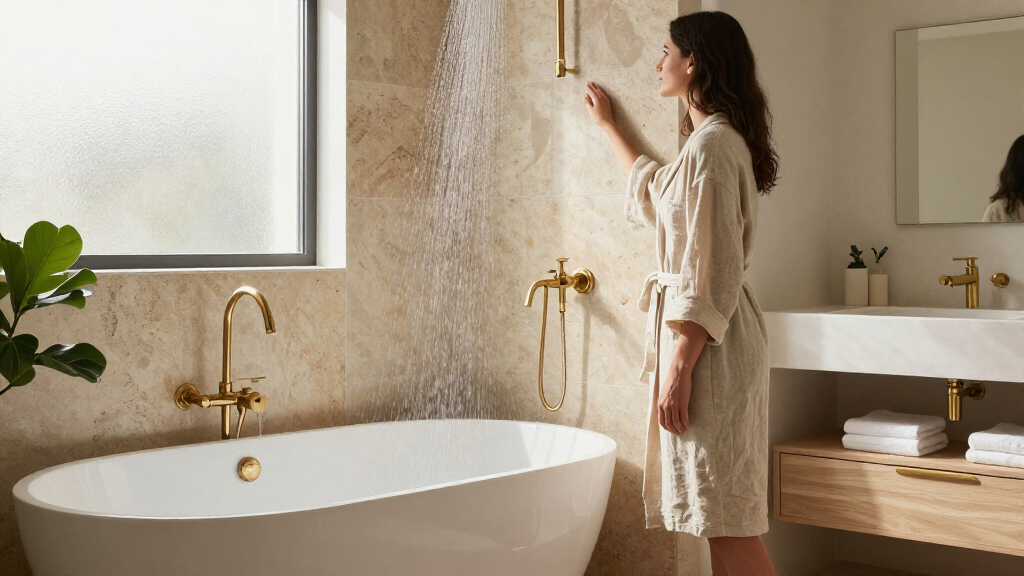
The other forecast trends are more expressive hardware, including varied shapes and mixed metals, and lighting from multiple sources rather than a single fixture around the mirror. Elkins describes combining task lighting with softer nighttime illumination, natural light, toe-kick or baseboard lights, and decorative lamps where appropriate.
Cannon says designers are also refreshing familiar tile through herringbone, offset-brick and other deliberate layouts, sometimes introducing colored motifs or borders against otherwise neutral floors. Elkins describes a move away from bathrooms that feel purely practical, with warmer paint, stained wood, trim and distinct vanity and wet areas. The sixth category is smart bathroom equipment, such as automated shower controls, smart toilet functions, touch-free faucets and motorized window coverings.
Design Moves Beyond Basic Function
Taken together, the six forecasts describe bathrooms being treated more like coordinated living spaces: storage is tailored to daily routines, lighting serves different tasks and times of day, and materials and trim connect the room to the rest of the home. For homeowners planning a renovation, these ideas may help frame discussions with designers about function, appearance and long-term usability.
The report also suggests that updates need not mean replacing every surface. A new tile layout, distinctive cabinet hardware or an additional lighting layer can change the character of a room without adopting every trend at once. The article does not provide cost estimates or establish which changes have the strongest effect on resale value; it presents designers’ observations about client interest and design practice.
As an affiliate, we earn on qualifying purchases.
How Designers Read Client Requests
Veranda frames its report around the idea that bathroom choices can reflect wider decorating preferences, even though bathrooms are often renovated less frequently than living rooms or kitchens. It quotes Elkins saying trends can involve materials, storage and function as well as style, and that designers monitor them when developing client projects.
The six directions come from comments by Elkins and Cannon, rather than a survey of homeowners, a sales analysis or a broader industry study. The examples are specific to their work and observations: Cannon discusses custom cabinetry, hardware and tile arrangements, while Elkins describes lighting, room finishes and connected fixtures. The report does not give a research method or quantify how many clients are requesting each feature.
“By incorporating customized organizational systems, we can maximize every inch and make the bathroom feel more intuitive, efficient, and personal.”
— Rachel Cannon, founder and principal designer of Rachel Cannon Limited
As an affiliate, we earn on qualifying purchases.
Forecasts, Not Market-Wide Data
The report does not establish whether these preferences will become widespread in 2027. It offers designer predictions and examples, without sales figures, a homeowner survey, adoption rates or a comparison with previous years. It also does not rank the six ideas or say that every trend is appropriate for every bathroom.
Practical details remain project-specific. The article gives no price ranges or guidance on how renovations involving wood near wet areas, electrical outlets in drawers, automated fixtures or lighting should be planned. Homeowners would need to assess layout, moisture exposure, electrical and plumbing requirements, accessibility and budget with qualified professionals.
As an affiliate, we earn on qualifying purchases.
How the Forecast Will Be Tested
The predictions will be borne out, or not, through future client projects and renovation choices as 2027 approaches. Veranda’s report does not announce a follow-up study or provide a timetable for checking whether the trends spread beyond the designers’ practices.
For now, readers considering a bathroom update can treat the list as a set of design ideas, not a checklist or guarantee of resale value. The next useful evidence would be broader reporting on homeowner demand, product sales and completed projects, alongside clearer information about costs and installation needs.
As an affiliate, we earn on qualifying purchases.
Key Questions
What are the six bathroom trends predicted for 2027?
The report lists custom cabinetry and storage, standout hardware, multiple lighting sources, patterned tile floors, a move away from purely utilitarian design and smart technology.
Are these trends confirmed to be popular with homeowners?
No. They are forecasts from two designers based on their client experiences and observations. The report does not include a homeowner survey or market-wide data.
What does layered bathroom lighting mean?
It means combining different sources for different needs, such as task lighting at a vanity, softer nighttime lights and decorative or natural light, rather than relying on one fixture.
Which smart features does the report mention?
Elkins cites automated shower controls, smart toilet functions, touch-free faucets and motorized shades or drapery as features clients are requesting.
Source: rss
Halloween Picks
halloween
As an affiliate, we earn on qualifying purchases.