
TL;DR

Get pool and patio gear delivered free with Prime
- Fast, free delivery on millions of items
- Prime Video, Amazon Music and more included
- Member-only deals all year
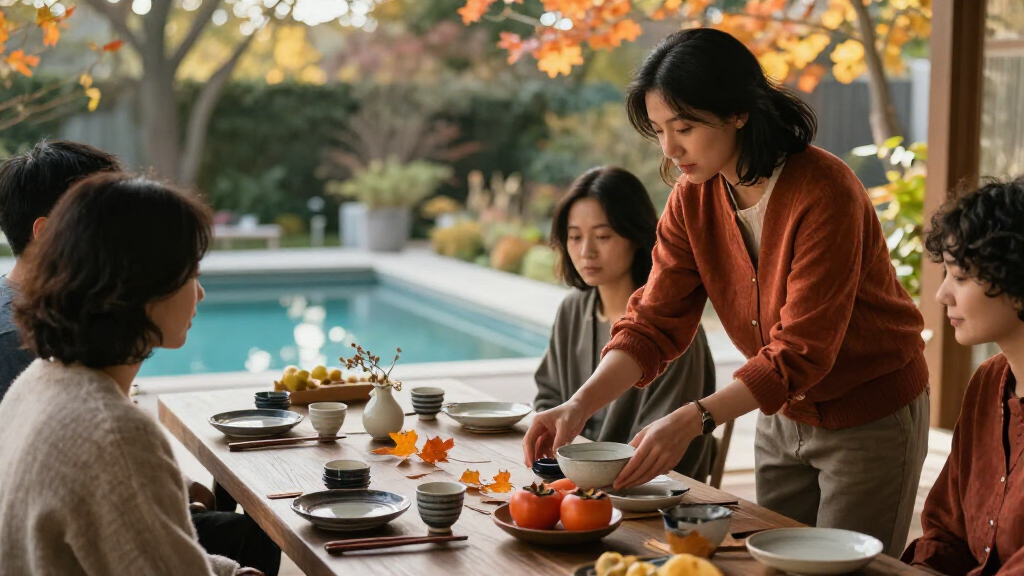
Livingetc has published four Japanese tablescaping ideas for making autumn gatherings feel more personal and seasonal. The suggestions pair individual place settings with shared dishes, prioritize tableware suited to each diner and meal, and use warm-toned vessels and small seasonal details.
Livingetc has published four Japanese-inspired tablescaping lessons for autumn hosting, recommending a mix of individual place settings and shared dishes, personal rather than uniform tableware, vessels chosen to suit the food, and seasonal changes to plates and bowls. The guide draws on practices described in Japanese homes and on the work of Nakagawa, a craft maker and retailer founded in Nara in 1716, and presents them as ideas that can be adapted to Western dining.
The first suggestion is to combine individual settings with shared platters. Livingetc describes an oshiki, or flat tray, holding a rice bowl, soup bowl and small plate for each diner, while larger dishes sit in the center for people to share. The article uses the term meimei no ba for each person’s own place. It says this arrangement blends the structure of plated dining with the ease of family-style service.
The second lesson is to choose some tableware for the person who will use it, rather than buying a fully matching set. The report says family members may have their own rice bowls and chopsticks, selected for hand size and preferred feel. Its third lesson treats the vessel as part of the meal: the article attributes the phrase “the vessel is the kimono of the food” to the tradition associated with potter Kitaōji Rosanjin, who opened a Tokyo restaurant in 1925 and made vessels for its dishes.
For a practical starting point, the guide points to mame-zara—small plates about saucer-size—which can be collected individually and mixed or matched. Its final suggestion is to change the tableware with the season, not remake the whole table. For autumn, Livingetc proposes warm clay and glazes in persimmon and rust tones, with a small detail such as a chrysanthemum-shaped chopstick rest. It says Japanese seasonal arrangements may welcome the next season slightly early.
Small Changes Shape Autumn Hosting
The ideas offer hosts a way to make a table feel considered without relying on a complete matching set or an elaborate centerpiece. Combining shared food and individual settings can support different dining habits at once, while personal bowls and utensils add a practical, individualized element. Seasonal ceramics also provide a low-effort way to mark autumn: the guide suggests changing a few vessels rather than replacing the entire table arrangement.
These are design recommendations, not evidence that a particular setting improves hospitality or that all Japanese households follow the same customs. Their value for readers is as adaptable inspiration: the article shows how material, shape and use can matter alongside color and decoration.
Products Worth Considering

GoPro Fluid Pro AI 3-Axis Gimbal Stabilizer

Amazon Kindle Paperwhite Signature Edition (12th Generation, 2024), 32 GB, Metallic Black

Amazon Kindle Paperwhite (2024), 16GB, 7-inch Display, Black
As an affiliate, we earn on qualifying purchases.
Four Practices Behind the Guide
The report is a home and design guide from Livingetc, rather than a study or announcement of a new product. It says the practices were drawn from autumn tablescapes in Japanese homes and developed while working with Nakagawa, a Nara-based craft maker and retailer established in 1716. The source does not identify a named researcher or provide interviews with households.
Its examples connect tableware to specific dining functions: a tray organizes each diner’s place, shared dishes remain accessible in the middle, and small plates can accommodate varied foods. It also links autumn styling to clay and warm glaze colors, in contrast with the glass and white porcelain the article associates with summer. These details support the guide’s central point: a seasonal table can be shaped through the objects used to serve and eat the meal.
“The vessel is the kimono of the food.”
— Livingetc report
Limits of the Source Material
The supplied report does not give a publication date, name an author in the text provided, or explain how many homes informed its descriptions. It does not establish how common each practice is across Japan, and the advice should be read as a design guide rather than a comprehensive account of Japanese dining traditions. The article also offers no independent assessment of whether these approaches make hosting more comfortable; that outcome is presented as design guidance, not measured evidence.
How Hosts Can Adapt the Ideas
The next step for readers is practical rather than a scheduled news development: choose one or two suggestions that suit the meal. A host could keep a personal bowl and small plate at each seat, place shared dishes within reach, or introduce a few autumn-toned vessels instead of changing every item. The report also suggests collecting small plates over time, allowing a tableware mix to develop gradually. No follow-up announcement or further milestone is identified in the source.
Key Questions
What are the four Japanese tablescaping lessons?
Livingetc recommends combining individual place settings with shared dishes, considering the person using each item, choosing vessels that suit the food, and changing plates and bowls to reflect the season.
What is an oshiki?
In the report, an oshiki is a flat tray holding a diner’s rice bowl, soup bowl and small plate. Shared dishes are placed separately in the center of the table.
What does mame-zara mean?
Mame-zara refers to small plates about the size of a saucer. The guide says they can be collected individually and used in matching or mixed combinations.
How does the guide suggest making a table feel autumnal?
It recommends warm clay and glazes in persimmon and rust tones, paired with one small seasonal accent, such as a chrysanthemum-shaped chopstick rest. The article suggests keeping the rest of the table unchanged.
Source: livingetc.com