
TL;DR

Get pool and patio gear delivered free with Prime
- Fast, free delivery on millions of items
- Prime Video, Amazon Music and more included
- Member-only deals all year
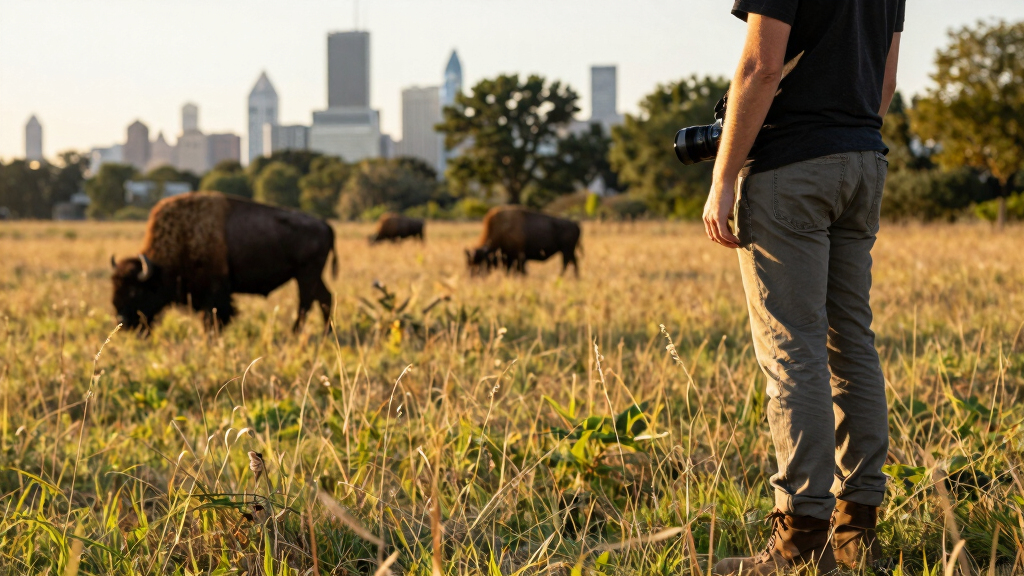
Six bison were released into Burlington Prairie, 60 miles northwest of Chicago, on December 5, 2025, returning to the area after more than 200 years. This ecological and cultural project involves local agencies and Indigenous groups, aiming to restore prairie health and Indigenous connections.
Six bison have been reintroduced to Burlington Prairie, a forest preserve 60 miles northwest of Chicago, marking the first time in over 200 years that wild bison have been present in the area. This project, a partnership between local conservation authorities, Indigenous groups, and private stakeholders, aims to restore prairie ecosystems and reconnect Indigenous communities with their cultural heritage.
On December 5, 2025, six bison were released into a 38-acre fenced enclosure on Burlington Prairie, managed by the Forest Preserve District of Kane County in collaboration with the American Indian Center of Chicago (AIC) and Ruhter Bison. The herd is descended from Illinois bison with heritage tracing back to the last remaining bison on the Great Plains. This marks a significant ecological and cultural milestone, as bison once roamed the Great Plains in the tens of millions before mass slaughter in the 1800s, which contributed to the displacement of Native peoples.
The project emphasizes Indigenous involvement, with AIC representatives stating that the bison symbolize a vital link to Indigenous history and land. The herd’s presence is intended to benefit prairie health through natural grazing, soil fertilization, and habitat creation, such as wallows that support insects and birds. The area, once almost entirely converted from prairie to farmland, now hosts native species and is open to the public for observation, promoting community engagement with local ecosystems and Indigenous heritage.
Why It Matters
This reintroduction is a meaningful step in ecological restoration, helping to maintain prairie health and biodiversity. It also has cultural importance, reconnecting Indigenous communities with their ancestral lands and traditions. The project demonstrates a collaborative approach to conservation, blending ecological benefits with cultural revitalization, and could serve as a model for future prairie and wildlife restoration efforts in the Midwest.
As an affiliate, we earn on qualifying purchases.
Background
Bison historically roamed across the Great Plains in vast numbers, but European colonization and westward expansion led to their near-extinction by the late 1800s. The decline of bison had profound impacts on Indigenous cultures that relied on them for food, clothing, and spiritual practices. In recent years, efforts to restore bison populations have increased, primarily in national parks like Yellowstone, which hosts thousands of bison. The Burlington Prairie project is part of a broader movement to reintroduce bison into their native ecosystems and foster Indigenous cultural connections in the Midwest.
“Having the bison on the prairie is a way for us to connect with that piece of our indigeneity that’s nearby. Urban Natives have a chance to understand this animal relative of ours and its significance in Indigenous history.”
— Jessica Pamonicutt, President of AIC
“We have bison on the prairie, rather than on a paddock. It’s open to the public in a multi-purpose facility. The whole effort is publicly accessible.”
— Benjamin Haberthur, Forest Preserve District of Kane County
wildlife observation camera for prairie animals
As an affiliate, we earn on qualifying purchases.
As an affiliate, we earn on qualifying purchases.
What Remains Unclear
It is not yet clear how the herd’s ecological impact will develop over time or how the population will be managed long-term. Scientific data collection is ongoing, and the full ecological effects of the reintroduction are still being studied. Additionally, the broader cultural and community impacts are still being assessed as the project progresses.
As an affiliate, we earn on qualifying purchases.
What’s Next
The project team plans to monitor the herd’s ecological impact over the coming year, including soil health, plant diversity, and bird populations. They will also evaluate community engagement and Indigenous cultural outcomes. Further herd management and potential expansion are possible depending on ecological success and community feedback.
As an affiliate, we earn on qualifying purchases.
Key Questions
Why were bison reintroduced to Burlington Prairie?
The reintroduction aims to restore prairie ecosystems and reconnect Indigenous communities with their cultural heritage, while also promoting biodiversity and ecological health.
How many bison are in the herd?
The herd currently consists of six bison, all descended from Illinois origins with ties to the last bison herds on the Great Plains.
Can the public visit the bison?
Yes, the herd is housed in a fenced enclosure at Burlington Prairie, and the public can observe them from a respectful distance. The site is open for visitation since May 2026.
What ecological benefits do bison provide?
Bison help maintain healthy prairies through grazing, create microhabitats via wallows, and fertilize the soil with their dung, supporting native plant and animal species.
What are the long-term plans for the herd?
Monitoring and scientific study will guide future herd management, with potential expansion depending on ecological and community outcomes.
Source: Outside
Halloween Picks
halloween
As an affiliate, we earn on qualifying purchases.