
TL;DR

Get pool and patio gear delivered free with Prime
- Fast, free delivery on millions of items
- Prime Video, Amazon Music and more included
- Member-only deals all year
A Livingetc writer reports buying Japanese donabe clay pots after seeing dishes cooked and served in them at a London restaurant. Donabe expert Naoko Takei Moore says the pots retain heat and suit one-pot meals, while serving from a shared pot reflects a communal dining tradition in Japan.
Livingetc writer Luke Arthur Wells says he bought Japanese donabe clay pots after seeing food cooked and served in them at a London restaurant, prompting a report on how the cookware works and what it represents. Donabe expert Naoko Takei Moore told the publication that the pots are designed for gentle, heat-retaining cooking and are often brought to the table for people to share.
Wells says he had collected Japanese and Japanese-inspired plates, cups and bowls, but had not previously explored Japanese cookware. A visit to Donabe on London’s South Bank, which describes itself as London’s first Japanese clay pot restaurant, prompted his interest. The restaurant cooks and serves dishes in small donabe pots at the table, an approach he could imagine adapting for home entertaining.
After looking for places to buy one in the UK, Wells says he purchased two pots from a seller on Amazon because the design suited his preferences. His account presents the purchase as a personal choice, not as evidence of a broader change in cooking or shopping trends. He also says he wanted to learn about the pot’s traditional role rather than focus only on its appearance.
Moore, a Japanese-born donabe specialist based in Los Angeles, cookbook author and founder of cookware brand TOIRO, explained that the porous clay gives donabe heat-retention qualities distinct from Western ceramic pots. She said the heat transfers more slowly and gently, making the pots suitable for rice, grains, vegetables, chicken and fish, while less suited to browning and caramelizing. The report does not identify the exact models Wells bought or describe his cooking results in detail.
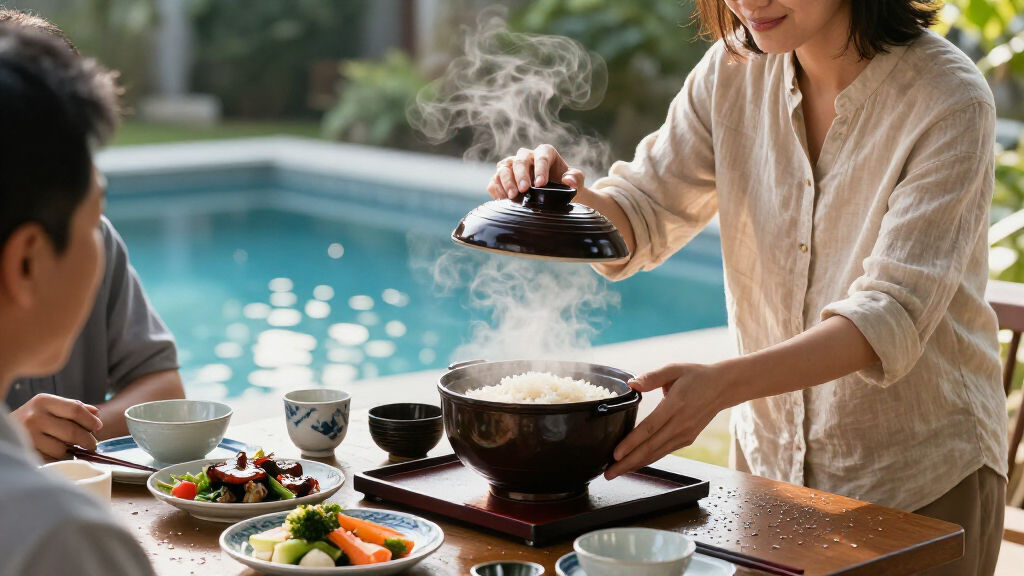
The donabe’s appeal in the report is both practical and social. Its capacity to retain heat and moisture can suit one-pot dishes, while bringing the vessel directly to the table makes serving part of the meal. For home cooks, that offers an alternative to transferring food from cookware to a separate serving dish.
Moore describes the pot as connected to communal dining in Japan. She cites the expression “Nabe wo Kakomu,” meaning “surrounding a pot,” for the practice of sharing food from the same vessel. That explanation comes from Moore, who works with donabe and has written about its cooking; it should not be read as a claim that every Japanese meal follows this custom.
The report also links donabe to kitchen styling, noting the range of finishes available. Moore says artisan pots can vary by region and maker, with some intentionally uneven surfaces valued for their rustic appearance. The cookware therefore occupies two roles in Wells’s account: a tool for cooking and an object displayed or served at the table.
Products Worth Considering

DJI Osmo Pocket 3 Gimbal Camera

Sony WH-1000XM4C Wireless Noise-Cancelling Headphones, Black

DJI Osmo Mobile 8 Gimbal with Mic Mini Transmitter, Infinity Black
As an affiliate, we earn on qualifying purchases.
From Tokyo-Inspired Ceramics to Cookware
Wells situates the purchase within a longer personal interest in Japanese ceramics, which he says grew after a visit to Tokyo several years ago. His kitchen collection had focused on tableware before the restaurant visit drew his attention to Japanese clay cookware. The article is a first-person lifestyle report, not a product test or a survey of donabe use.
Moore founded TOIRO in 2007 to introduce donabe cooking to the United States, according to the source. She is also the author of Donabe: Classic and Modern Japanese Clay Pot Cooking and Simply Donabe. Her experience provides the article’s explanation of the pot’s material and dining traditions.
What the Report Does Not Establish
The article offers Wells’s account of buying two pots and Moore’s explanation of donabe cooking, but it does not provide a controlled comparison of different cookware or independent testing of heat retention and durability. It also does not give the price, size, maker or care instructions for the specific pots Wells purchased.
The report does not establish how widely donabe is used in Japan, nor does Moore’s description imply that communal dining is universal. Readers considering a purchase would need to check the individual maker’s guidance, since the article does not set out care requirements or confirm that every donabe is suitable for the same heat sources and recipes.
How Wells Uses the Pots
The source does not announce a follow-up, publication schedule or planned test of the pots. It leaves Wells’s future use of them open; he says he had put away a Japanese grill for summer but does not give a timeline for cooking with the donabe or report later results.
For readers interested in trying one, the practical next step is to check the pot’s specifications and the seller’s instructions before cooking. The article names UK retailers and online listings as possible places to shop, but it does not verify current stock, prices or the suitability of particular models.
Key Questions
What is a donabe?
A donabe is a Japanese earthenware cooking pot. In the report, donabe expert Naoko Takei Moore describes it as a porous clay pot that can retain heat and is often used for one-pot dishes.
What foods are suited to donabe cooking?
Moore says donabe works well for rice, grains, vegetables, chicken and fish, because it transfers heat slowly and gently and traps moisture. She says it is less suited to browning and caramelizing.
Why serve food directly from a donabe?
Moore says donabe is often used both to cook and serve a one-pot dish at the table. She connects sharing food from one pot with the Japanese expression “Nabe wo Kakomu,” or “surrounding a pot.”
Where did the Livingetc writer buy his donabe?
Wells says he bought two pots from a seller on Amazon because he preferred their design. The report also mentions UK retailers, but does not confirm current stock or prices.
Source: rss