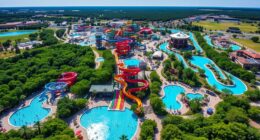
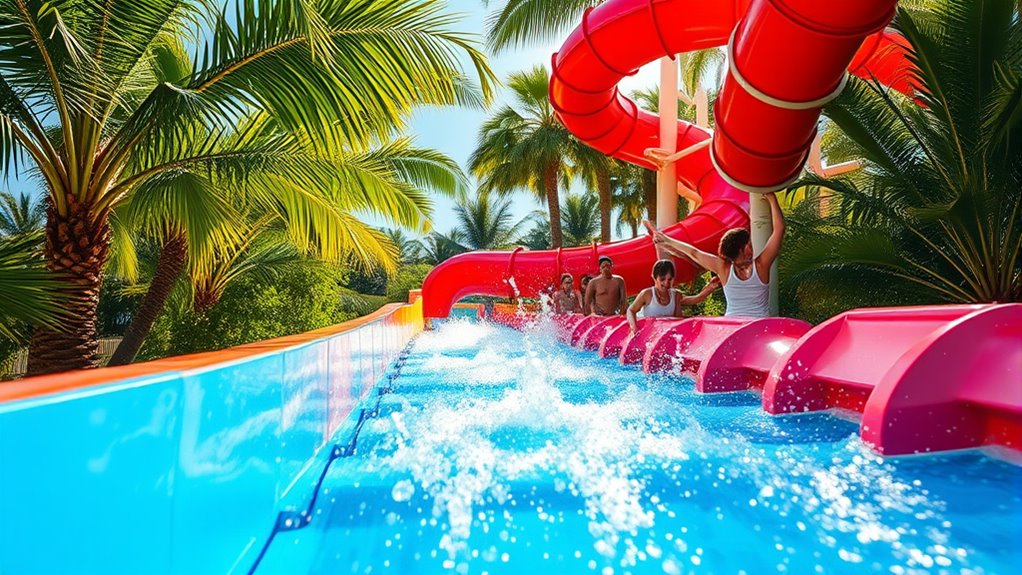

Turning your water park day into a cardio session is easy and fun. Climbing stairs and sliding continuously burn calories while keeping your heart rate elevated. The water’s resistance makes muscles work harder, boosting strength and endurance. Plus, active play, like launching down slides or racing with friends, increases your activity level naturally. Keep going, and you’ll discover strategies to maximize your effort and enjoy even more health benefits.
Key Takeaways
- Climbing stairs and navigating slides at waterparks burn approximately 10 calories per minute, boosting your cardio workout.
- Sliding and active water play elevate heart rate, providing effective low-impact cardiovascular exercise.
- Incorporating multiple flights of stairs and slides increases caloric expenditure and maintains aerobic activity.
- Water’s resistance challenges muscles during climbing and sliding, enhancing endurance and cardiovascular benefits.
- Engaging in waterpark activities turns fun into a calorie-burning, heart-healthy workout routine.
The Calorie-Burning Power of Waterpark Climbing and Sliding
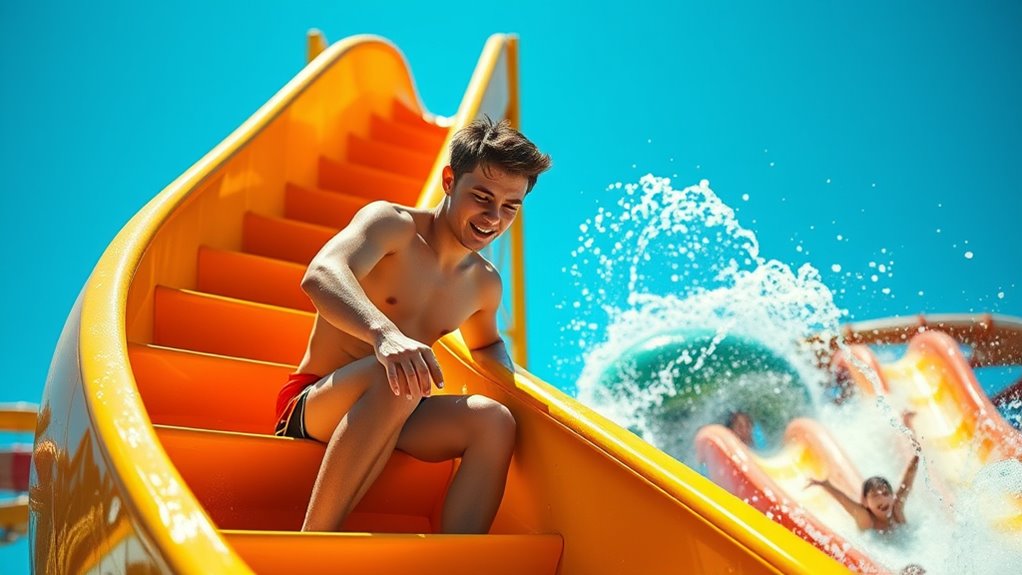
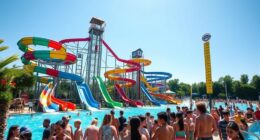
Waterpark climbing and sliding offer an enjoyable way to burn calories while having fun. When you climb stairs at a waterpark, you can burn around 10 calories per minute if you weigh 150–160 lbs. Spending 20 minutes climbing and sliding can torch nearly 400 calories. A full day of activity, including bouncing, climbing, and sliding, can burn between 150 and 700 calories, and sometimes over 1,000 calories in a single outing. Climbing multiple flights of stairs and sliding creates intermittent intense activity, boosting your overall caloric burn. The combination of these movements not only burns calories but also keeps your heart rate elevated. This makes waterpark activities a playful yet effective way to incorporate cardio into your day. Water-based activities are aerobic, which helps improve cardiovascular health and stamina while engaging major muscle groups in a fun environment. Additionally, incorporating proper activity intensity can maximize the health benefits of your waterpark adventure.
Strengthening Muscles and Improving Functional Fitness With Water Slides
As you climb and slide, water’s resistance makes your muscles work harder, boosting strength and endurance. These movements engage key muscle groups like your core, arms, and legs, helping you build functional fitness. By maintaining balance on slippery surfaces, you also improve coordination and stability, making everyday tasks easier. Water conservation through smart water management in water parks can also promote sustainability and resource efficiency. Engaging in water play regularly can also enhance bone density, contributing to overall physical health and resilience.
Resistance From Water Movement
Have you ever considered how water’s natural resistance can transform your workout? Water’s density creates multidirectional resistance that challenges your muscles in all movement planes during sliding. Pushing, pulling, or twisting through water increases your workload, recruiting more muscle fibers than dry-land activities. You can easily adjust resistance by changing your speed or technique, making your workout scalable without equipment. This natural resistance promotes balanced muscle development, reducing injury risk caused by muscular imbalances. Continuous tension during each slide ensures consistent muscle engagement, boosting endurance and strength. As you navigate the water slide, your muscles work harder to stabilize and control movement, enhancing both strength and functional fitness. The resistance from water effectively turns a fun activity into a powerful, low-impact workout. Water’s resistance also improves cardiovascular health by requiring your heart to pump more efficiently during active play.
Muscle Engagement During Climbing
Climbing the water slide steps creates significant muscle engagement, especially when water resistance is involved. You activate major muscle groups like your quadriceps, hamstrings, glutes, and calves through weight-bearing, repetitive stepping. Water drag can increase muscle activation, sometimes matching or surpassing land-based exercise. Your core muscles—erector spinae and multifidus—work harder to maintain stability, improving strength and posture. The movement involves both lifting and lowering your body, building endurance and control. Additionally, gripping handrails and pulling engage your upper body, boosting strength and coordination. The continuous effort stimulates muscle endurance and neuromuscular control, mimicking real-life movements. This dynamic activity promotes functional fitness, helping you develop muscle groups essential for daily activities while enjoying the fun of water slides. Incorporating water slide climbing into your routine can also enhance your overall cardiovascular health by providing low-impact aerobic exercise.
Functional Movements and Balance
Water slides actively promote functional movements by engaging your muscles in ways that closely resemble everyday activities like stair climbing and controlled lowering. As you climb, slide, and maneuver twists, your body makes dynamic adjustments, boosting agility and mobility. Shifting between climbing and sliding activates multiple muscle groups in coordinated sequences, while the water’s low-impact environment reduces joint stress. These movements require stabilization during ascent and descent, enhancing overall control and movement efficiency. Additionally, balancing on inflatable surfaces challenges your stability, prompting micro-adjustments and improving proprioception. Navigating curves sharpens spatial awareness and motor planning. Repeated exposure strengthens neural pathways, leading to better coordination, core stability, and functional fitness—making your water slide adventure a powerful workout for everyday strength and balance. These activities also improve cardiovascular health by increasing heart rate through continuous movement. Incorporating functional movement patterns into recreational activities like water sliding can contribute to overall fitness and injury prevention.
How Waterpark Activities Boost Physical Activity Levels and Patterns
Waterpark activities naturally encourage you to be active, from climbing ladders and sliding down to exploring different zones. These varied areas keep you moving and engaged, blending fun with exercise. Plus, social play fosters teamwork and motivation, making physical activity feel like part of the experience. Drownings have occurred at U.S. water parks, affecting both adults and children, so staying active while being aware of safety rules is essential for a healthy and enjoyable visit. Many water parks, such as those in Wisconsin Dells, offer family-friendly attractions, which promote inclusive activities for all ages.
Active Climbing and Slides
Active climbing and sliding in waterparks play a significant role in boosting physical activity levels, especially among youth. These activities involve more than just fun—they generate moderate to vigorous physical activity (MVPA) that benefits heart health and muscle engagement. Climbing stairs to slides requires sustained effort, raising heart rates and activating major muscle groups. The repetitive nature of climbing and sliding encourages multiple rounds, increasing overall energy expenditure. Additionally, engaging in cycling practice during waterpark activities can help improve coordination and endurance, further enhancing physical fitness. Waterpark stairs and structures contribute to MVPA, comparable to land-based stair climbing. Longer or steeper slides demand more effort, boosting activity intensity. Repeated climbs and slides lead to sustained MVPA over time. Youth engage in playful, competitive behaviors, maximizing physical activity.
Varied Activity Zones
Different activity zones within waterparks considerably influence how much physical activity youth engage in during their visit. The multiuse pool supports the highest MVPA at 27%, thanks to open swimming and active play. The lazy river also promotes movement, with 25% of total activity involving frequent arm and leg propulsion. In contrast, the plunge pool sees only 2% MVPA, mostly sedentary or light activity. The deck area contributes 17%, mainly through movement, games, and passage between attractions. Facility design plays a key role—open pools and active zones encourage more movement, while relaxation areas like plunge pools promote rest. Youth across ages 4 to 18 show varied MVPA levels depending on the zone, with activity patterns influenced by the features’ layout and purpose. Research indicates that environmental design significantly impacts youth physical activity levels, and optimized design can maximize physical activity across all waterpark zones. Incorporating features that encourage active engagement can further enhance the overall MVPA during visits.
Social and Play Engagement
Have you ever noticed how social interactions and group activities in waterparks naturally boost physical activity levels? When you’re participating in activities like inner tube races or playing in shared pools, you’re often moving more vigorously without realizing it. Social engagement encourages continuous movement and can elevate your activity intensity. For example:
- Inner tube races and competitive games increase moderate to vigorous activity.
- Multiuse pools and lazy rivers promote social play that keeps you active.
- Deck areas become lively hubs of interaction, boosting MVPA.
- Regular group visits improve confidence and overall wellbeing through social bonds.
- The social environment in waterparks can also motivate longer stays, increasing overall activity duration.
These interactions not only make your waterpark experience more enjoyable but also support sustained physical activity. The social aspect motivates you to participate more actively, turning a fun day into effective exercise.
Mental Health Benefits of Engaging in Slide-Based Waterpark Exercises
Engaging in slide-based waterpark exercises offers notable mental health benefits, helping you reduce stress and boost mood. Sliding triggers the release of endorphins, which promote happiness and relaxation, easing anxiety. The rhythmic breathing and movement involved can bring a sense of mindfulness, shifting your focus from worries to present enjoyment. Water’s soothing motion calms your nervous system, lowering cortisol levels and supporting mental relaxation. The adrenaline rush from sliding stimulates neurotransmitters like dopamine and β-endorphins, further elevating your mood. Water-based activity also provides a calming sensory experience, enhancing emotional well-being. Plus, participating in these activities outdoors and in groups fosters social connection, which strengthens resilience against depression and improves overall mental health. Bodies are 75% water, which makes water immersion and movement particularly effective for supporting mental well-being. Additionally, engaging in such water activities can promote physical health, which is closely linked to mental health improvements.
The Low-Impact Advantage: Protecting Joints While Staying Active
Water’s buoyancy offers a significant advantage for staying active without putting unnecessary strain on your joints. It supports up to 90% of your body weight, easing impact and reducing stress on bones, joints, and muscles. This makes water activities ideal for those with arthritis, osteoporosis, or recovering from surgery. Water also provides natural resistance, strengthening muscles around joints without additional harm. You can modify resistance levels with speed or equipment, making workouts customizable. Additionally, warm water relaxes muscles and improves flexibility, helping you stretch safely. The unstable environment of water enhances balance and coordination, promoting stability and reducing fall risks. Activities like water walking or pool planks are gentle, low-impact options suitable for all fitness levels and joint conditions. Incorporating mindset and confidence techniques can further boost motivation and consistency during your water exercise routines.
Achieving Weight Management Goals Through Waterpark Play
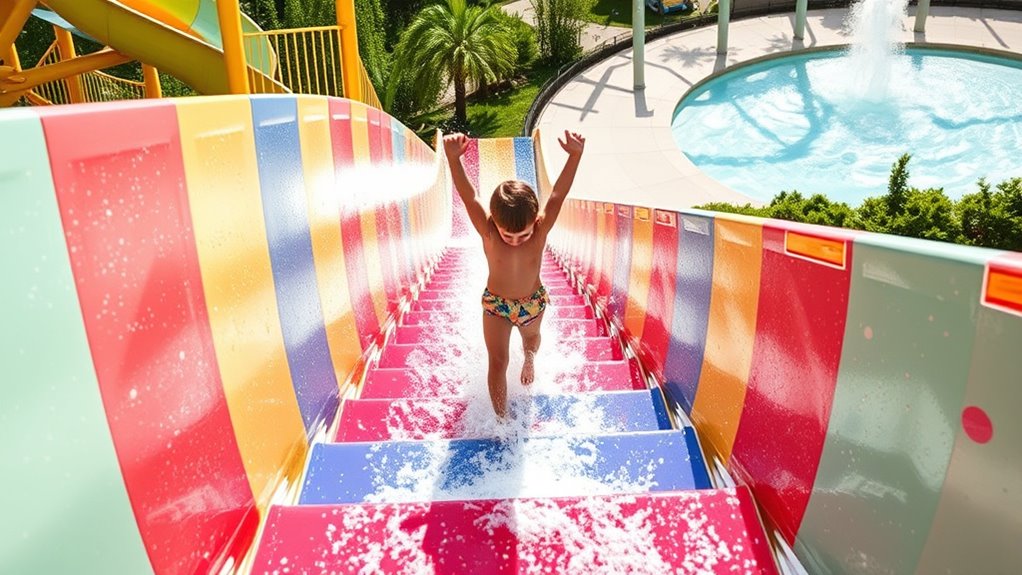
Building on the benefits of low-impact water exercises, participating in waterpark play offers an enjoyable way to achieve your weight management goals. Vigorous activities like climbing, sliding, and splashing can burn up to 1,056 calories in a full day, while just 20 minutes of bouncing and climbing stairs can burn nearly 400 calories. These activities raise your heart rate and engage major muscle groups, from legs to core and upper body, thanks to water resistance. The dynamic movements boost muscle tone, endurance, and cardiovascular health, similar to circuit training and moderate cardio workouts. Plus, the fun factor encourages longer participation, making it easier to sustain consistent activity. Additionally, waterpark play can improve exercise motivation by making workouts more enjoyable and engaging. Overall, waterpark play provides a versatile, engaging approach to maintaining a healthy weight and improving fitness levels. Calorie burn varies depending on individual effort and activity intensity, further emphasizing the importance of staying active during waterpark adventures.
Frequently Asked Questions
How Does Water Resistance Enhance Muscle Strength During Waterpark Activities?
Water resistance boosts your muscle strength during waterpark activities by requiring you to work against multi-directional forces, which engage multiple muscle groups at once. This resistance slows your movements, making your muscles work harder, especially in the lower and upper body. As you push and pull through the water, you build muscle endurance and mass, ultimately strengthening your muscles while reducing joint stress and lowering injury risk.
Can Waterpark Exercises Help Improve Balance and Coordination?
Imagine gliding down a water slide, feeling your body subtly adjusting with each twist and turn. Waterpark exercises can indeed boost your balance and coordination. The resistance and turbulence challenge your muscles and neuromuscular system, forcing you to stabilize and control your movements. As you navigate the slides and pools, you build core strength, improve postural reactions, and develop better balance, making everyday activities safer and more confident.
Are Water Slides Suitable for All Fitness Levels and Ages?
You can enjoy water slides regardless of your age or fitness level, but safety is key. If you’re young, healthy, and mobile, slides offer a fun way to boost cardio and muscle tone. However, if you have health issues or limited mobility, you should assess your suitability and choose appropriate activities. Always follow safety guidelines, stay hydrated, and listen to your body to make the most of this exciting exercise option.
How Do Waterpark Activities Influence Long-Term Exercise Motivation?
Waterpark activities boost your long-term exercise motivation by making fitness fun, fostering social connections, and creating positive experiences. When you enjoy splashing, sliding, and playing with others, you’re more likely to stick with active habits. These activities develop confidence, encourage frequent participation, and reinforce a lifestyle centered on movement. So, immersing yourself in waterpark fun transforms exercise from a chore into a joyful, motivating part of your routine.
What Safety Precautions Should I Take During Waterpark-Based Workouts?
During waterpark-based workouts, you should always get medical clearance first, especially if you have health issues. Use properly fitting flotation devices, hold onto handrails when entering or exiting the pool, and never swim alone—partner up or have a lifeguard nearby. Stay hydrated, wear water shoes for grip, and avoid high-impact exercises. Follow all safety signs, supervise children, and stop immediately if you feel pain or discomfort.
Conclusion
So, next time you hit the waterpark, remember it’s more than just fun—it’s a sneaky way to turn a slide day into a powerful workout. Some believe that water-based activities naturally enhance calorie burn and boost mood, and research supports this idea. By embracing waterpark exercises, you not only enjoy the thrills but also protect your joints and improve overall fitness. Turns out, sliding into fun can secretly slide you closer to your health goals.