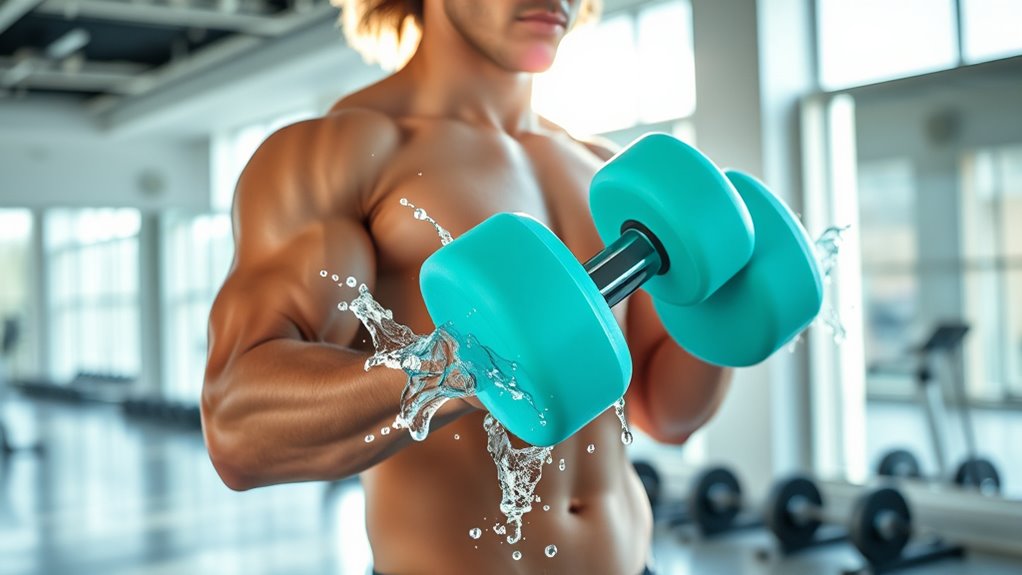
With water dumbbells, you can perform effective resistance exercises that boost muscle strength, endurance, and calorie burn. The water’s natural resistance makes your muscles work harder as you push and pull underwater, while buoyancy reduces joint stress. You can target both upper and lower body muscles with moves like arm lifts, knee raises, and core twists. Keep exploring for detailed routines and safety tips to get the most out of your water dumbbell workouts.
Key Takeaways
- Use water dumbbells to perform upper body exercises like bicep curls, shoulder presses, and tricep extensions for resistance training.
- Incorporate dynamic movements such as water walking, knee lifts, and arm lifts to activate multiple muscle groups simultaneously.
- Adjust movement speed and water depth to increase resistance and challenge different muscle fibers effectively.
- Combine resistance exercises with core engagement and full-body movements for comprehensive strength development.
- Ensure proper grip, shallow water use, and gradual intensity increase to maximize safety and workout effectiveness.

Hikeen Aquatic Exercise Dumbbells Water Dumbbell Pool Resistance Aquatic Fitness Barbells With 4 High-Density EVA Foam Pool Weights Dumbbells, for Water Aerobics Weight Loss (2 EVA Blue)
【Free to Assemble】You can choose the number of foam plates you want to assemble on each side.In addition,…
As an affiliate, we earn on qualifying purchases.
As an affiliate, we earn on qualifying purchases.
Benefits of Water Dumbbell Resistance Training
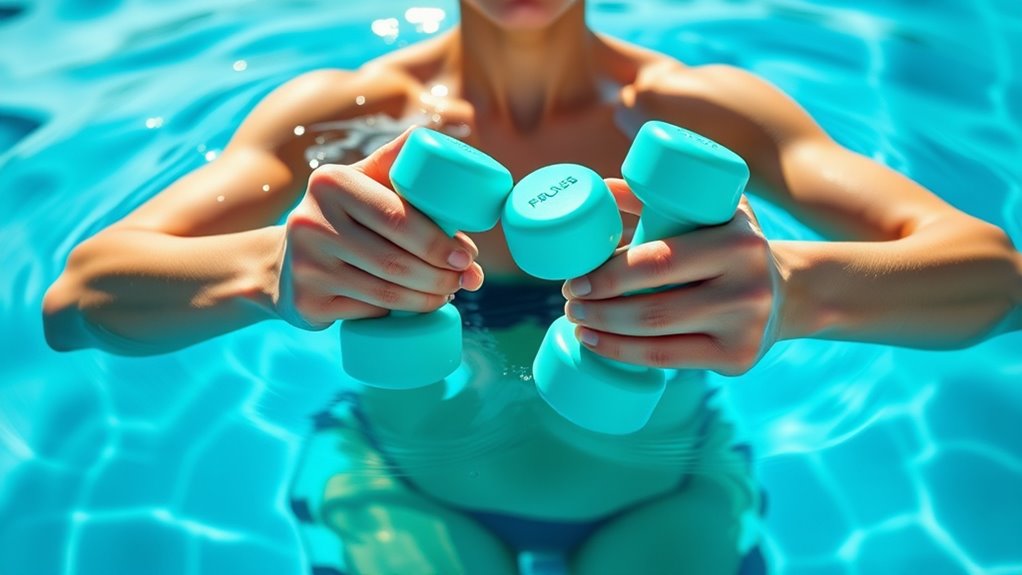
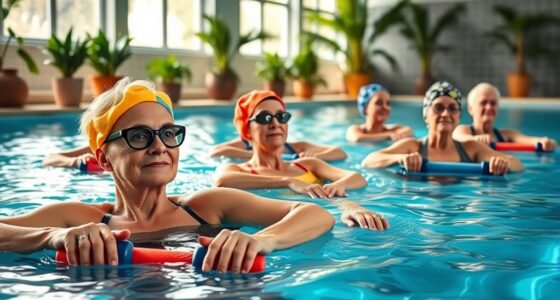
Water dumbbell resistance training offers numerous benefits that can enhance your overall fitness. As you move through exercises, water’s viscosity provides variable resistance, increasing challenge with speed. This dynamic resistance engages both concentric and eccentric muscle actions, promoting balanced strength and faster recovery. It targets muscles like your triceps, back, abdomen, and legs, ensuring continuous effort throughout each movement. Additionally, water activates smaller, often neglected muscles, helping improve muscle tone and endurance. Regular training can boost your explosive strength and stamina, especially as you age. The resistance also promotes greater calorie burn, supporting fat loss and muscle growth. Plus, the buoyancy reduces joint stress, making workouts safer and more comfortable for those with joint issues or chronic pain. Incorporating water dumbbells into your routine can also enhance your overall fitness by providing a comprehensive workout that improves strength, endurance, and flexibility.

Sunlite Sports Water Workout Combo Set, Aqua Dumbbells, Swim Belt and Aqua Cuffs, Water Weights for Pool Exercise, Water Aerobics Equipment, High-Density EVA Foam for Aqua Jogging and Therapy
【Transform Your Pool into a Full-Body Gym】: Get a complete aquatic workout with this 6-piece set, featuring 2…
As an affiliate, we earn on qualifying purchases.
As an affiliate, we earn on qualifying purchases.
Selecting the Right Water Dumbbells for Your Workout

Choosing the right water dumbbells depends on understanding their materials and buoyancy, which affect resistance and comfort. You should also consider the resistance levels, matching them to your strength and workout goals. Testing different sizes and weights helps make sure you select equipment that challenges you without compromising form. Materials and buoyancy play a crucial role in how effective and comfortable your workouts will be, so paying attention to these factors can enhance your training experience. Additionally, selecting water dumbbells with appropriate material composition can provide better durability and grip during exercises.
Material and Buoyancy
Selecting the right water dumbbells depends largely on their material and buoyancy properties, which directly influence your workout experience. Most are made from buoyant materials like EVA foam or closed-cell foam, making them lightweight, water-resistant, and comfortable to hold. Plastic components, often hollow, help maintain shape and increase buoyancy without adding weight. Some designs trap air in sealed pockets or foam segments, boosting flotation and resistance. These non-absorbent materials prevent waterlogging, ensuring consistent buoyancy during exercise. The foam’s softness provides a comfortable grip, reducing hand fatigue and injury risk. Buoyancy creates upward resistance, requiring effort to push or pull the dumbbells underwater. Choosing the right water dumbbells involves considering the specific buoyancy level needed for your workout goals, ensuring your workouts are safe, effective, and tailored to your fitness goals. Additionally, selecting water dumbbells with appropriate material durability can extend their lifespan even with frequent use in chlorinated or saltwater environments.
Resistance Level Selection
The resistance you feel when using water dumbbells depends on how much effort it takes to keep them submerged, which is influenced by buoyancy opposing your movements. To select the right resistance, consider your fitness level—beginners should start with light to medium dumbbells to learn proper form and prevent strain. Remember, resistance increases with movement speed and water drag, so moving faster adds more challenge. Pool depth also matters; chest-deep water provides ideal resistance for full muscle engagement. Your workout goals guide your choice: lower resistance for endurance and toning, higher resistance for building strength, and lighter weights for rehabilitation. Test different sizes initially, monitor fatigue, and adjust resistance as you progress to ensure continuous challenge and effective results. Utilizing analytical cookies can help track your progress and optimize your workout plan over time.
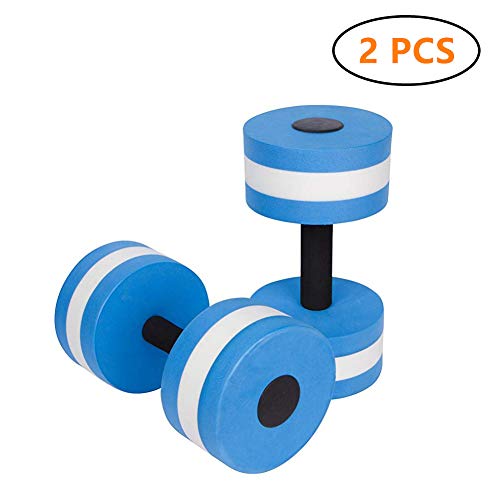
BigBoss Sports Aquatic Exercise Dumbbells Aqua Fitness Barbells Exercise Hand Bars – Set of 2 – for Water Aerobics…
Material:Eva foam. Dimension: 10.8 x 6 x 6 inch / 27.5 x 15 x15 cm.Weight:4.5oz.Recommended for ages 14…
As an affiliate, we earn on qualifying purchases.
As an affiliate, we earn on qualifying purchases.
Warm-Up Exercises in Water to Prepare Your Muscles
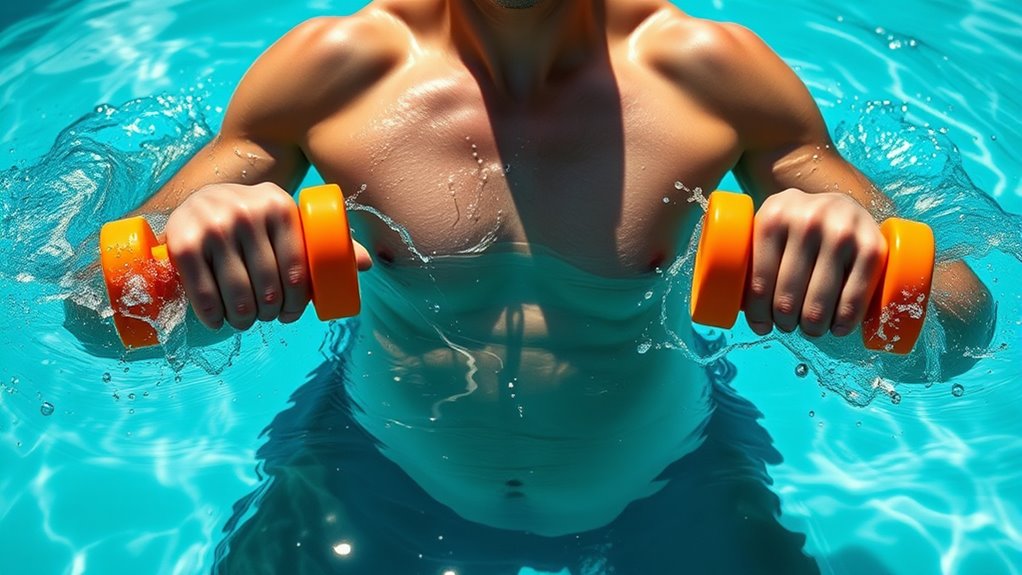
Warming up your muscles in water prepares your body effectively by reducing stiffness and minimizing injury risk. Using water between 83°F to 90°F helps muscles relax and prepares them for activity. Buoyancy supports up to 90% of your body weight, decreasing joint stress and allowing easier movement. Water resistance engages smaller muscle groups, boosting activation before your main workout. Gradually increasing movement intensity promotes circulation and flexibility without overloading muscles. Dynamic exercises like water walking, knee lifts, and arm lifts with water dumbbells warm up your lower and upper body efficiently. These movements improve muscle elasticity and joint mobility while reducing impact. Incorporating water resistance training enhances overall muscle activation and prepares your body for more intense resistance exercises. Combining warmth, resistance, and buoyancy creates an ideal environment for safe, effective muscle preparation before resistance exercises. Additionally, the gentle resistance provided by water helps activate stabilizing muscles, enhancing overall joint stability and preparing your body for more intense training.

NOLITOY Water Fitness Equipment 2Pcs Eva Water Dumbbells for Aquatic Exercise Resistance Training and Joint-Friendly Full Body Workout
Lightweight Design: Crafted from eva material this water fitness equipment offers a lightweight build at just 9.2 ounces…
As an affiliate, we earn on qualifying purchases.
As an affiliate, we earn on qualifying purchases.
Upper Body Resistance Movements With Water Dumbbells
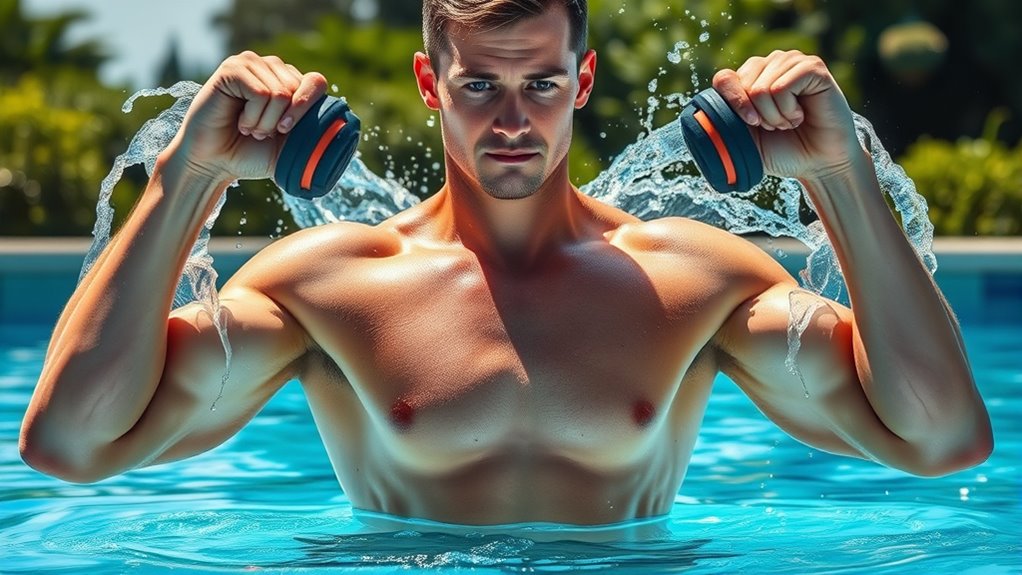
Building on your warm-up routine, upper body resistance exercises with water dumbbells effectively target key muscle groups while minimizing joint stress. For your arms, bicep curls with palms facing up isolate your biceps and forearms, improving strength and endurance. Using foam or water-filled dumbbells allows safe resistance variation without stressing joints, especially with controlled reps or tempo changes. Keep your elbows close to your torso to focus on biceps and reduce compensatory movements. Moving to your shoulders and chest, chest flies and presses strengthen these areas while maintaining shoulder stability. Lateral and diagonal lifts enhance shoulder mobility and strength, especially in chest-deep water. These exercises activate stabilizers, improve posture, and build upper body strength, all while protecting your joints. Water resistance increases naturally with movement speed, providing an extra challenge to your muscles during each exercise. Additionally, joint-friendly resistance training helps prevent injuries and supports long-term joint health.
Lower Body and Core Exercises Using Water Dumbbells
Looking to strengthen your lower body and core safely and effectively? Water dumbbells are perfect for this. Aqua squats target your quadriceps, hamstrings, glutes, and calves while reducing joint pressure thanks to buoyancy. Holding dumbbells during water lunges boosts muscle activation and improves balance. Standing calf raises with water dumbbells strengthen your calves with less impact, ideal for joint health. Side leg lifts challenge your hip abductors, enhancing lateral stability and mobility. During leg shots, resistance from water increases muscle recruitment in thighs and hips. For core stability, underwater torso twists with water dumbbells target obliques, while water punches engage abdominal muscles. Suspended plank variations and flutter kicks activate deep core muscles, helping you build strength and endurance in a low-impact environment. Water resistance provides continuous engagement, further enhancing muscle activation during these exercises, and incorporating proper technique ensures safety and effectiveness in your workout.
Incorporating Water Dumbbells Into Full-Body Routines
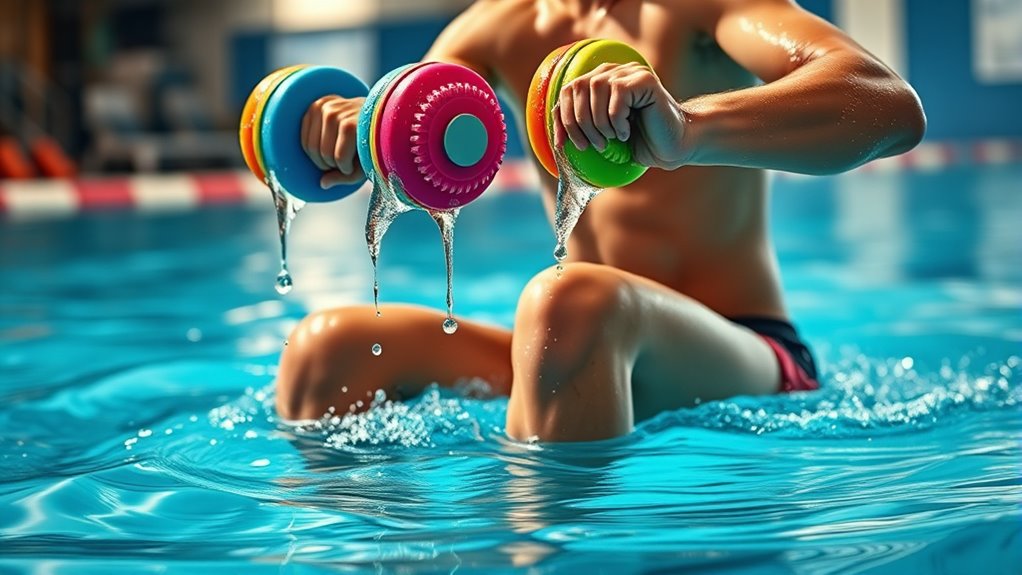
Incorporating water dumbbells into full-body routines helps you engage multiple muscle groups simultaneously, maximizing workout efficiency. These exercises also improve flexibility and range of motion while reducing joint stress. Plus, combining resistance and movement boosts calorie burn, making your sessions more effective. Additionally, using Dog names can add a fun and motivating element to your workout routines, especially if you prefer to personalize your exercise sessions.
Total Body Engagement
Water dumbbells activate multiple muscle groups simultaneously, making full-body routines highly effective. You engage your arms, shoulders, back, core, and legs all at once, thanks to resistance in every direction. The water’s dynamic resistance challenges muscles differently than traditional weights, especially targeting your triceps, abs, and back. When submerged, your body feels like it’s surrounded by weights, boosting overall strength. This full engagement recruits stabilizer muscles often neglected on land and enhances coordination. Incorporating water dumbbells into routines combines cardiovascular effort with strength, maximizing calorie burn. Use the following chart to visualize muscle groups involved:
| Muscle Group | Exercise Examples | Benefits |
|---|---|---|
| Upper Body | Bicep curls, chest fly | Arm and chest toning |
| Core & Back | Plank, back rows | Improved posture & stability |
| Lower Body | Leg lifts, lunges | Balance and leg strength |
Additionally, utilizing cybersecurity principles such as data protection can be metaphorically applied to safeguarding your fitness routines by tracking progress and preventing injury.
Enhancing Flexibility and Range
By engaging in full-body routines with water dumbbells, you can effectively enhance your flexibility and range of motion. The buoyancy of water reduces joint weight by up to 90%, allowing safer, deeper stretches with less strain. This environment promotes improved movement in stiff areas like hips, shoulders, and the lower back. Incorporating stretching before and after resistance exercises helps prevent muscle shortening and maintains joint mobility. Warm water boosts blood flow and relaxes muscles, further enhancing flexibility. Water dumbbells create resistance that challenges muscles during lengthening movements, encouraging controlled, full-range motions. They also target stabilizer muscles, improving balance and joint stability. Combining dynamic resistance with stretching in water promotes elongation and better muscle elasticity, supporting overall flexibility and range of motion. Research shows that practicing these exercises regularly can lead to sustained improvements in joint health and mobility over time. Additionally, the cybersecurity vulnerabilities during outages highlight the importance of secure digital practices even in fitness technology applications.
Boosting Calorie Burn
Full-body routines with water dumbbells not only enhance strength and flexibility but also considerably boost calorie burn. Water resistance is about 12 times greater than air resistance, making your muscles work harder during each movement. Depending on workout intensity and your weight, you can burn between 400 to 800 calories per hour with water dumbbell exercises. Even a 30-minute session can burn roughly 200 to 500 calories. Incorporating high-speed movements, larger ranges of motion, and performing exercises in deeper water can further increase calorie expenditure. Using interval training with short bursts of intense effort followed by rest keeps your heart rate elevated. Continuous core engagement and minimizing rest periods also help maximize calorie burn, making water dumbbell routines an efficient way to torch calories while building muscle. Water resistance’s impact on calorie burn can be amplified by maintaining proper form and engaging multiple muscle groups simultaneously.
Tips for Safe and Effective Water Dumbbell Workouts
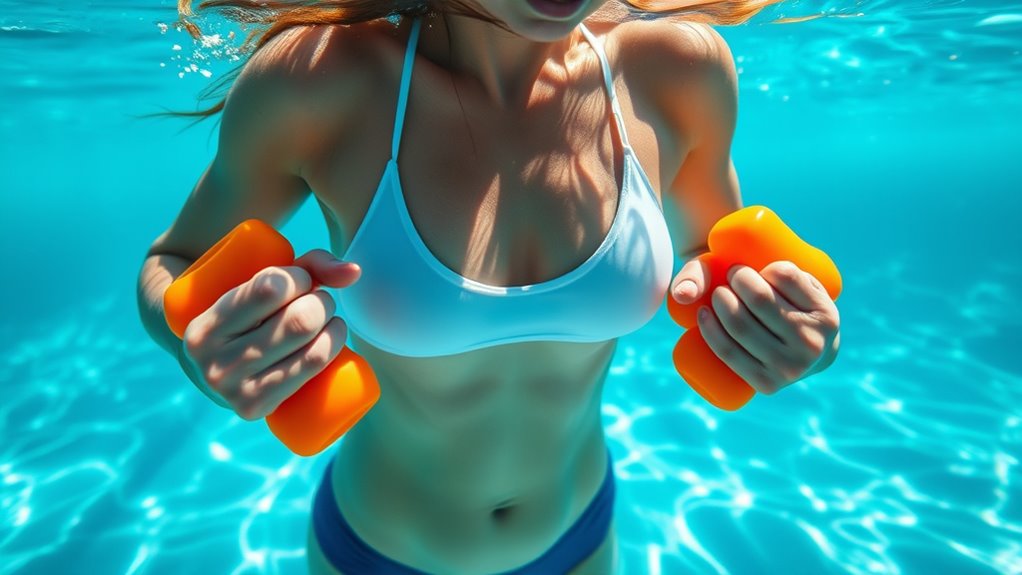
To guarantee your water dumbbell workouts are both safe and effective, it’s essential to select the right equipment and handle it properly. Use water-specific dumbbells made from foam or light plastic to prevent slipping and injury. Choose dumbbells designed to counteract water’s resistance and leverage buoyancy for muscle toning. Always maintain a secure grip, as wet conditions increase the risk of dropping them. Avoid metal or standard gym equipment not intended for water use, as they can be hazardous. Perform exercises in shallow water to reduce drowning risks and improve balance, especially when alone. Stay hydrated and avoid high water temperatures to prevent discomfort. Additionally, studies have shown that water resistance provides a low-impact alternative that can be just as effective as traditional strength training, making it suitable for individuals with joint issues or those recovering from injury. Paying attention to water temperature and safety precautions can further enhance your workout experience and prevent accidents.
Frequently Asked Questions
Can Water Dumbbells Help Improve Muscle Balance and Coordination?
Yes, water dumbbells can help improve your muscle balance and coordination. They challenge your stabilizing muscles, forcing you to engage different muscle groups and correct imbalances. Unilateral exercises promote cross-body coordination, while the resistance adapts to your movements, enhancing neuromuscular control. Regular use strengthens weaker muscles, reduces injury risk, and boosts overall coordination, making your movements more efficient and balanced both in water and on land.
How Often Should I Incorporate Water Dumbbell Exercises Into My Routine?
You should incorporate water dumbbell exercises at least 2 days a week to meet muscle strengthening guidelines. Aim for about 3 to 4 sessions weekly, spreading them out to allow recovery. Keep workouts between 40 and 60 minutes, including warm-up and cool-down. Consistency is key, so gradually increase intensity or repetitions over time. Don’t forget to listen to your body and include rest days to prevent overtraining and promote ideal gains.
Are Water Dumbbells Effective for Rehabilitation or Injury Recovery?
Yes, water dumbbells are effective for rehabilitation and injury recovery. They provide controlled resistance that helps rebuild muscle strength without putting excessive stress on joints or injured areas. You can safely progress your exercises by adjusting movement speed and resistance level. Their buoyancy reduces impact, making them ideal for easing pain and improving mobility. Incorporating water dumbbells into your rehab program supports safe, gradual recovery while enhancing strength and functional movement.
What Are the Best Water Dumbbell Exercises for Beginners?
You should start with simple water dumbbell exercises like chest flys, bicep curls, and triceps presses in chest-deep water. Focus on controlled movements and proper form, performing 12-20 reps per set. Keep your movements slow to build strength gradually and avoid injury. Incorporate these exercises 1 to 3 times a week, and listen to your body to prevent overexertion while enjoying the low-impact resistance.
How Do Water Dumbbells Compare to Traditional Weights for Muscle Growth?
Water dumbbells work well for muscle maintenance and moderate growth, but traditional weights typically deliver bigger, more consistent boosts for muscle building. With traditional weights, you can increase resistance gradually, pushing your muscles toward maximum potential. Water dumbbells provide variable, versatile resistance that activates stabilizer muscles and promotes endurance, but they usually don’t produce the rapid, robust results that heavier, static weights can achieve. For serious strength gains, traditional weights are your best bet.
Conclusion
Incorporating water dumbbells into your routine offers a invigorating way to build strength while reducing impact—think of it as your modern-day workout armor, much like the legendary armor of Achilles. Stay consistent, follow proper form, and listen to your body. With patience and dedication, you’ll see progress without risking your health. Plunge into these exercises confidently, and let water be your partner in achieving your fitness goals—no need for a magic wand, just water and effort!