To track calorie burn in the water, use swim-specific devices or apps that monitor strokes, distance, and effort. Make sure your device is calibrated with your weight and personal details for accuracy. You can also estimate calories burned by knowing the MET value of your chosen stroke and applying the formula: calories = MET × weight (kg) × time (hours). For better results, keep consistent tracking; understanding these methods helps you gauge your workout’s true intensity. Keep exploring to learn more effective ways to track your aquatic calorie burn.
Key Takeaways
- Use wearable swim trackers or waterproof fitness devices that estimate calorie burn based on stroke, duration, and effort.
- Record your swim sessions manually with apps like MySwimPro, noting stroke type, distance, and time for calorie calculations.
- Apply MET-based formulas, considering your weight, activity duration, and specific swimming stroke to estimate calories burned.
- Ensure device calibration with accurate personal data and select appropriate swim modes for better tracking accuracy.
- Maintain consistent tracking routines, log water conditions, and cross-reference device data with perceived exertion for reliable results.

Smart Watch for Men Women, Fitness Tracker Heart Rate Monitor, 1.85" Touch HD Smartwatch for Android iOS IP68 Swimming Waterproof for 100+ Sport Modes, Sleep Tracking, Step Pedometer Calories Tracker
100+ Sports Modes & IP68 Waterproof: The activity tracker supports 100+ sports modes, including Running, Walking, Hiking, Basketball,…
As an affiliate, we earn on qualifying purchases.
As an affiliate, we earn on qualifying purchases.
Understanding Factors That Influence Water-Based Calorie Expenditure
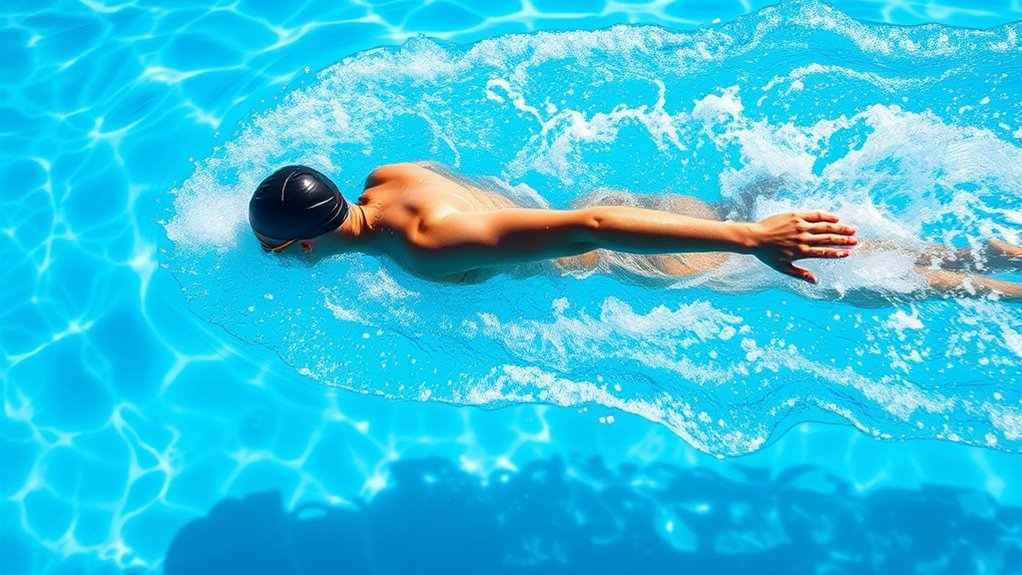
Understanding what influences water-based calorie expenditure helps you optimize your workouts. Water offers more resistance than air, meaning your muscles work harder, increasing energy use. Resistance can boost calorie burn by 1-2 kcal per minute, especially during vigorous exercises. Movements in water demand more muscular effort due to drag, so your body expends more energy. Depending on intensity, you can burn around 400-500 calories per hour in water. Your heart rate tends to stay lower during water workouts, but this doesn’t necessarily mean fewer calories burned—recovery is quicker, and buoyancy reduces weight-bearing stress. Factors like exercise intensity, movement complexity, water temperature, and your individual characteristics—such as weight, age, and fitness level—also influence calorie expenditure. Water’s resistance can vary based on its viscosity, which is affected by temperature, helping you better estimate and enhance your water workout results. Additionally, individual fitness levels can significantly impact how many calories you burn during water-based activities.

Parsonver Smart Watch, 5ATM Waterproof Watch for Swimming, Fitness Activity Tracker with 110+ Sports Modes, Heart Rate/Sleep/SpO2/Calories Monitor, Pedometer, Fitness Watch for Android & iPhone, Black
【5ATM WATERPROOF SWIMMING WATCH – THE PERFECT SWIM TRACKER AWAITS, FOR SWIMMING & DIVING】Dive into performance with the…
As an affiliate, we earn on qualifying purchases.
As an affiliate, we earn on qualifying purchases.
Selecting the Right Swimming Stroke for Accurate Tracking

Choosing the right swimming stroke is essential for accurate calorie tracking because different strokes engage muscles differently and vary in intensity. Butterfly burns the most calories, around 450 in 30 minutes, due to full-body movements involving arms, core, and legs. Breaststroke averages about 400 calories, offering a strong cardiovascular workout with lower impact on shoulders. Front crawl, or freestyle, burns roughly 300 calories in half an hour and allows sustained pace, making it efficient for longer sessions. Backstroke, burning between 250-350 calories, is less intense but promotes endurance and reduces strain on neck and back. Your stroke choice impacts calorie estimates, so selecting a stroke that matches your skill level and workout goals guarantees more accurate tracking. Consistent technique and effort are key to reliable results. Additionally, maintaining proper form ensures that you maximize calorie expenditure and minimize the risk of injury.

Calaytaly Smart Food Scale with Nutritional Calculator for Kitchen Tracks Calories, Fat, Carbs, Protein & Works with App for Healthy Eating Meal Prep, 50+ Foods & 23 Nutrients Built-in, TFT Display
Stop guessing, start knowing. Achieve your health and fitness goals with precise nutrition tracking. Our smart food scale…
As an affiliate, we earn on qualifying purchases.
As an affiliate, we earn on qualifying purchases.
Using MET Values and Formulas to Calculate Calories Burned
Calculating the calories you burn during water workouts relies on MET values, which quantify energy expenditure relative to resting. To estimate calories burned, multiply the MET value by your weight in kilograms and the duration in hours using the formula: Calories burned = MET × weight (kg) × duration (hours). Alternatively, for minute-by-minute estimates, use: Calories per minute = (MET × 3.5 × weight in kg) / 200. MET values vary depending on the swimming stroke or water activity, reflecting different energy intensities.
| Activity | MET Value | Calories Burned (70kg, 1hr) |
|---|---|---|
| Treading water | 9.8 | 686 kcal |
| Breaststroke | 5.3 | 371 kcal |
| Backstroke | 4.8 | 336 kcal |
| Freestyle | 8.3 | 581 kcal |
| Butterfly | 13.8 | 966 kcal |

Smart Watch Fitness Tracker with 24/7 Heart Rate, Blood Oxygen Blood Pressure Monitor Sleep Tracker 120 Sports Modes Activity Trackers Step Calorie Counter IP68 Waterproof for Andriod iPhone Women Men
【Superb Visual Experience & Effortless Operation】Diving into the latest 1.58'' ultra high resolution display technology, every interaction on…
As an affiliate, we earn on qualifying purchases.
As an affiliate, we earn on qualifying purchases.
Leveraging Tools and Apps for Precise Monitoring
Advances in wearable technology and mobile apps have made it easier to monitor your swimming workouts with greater accuracy. Devices from Garmin, Suunto, and Samsung include built-in swim tracking that detects strokes and estimates calories burned. Wear OS and Apple Watch support swim-specific apps, using accelerometers and heart rate sensors to provide detailed data during pool and open water swims. Syncing with platforms like Swim.com and MySwimPro allows you to analyze your progress over time. Dedicated apps such as Swim.com and MySwimPro automatically record your sessions, tracking distance, strokes, and calories. Many apps display calorie estimates based on swim duration, stroke, and intensity, giving you valuable insights. These apps often feature customizable training plans and goal tracking to help you stay motivated and improve your performance. Incorporating calorie tracking metrics from these tools can enhance your understanding of workout efficiency. While estimates aren’t perfect, regular use and syncing with fitness ecosystems improve tracking reliability.
Tips for Improving Accuracy and Consistency in Tracking

To improve the accuracy and consistency of your water calorie tracking, start by calibrating your device settings carefully. Enter your correct weight, height, and age to guarantee accurate estimates. Select the appropriate swimming stroke type in the device settings to match your workout, and update the firmware regularly for improved algorithms. Use swim-specific modes and set the correct pool length or open water mode for precise distance tracking. Wear the device snugly on your wrist, positioned higher near the forearm, and avoid bulky accessories or swimwear that interfere with sensors. Tracking every session consistently using the same device and settings, preferably at the same time each day, helps establish reliable data. Cross-reference data with manual logs and subjective effort levels to identify discrepancies and enhance your tracking reliability. Water conditions can also influence sensor performance, so be mindful of factors like water temperature and clarity that may impact readings. Additionally, consider the home environment to minimize external factors that could affect sensor accuracy.
Frequently Asked Questions
How Does Water Temperature Impact Calorie Burn During Swimming?
You’ll burn more calories swimming in colder water because your body works harder to maintain its core temperature. When water drops below 70°F, your metabolism speeds up by activating brown fat and increasing muscle contractions, boosting calorie burn by up to 35%. Just remember, colder water also shortens your swim time for safety. Wearing a wetsuit can help you stay longer and burn even more calories safely.
Can Swimming Technique Influence Calorie Expenditure Estimates?
Yes, your swimming technique considerably influences calorie expenditure estimates. When you use efficient strokes and proper body alignment, you reduce drag and energy waste, lowering calorie burn for the same effort. Conversely, poor technique increases resistance, making you work harder and burn more calories. By improving your mechanics—like stroke length and kick efficiency—you can optimize your energy use and get more accurate estimates of your calorie burn.
Do Pool Conditions Affect Calorie Calculations in Water Workouts?
Pool conditions can markedly affect your calorie calculations during water workouts. Choppy water, waves, or cold temperatures make your body work harder, boosting calorie burn more than in calm, warm pools. Conversely, warm, still water can lower your effort slightly. So, if you want accurate estimates, consider these conditions—they’re like hidden factors that can turn your calorie count into a wild rollercoaster ride!
How Does Individual Metabolism Affect Swimming Calorie Burn?
Your individual metabolism plays a key role in swimming calorie burn. If you have a higher resting metabolic rate, you’ll burn more calories during each session because your body demands more energy. Factors like muscle mass, body composition, and metabolic efficiency also influence how many calories you burn. So, even if you swim the same distance and intensity as someone else, your unique metabolic profile determines your total calorie expenditure.
Are There Specific Exercises to Increase Calorie Burn While Swimming?
You can increase calorie burn while swimming by incorporating high-intensity interval training (HIIT), switching between fast and slow laps to keep your heart rate elevated. Use equipment like fins, paddles, or kickboards to add resistance, making your muscles work harder. Mix different strokes, especially butterfly and freestyle, to engage various muscle groups. Underwater kicking and reducing rest periods also boost effort and calorie expenditure during your swim.
Conclusion
Tracking your calorie burn in the water isn’t just about numbers; it’s about discovering how your unique strokes and efforts sync with technology. As you immerse yourself in different strokes and explore tools, you might find yourself surprised by how much your body works underwater. Sometimes, the real reward isn’t just the calories burned but the connection you build with your movement. So, stay consistent, enjoy each swim, and let your progress unfold naturally—sometimes, the best moments are when things just align.