To maximize fat loss with swimming laps, focus on incorporating high-intensity interval training, such as sprints with rest periods, and vary your strokes to challenge different muscles. Aim for 4-5 sessions weekly, gradually increasing duration from 30 to 60 minutes as your endurance improves. Track your progress and adjust sets, rest, and intensity accordingly. Stay motivated by mixing up routines and setting goals—more tips ahead to keep your workouts effective and engaging.
Key Takeaways
- Incorporate high-intensity interval training (HIIT) with sprints and recovery laps to maximize fat burn during swim sessions.
- Vary strokes, durations, and intensities to prevent plateaus and keep workouts engaging and effective.
- Aim for 4-5 weekly swim sessions, gradually increasing from 15-20 to 30-45 minutes as endurance improves.
- Use structured interval sets, like Tabata or pyramid sprints, with optimized rest periods to boost calorie expenditure.
- Track your progress with swim apps or journals to stay motivated and adjust sets for continuous fat-loss gains.
Understanding the Calorie Burn of Swimming for Fat Loss
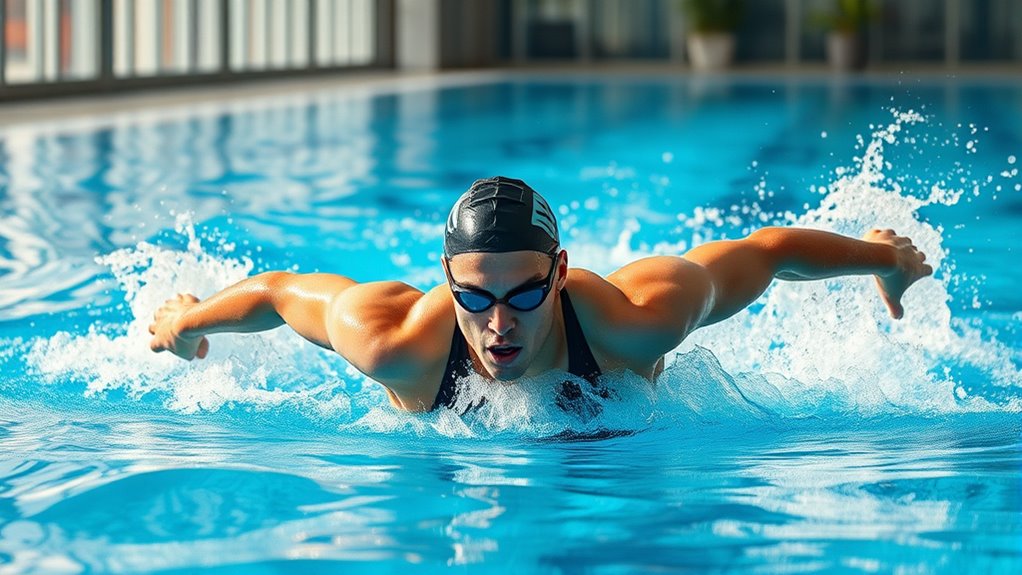
Understanding how many calories you burn while swimming is key to using it effectively for fat loss. A 155-pound person burns about 360 calories in 30 minutes of vigorous lap swimming, according to Harvard Health. Over an hour, calorie burn ranges from 423 to 715, depending on intensity. Different strokes burn varying amounts: front crawl (~976 cal/hr), backstroke (~500 cal/hr), breaststroke (~400 cal/hr), and freestyle (~540-750 cal/hr). Swimming fast can burn over 900 calories per hour for heavier individuals, similar to running. The more intense your swim, the more calories you burn. Water resistance and stroke effort substantially influence energy expenditure. Body weight and stroke efficiency also play crucial roles, making swimming a highly effective calorie-burning exercise for fat loss. Consistent effort and proper technique can further maximize calorie burn during your swim sessions.
Optimal Frequency and Duration for Swimming Workouts

To maximize fat loss through swimming, finding the right balance of workout frequency and duration is key. Beginners should aim for four sessions weekly to build endurance and skill gradually, with consistency of 4-5 sessions being ideal for sustained fat loss. Adjust the frequency based on your fitness goals and recovery needs, ensuring you include rest days to avoid burnout and injury. Shorter, more frequent sessions are better for maintaining form and reducing fatigue than infrequent long swims. Start with 15-20 minutes per session, gradually increasing to 30-45 minutes as your conditioning improves. Moderate effort sessions of 30-45 minutes are effective, while higher-intensity workouts of 20-30 minutes can boost calorie burn. Balance duration and intensity to optimize fat oxidation and overall cardiovascular benefits. Studies show that consistent swimming routines not only promote weight loss but also improve flexibility and cardiovascular health, making it a comprehensive exercise choice. Additionally, training consistency plays a crucial role in achieving long-term fat loss and fitness goals.
Incorporating Interval Training to Maximize Fat Burn

To boost fat burn, you should incorporate high-intensity sprint techniques into your swim sessions, pushing yourself during short, all-out efforts. Equally important is optimizing your rest periods, allowing just enough recovery to maintain intensity without losing momentum. Balancing effort and rest keeps your heart rate elevated and maximizes calorie burn during and after your workout.
High-Intensity Sprint Techniques
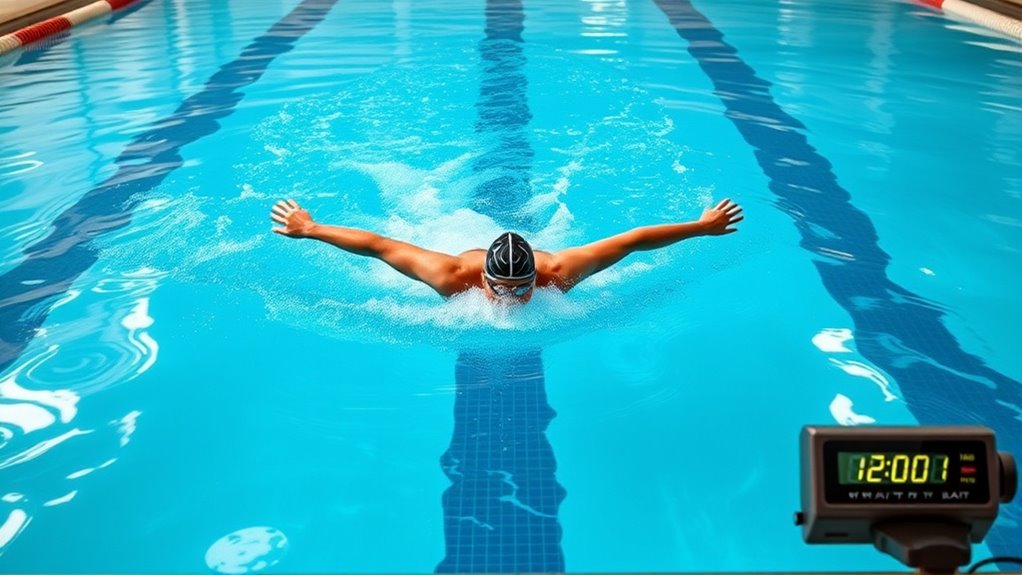
Ever wondered how to maximize fat burn during your swim workouts? High-Intensity Sprint Techniques are your answer. By swimming maximum effort distances—like 25m or 50m sprints—you push your body into an anaerobic state, boosting fat metabolism. Use work-to-rest ratios such as 20-30 seconds sprint followed by 30-60 seconds easy swimming or floating. Incorporate Tabata-style intervals—20 seconds of all-out effort, 10 seconds rest, repeated eight times—to amplify calorie burn and post-exercise fat oxidation. Distance pyramid intervals, gradually increasing sprint length while keeping rest consistent, improve endurance and maximize HIIT benefits. Maintaining near-maximal effort, optimizing stroke technique, and using tools like kickboards can elevate your sprint intensity, ensuring you burn more fat in less time with every workout. Water resistance (~12x denser than air) engages core muscles during movement, burning 360-532 calories/hour at moderate to vigorous effort for a 155-pound individual. Additionally, incorporating training variability prevents plateaus and keeps your body adapting for continued fat loss.
Rest Period Optimization
Optimizing rest periods between high-intensity swim intervals is essential for maximizing fat burn. Passive recovery of about 3 minutes allows you to sustain higher intensity during subsequent sets, boosting calorie expenditure and fat oxidation. Shorter rests of 1–2 minutes challenge your cardiovascular system more but can lower work intensity, possibly reducing overall energy burn. Adjust rest durations based on your fitness level and goals: longer rests support maximal effort, while shorter rests increase metabolic stress. Proper rest guarantees you recover adequately, enabling consistent high-quality efforts that enhance fat-loss results. Incorporate structured intervals, like 6–10 sets of 30-second all-out sprints with 3-minute passive rests, and progressively increase volume over time. This approach maximizes fat burn while maintaining safety and effectiveness. Research shows that effective rest periods can significantly influence overall calorie expenditure and improve swimming performance. Additionally, understanding your rest period needs can help tailor your training for specific fat-loss outcomes.
Progression Strategies for Swimming Sets

Progression strategies for swimming sets focus on systematically increasing training demands to boost endurance, strength, and fat-burning potential. To do this effectively, you should gradually ramp up volume and intensity, shifting from steady swims to interval training with alternating effort levels. Incorporate varied strokes over time to engage different muscle groups and avoid plateaus. As you progress, lengthen your session duration from around 30 to 50-60 minutes and increase weekly frequency from 3 to 4-5 swims. Additionally, reduce rest intervals to boost workout intensity. Research shows that consistent progression in training load enhances fat loss and muscular adaptation, leading to more effective and sustainable results over time. To optimize your progress, consider tracking your training volume and making incremental adjustments based on your performance and recovery.
Designing a Balanced Weekly Swimming Routine
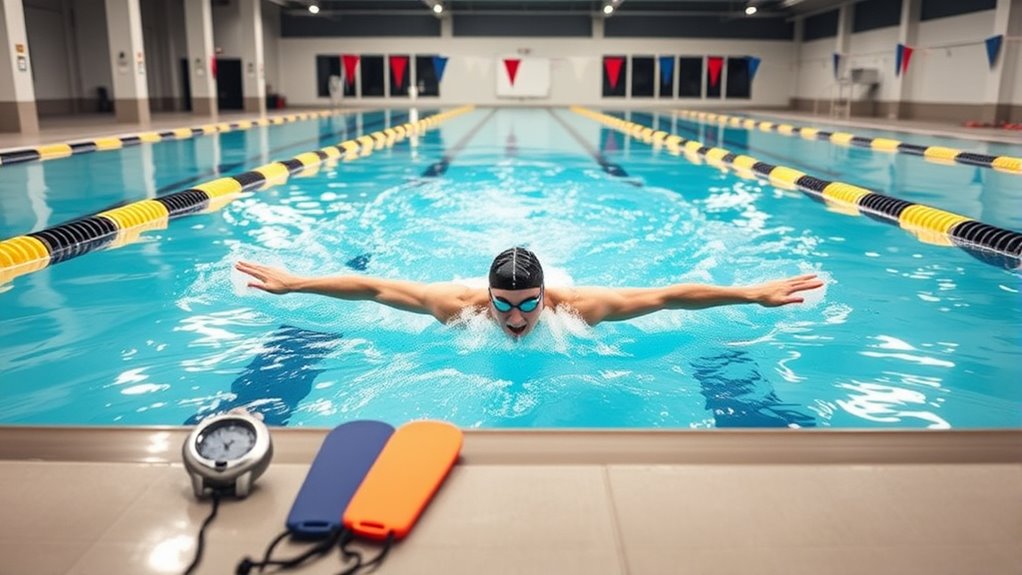
To create an effective weekly swimming routine, you need to balance session frequency, duration, and intensity. Aim for 3-4 sessions per week, gradually increasing time and effort to prevent burnout. Adjust your plan based on your schedule and progress to keep fat loss steady and sustainable. Consistent training is key to achieving long-term results and maintaining motivation. Incorporating exercise variety can also help prevent plateaus and keep your workouts engaging.
Weekly Session Structure
Creating a balanced weekly swimming routine is essential for effective fat loss and overall fitness. To optimize results, aim for 4 to 5 sessions weekly—mixing endurance and high-intensity workouts. Spread out intense sessions to prevent overtraining and allow recovery. Incorporate rest or active recovery days to help muscles repair and adapt. Regular swimming, such as 4 times weekly, can accelerate weight loss, e.g., 1-2 kg per month with intense workouts 1. This structure ensures you stay motivated and avoid injury, setting a solid foundation for reaching your fat loss goals efficiently. Additionally, adjusting your training intensity and incorporating varied strokes can maximize calorie burn and improve overall conditioning.
Intensity and Duration Balance
Balancing intensity and duration is essential when designing an effective weekly swimming routine for fat loss. You need to combine moderate efforts with high-intensity intervals to optimize calorie burn and recovery. Start with 30-minute sessions, gradually increasing to 45-60 minutes as your endurance improves, without always pushing maximum effort. Incorporate high-intensity interval training (HIIT) with sprints and recovery laps to boost calorie expenditure in less time. Vary stroke types, intensities, and durations to prevent plateaus. Use the table below to structure your week effectively: Regular variation prevents boredom and promotes continuous progress. Additionally, utilizing AI-driven insights can help tailor your training plan based on your progress and goals.
Combining Swimming With Dietary Approaches for Better Results
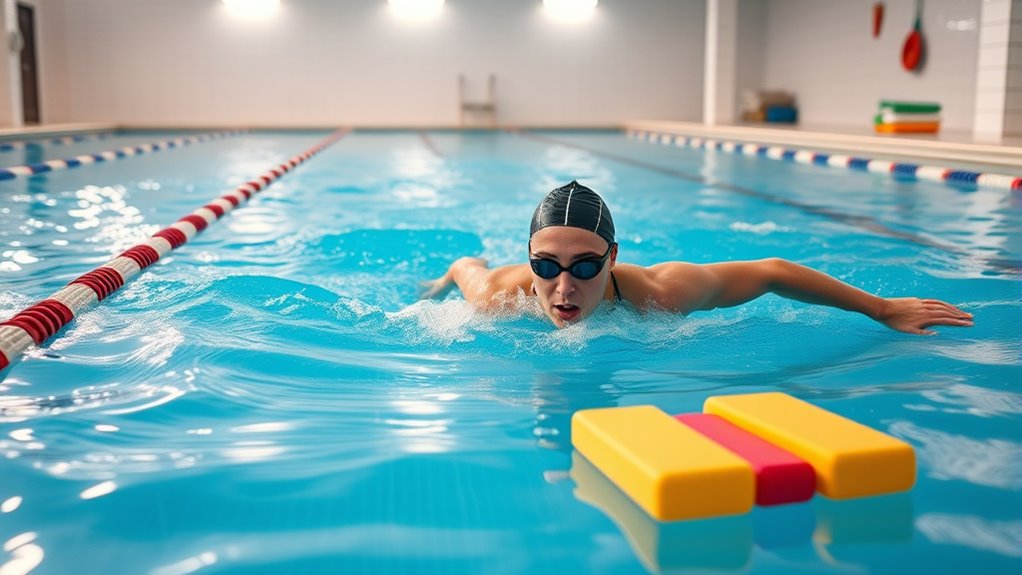
Combining swimming with dietary strategies can substantially enhance fat loss results. When you pair regular swimming with proper nutrition, you improve your metabolic health and accelerate fat reduction. For example, incorporating intermittent fasting alongside swimming can lower blood glucose and insulin levels, supporting better fat utilization. You also benefit from body composition improvements, such as reduced waist circumference and increased muscle mass, even without significant weight change. To maximize results, focus on:
- Creating a calorie deficit through mindful eating and consistent swimming sessions
- Burning around 360 calories in 30 minutes of vigorous lap swimming
- Adjusting your diet to support your swimming intensity and duration
- Proper nutrition plays a crucial role in fueling your workouts and aiding recovery, which further supports fat loss efforts. Additionally, maintaining hydration is essential for optimal performance and recovery during your training.
Targeting Different Muscle Groups With Stroke Variety
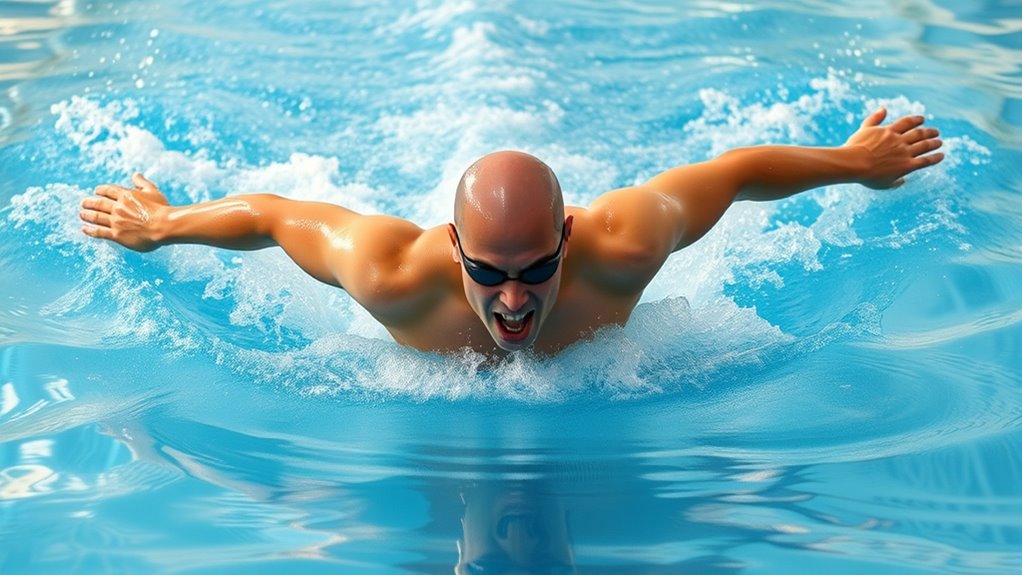
Varying your swimming strokes effectively targets different muscle groups, enhancing overall strength and fat loss. Each stroke emphasizes specific areas: freestyle works shoulders, arms, core, and legs for balanced development; backstroke engages chest, shoulders, arms, and especially glutes and thighs; breaststroke heavily involves quadriceps, hamstrings, glutes, and inner thighs through the whip kick; butterfly demands full-body coordination, activating abs, hips, shoulders, arms, and back muscles intensely. Using a mix of strokes ensures you work all major muscle groups, preventing plateaus and promoting uniform muscle tone. This variety maximizes calorie burn and boosts muscle engagement, which accelerates fat loss. Incorporating different strokes into your routine keeps workouts interesting and challenging, helping you build strength and endurance across your entire body.
Tracking Progress and Adjusting Intensity
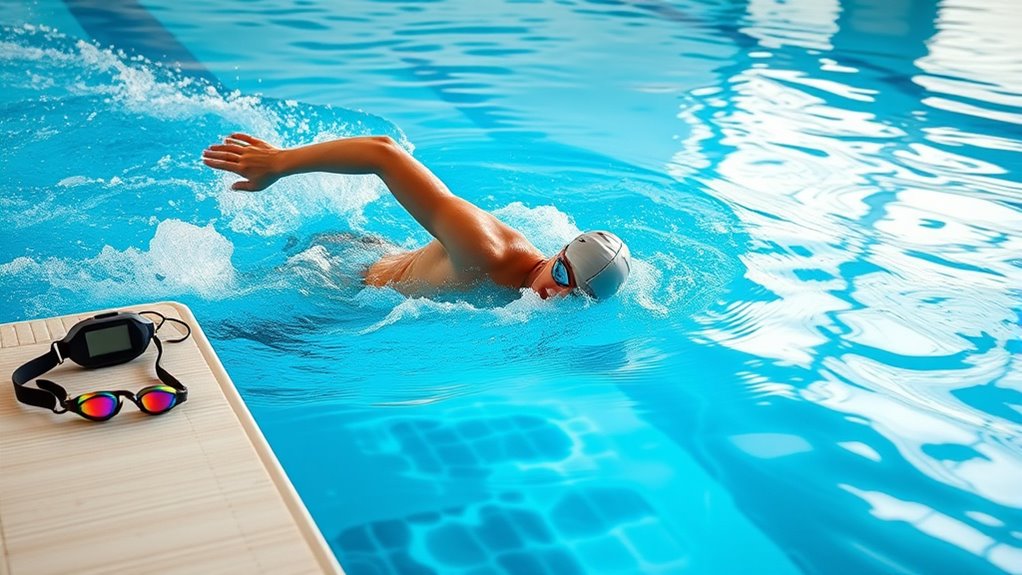
Tracking your swimming progress is essential for effective fat loss, as it helps you stay motivated and identify areas for improvement. By monitoring key metrics, you guarantee your workouts stay challenging and productive. To do this, you can:
Monitoring your swim progress keeps you motivated and ensures effective fat loss.
- Use swim-specific apps or wearables to log distance, pace, stroke count, and SWOLF scores.
- Sync devices like smart goggles or smartwatches for real-time data and instant feedback.
- Manually record sets, rest times, and intervals in a swim journal for offline analysis.
- Many apps also offer goal-setting features that help you stay focused and track your achievements over time enhancing motivation.
Establishing a consistent tracking routine enhances your understanding of training intensity, leading to more tailored and effective workouts.
Focus on total distance, average pace, and stroke rate to gauge progress. Adjust your intensity by increasing set durations, shortening rest, or incorporating interval training. Regular review of your logs keeps your fat loss journey on track.
Benefits of Cross-Training and Rest Days
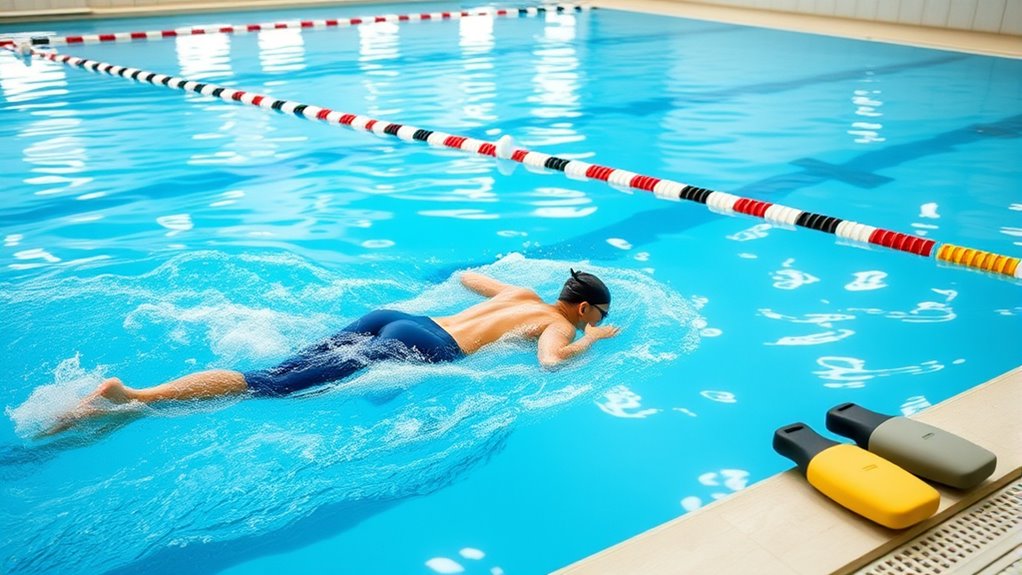
Incorporating cross-training and rest days helps you recover faster and reduces the risk of injuries from repetitive movements. By mixing different exercises, you strengthen various muscle groups and improve your overall fitness. Taking scheduled breaks guarantees your body heals, preventing burnout and supporting consistent progress. Research shows that combining different workout modalities can enhance overall health outcomes and promote sustained weight loss. Additionally, incorporating glycolic acid into your skincare routine can improve your skin’s appearance, complementing your fitness efforts by helping you achieve a healthier glow.
Enhances Recovery and Prevents Injury
Swimming offers a low-impact way to enhance recovery and prevent injuries, especially when combined with other forms of cross-training. This environment reduces stress on your joints, muscles, and ligaments, thanks to buoyancy that counters gravity. It allows you to keep moving during recovery without risking further injury. Cross-training redistributes mechanical load across different muscle groups, preventing overuse injuries common in high-impact sports. Additionally, swimming accelerates lactate clearance, helping muscles recover faster and delaying fatigue. You benefit from:
- Reduced joint and muscle stress
- Faster lactate removal for quicker recovery
- Balanced muscle engagement to prevent imbalances
- Improved circulation, which supports nutrient delivery to tissues and promotes healing. Incorporating swimming into your routine supports injury prevention while maintaining fitness, making it a smart choice during recovery phases. Engaging in active recovery through swimming can also help boost mental well-being and motivation during your training cycle.
Boosts Overall Fitness Progress
Boosting your overall fitness progress is greatly enhanced through cross-training and strategic rest days. Swimming offers a low-impact, full-body cardiovascular workout that boosts heart and lung function while improving VO2 max and endurance. It challenges your cardiovascular system differently by engaging multiple muscle groups simultaneously and helps delay fatigue. Swimming also promotes balanced muscle development, strengthening arms, shoulders, back, legs, and core, which complements other training routines. Incorporating swimming breaks monotony, reducing mental fatigue, and supporting recovery, especially during active rest days. This variety enhances motivation and training consistency. Additionally, swimming improves aerobic endurance, respiratory strength, and delays fatigue. Its low-impact nature reduces injury risk and supports long-term fitness, making it an effective tool for continuous progress and overall athletic longevity. Water resistance provides a sufficient stimulus to strengthen muscles across the body, which further contributes to overall physical resilience and performance. Deep-sky imaging techniques can inspire similar patience and precision in maintaining a diverse and balanced training routine.
Maintaining Motivation and Consistency in Your Swimming Journey
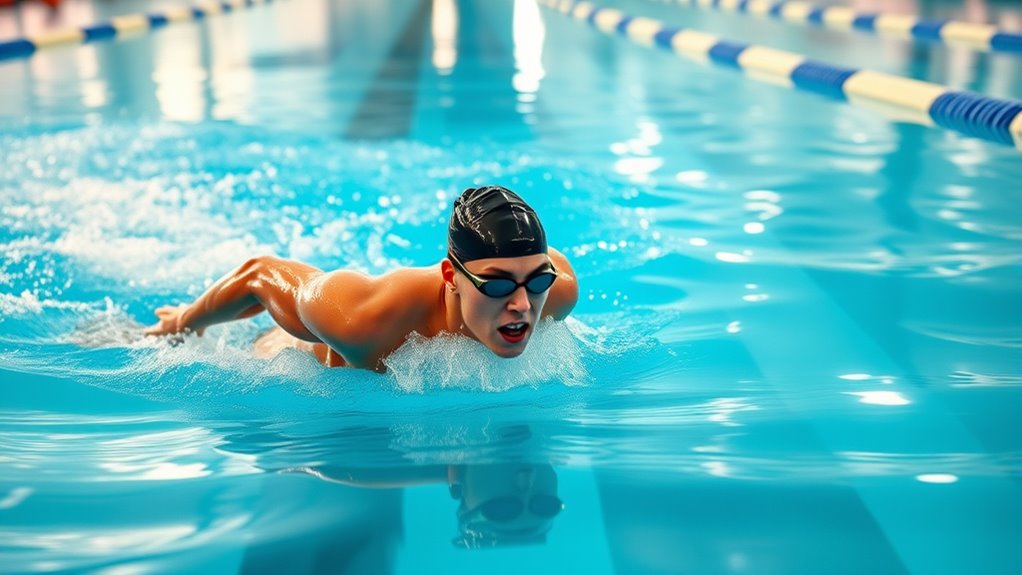
Staying motivated and consistent in your swimming journey requires more than just setting goals; it involves cultivating the right mindset, building strong relationships, and finding enjoyment in the process. To keep going, focus on:
- Engaging with your coach and peers to foster a positive, supportive environment that boosts motivation.
- Tracking your progress with lap times and distances to see tangible improvements and stay inspired.
- Setting clear, challenging goals and adjusting them as you advance to maintain interest and prevent plateaus.
- Incorporating technological tools, such as mobile-assisted swimming applications, can also help in reducing psychological barriers like water fear, making it easier to stay motivated and confident in the water.
- Remember that eye patch benefits like hydration and anti-aging effects can serve as a reminder that taking care of your body, including your skin, is essential for overall well-being and sustained activity.
Intrinsic motivation, driven by enjoyment and personal growth, is more sustainable than external rewards. Incorporate variety into your workouts and join community events to stay energized, accountable, and committed over the long haul.
Frequently Asked Questions
How Can I Prevent Boredom During My Swimming Workouts?
You can prevent boredom by mixing up your swimming routines with different strokes, techniques, and equipment. Incorporate interval training and vary your intensity levels to keep things exciting. Change your environment, like swimming in different pools or open water, and set clear goals to stay motivated. Adding variety not only challenges your body but also keeps your mind engaged, making your workouts more enjoyable and effective.
What Are the Best Swimming Strokes for Fat Loss?
The best swimming strokes for fat loss are butterfly and freestyle. Butterfly burns the most calories per hour, engaging your entire body with high intensity, making it excellent for rapid fat burning. Freestyle is efficient, easier to learn, and allows you to swim longer, boosting calorie burn over time. Incorporate both into your routine for maximum fat loss, combining their strengths for a challenging, effective workout.
How Do I Know When to Increase Intensity or Distance?
You should increase intensity or distance when you notice signs of adaptation, like completing sets with less effort, faster recovery, or improved technique. If your resting heart rate stays steady or drops, and you’re hitting personal bests regularly, it’s time to push further. Make gradual increases, no more than 10% weekly, and only add higher intensity once you’ve mastered your current pace to avoid injury and overtraining.
Can Swimming Help Target Stubborn Fat Areas?
Swimming alone isn’t a magic wand for stubborn fat; it’s more like watering a garden—systemic effort is key. While you engage your entire body, targeted fat loss in specific areas isn’t realistic because fat loss happens all over, not just where you work out. Consistent swimming boosts overall metabolism and muscle tone, but to shed those stubborn spots, combine it with a balanced diet and total-body conditioning.
What’s the Ideal Hydration Strategy During Swimming Sessions?
During your swim, it’s best to hydrate with water or electrolyte drinks, especially if you’re swimming longer than 60 minutes. Sip fluids as needed, focusing on electrolyte-rich options to maintain muscle function and prevent cramps. For sessions over 90 minutes, add carbohydrates to your hydration to sustain energy. Remember, individual responses vary, so listen to your body and hydrate consistently to optimize performance and recovery.
Conclusion
By blending bold bouts of swimming with smart strategies, you’ll stay motivated, maximize fat loss, and master your movement. Keep consistent with your cadence, challenge your chest, arms, and abs with variety, and rest regularly to recharge. Remember, progress is powerful when paired with patience and persistence. So leap in daily, push your pace, and practice persistence—because your passion and perseverance will propel your progress and produce powerful, permanent results.