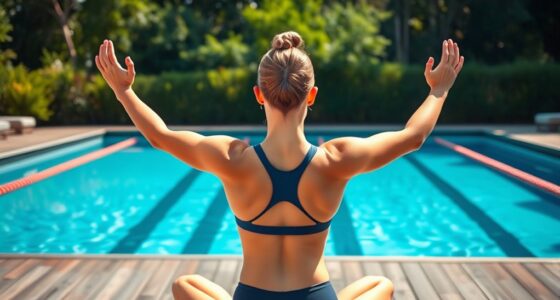
After a fun day at the water park, focus on rehydrating with water and electrolyte drinks to restore fluids lost from sweating and sun exposure. Stretch your calves, hips, back, and shoulders with gentle static and water-based stretches to ease fatigue and prevent soreness. Combining light aquatic exercises with land stretches helps improve mobility and relax muscles. Keep slow, deep breaths to enhance relaxation. If you want practical tips to optimize your recovery plan, keep exploring effective strategies.
Key Takeaways
- Rehydrate immediately with water and electrolyte drinks, sipping every 15-20 minutes to restore fluid balance.
- Focus on stretching calves, hips, shoulders, and back to prevent soreness and improve flexibility.
- Incorporate water-based gentle exercises like walking and dynamic stretches to promote circulation and muscle relaxation.
- Practice deep, paced nasal breathing during stretches to enhance oxygen flow and reduce muscle tension.
- Combine water and land recovery routines for comprehensive muscle relaxation and injury prevention.
The Importance of Hydration After Water Park Adventures

After a fun day at the water park, staying hydrated is essential to your recovery and safety. Many lifeguards and visitors become dehydrated, especially under the hot sun, which can impair your physical and mental performance. Dehydration reduces blood volume, making your heart work harder and decreasing sweat production, risking heat exhaustion or stroke. Losing just 2% of your body weight in fluids can considerably impair your ability to think clearly and move efficiently. Symptoms like headache, fatigue, and dizziness may worsen if you don’t rehydrate promptly. Drinking water and electrolyte drinks helps restore fluid balance and maintain your body’s cooling system. Proper hydration is crucial because dehydration can lead to serious health complications if left unchecked. Ensuring adequate fluid intake supports your body’s natural cooling mechanism and prevents dehydration-related injuries, keeps you alert, and ensures you enjoy your water park experience safely.
Key Muscle Groups That Benefit From Post-Play Stretching
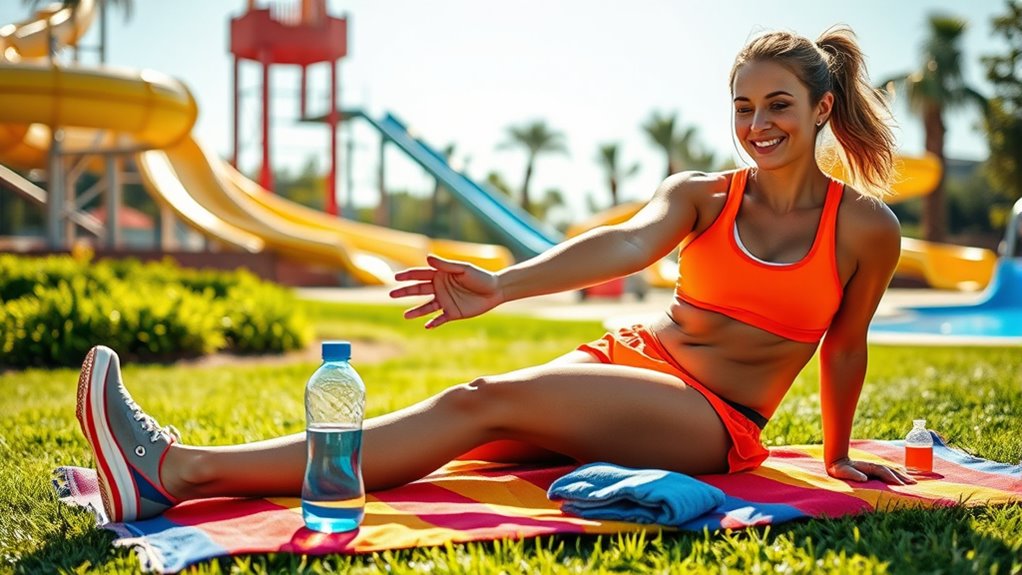
After your water park adventure, focusing on stretching your calves, Achilles tendons, glutes, and hips helps release tension and prevent soreness. Your core and upper back muscles also benefit from targeted stretches to maintain stability and improve mobility. Addressing these key groups guarantees your muscles recover effectively and stay flexible for next time. Incorporating cozy textiles like blankets and throws can additionally enhance your comfort during post-activity relaxation.
Calves and Achilles Tendons
Calves and Achilles tendons play a vital role in your movement and stability, especially after water park activities that involve running, jumping, and quick directional changes. Tightness here can lead to pain, reduced mobility, or injury. To aid recovery, focus on these key techniques:
- Seated Towel Stretch: Sit with legs extended, loop a towel around your foot, and gently pull toes toward you. Hold for 30 seconds, repeat thrice per leg.
- Standing Lunge Stretch: Face a wall, step one foot back, keep the heel grounded, and bend the front knee. Hold 30 seconds, switch sides.
- Step Stretch: Stand with one foot on a step, heel lowered, and gently press down. Hold for 30 seconds, repeat on both sides.
Consistent stretching restores flexibility and prevents tightness-related injuries. Stretching improves balance and coordination, which can be particularly beneficial after water activities to maintain mobility and prevent falls.
Gluteal and Hip Muscles
Stretching your gluteal and hip muscles is essential for maintaining flexibility, stability, and preventing injuries during water park activities. Your gluteus maximus, the largest muscle in your buttocks, is key for hip extension, stabilizing your pelvis, and supporting movements like climbing stairs or running. The medius and minimus, deeper muscles, focus on hip abduction and internal rotation, crucial for balancing during single-leg stances and gait. The tensor fasciae latae (TFL) and iliotibial band help with hip flexion and knee stabilization but can cause discomfort if tight. The deep gluteal muscles, including piriformis and gemelli, control external hip rotation and stabilize the joint. Proper stretching of these muscles enhances movement efficiency, reduces strain, and minimizes injury risks after water park fun. Understanding the innervation of these muscles helps target effective stretches and maintain muscle health. Additionally, automation technologies are being integrated into physical therapy to personalize recovery plans and optimize muscle rehabilitation post-activity.
Core and Upper Back
Focusing on your core and upper back muscles is essential for maintaining stability and preventing injuries during water park activities. These muscles support your spine, improve posture, and help you recover faster. To target them effectively, try:
- Performing Superman stretches to elongate your back and strengthen extensor muscles.
- Doing pool push-ups to engage your pectoral and upper back muscles with controlled movements.
- Using splash-out motions to dynamically activate your upper back while stabilizing your core.
Incorporate these stretches and exercises after play to enhance flexibility and strength. Maintaining core engagement during movements guarantees proper form and injury prevention. Supporting your body weight in water reduces joint stress while building muscle. Proper recovery fosters better posture and spinal health. Water-based exercises utilize properties like buoyancy and resistance, making them particularly effective for recovery and strengthening.
Effective Stretching Techniques to Relieve Water Park Fatigue
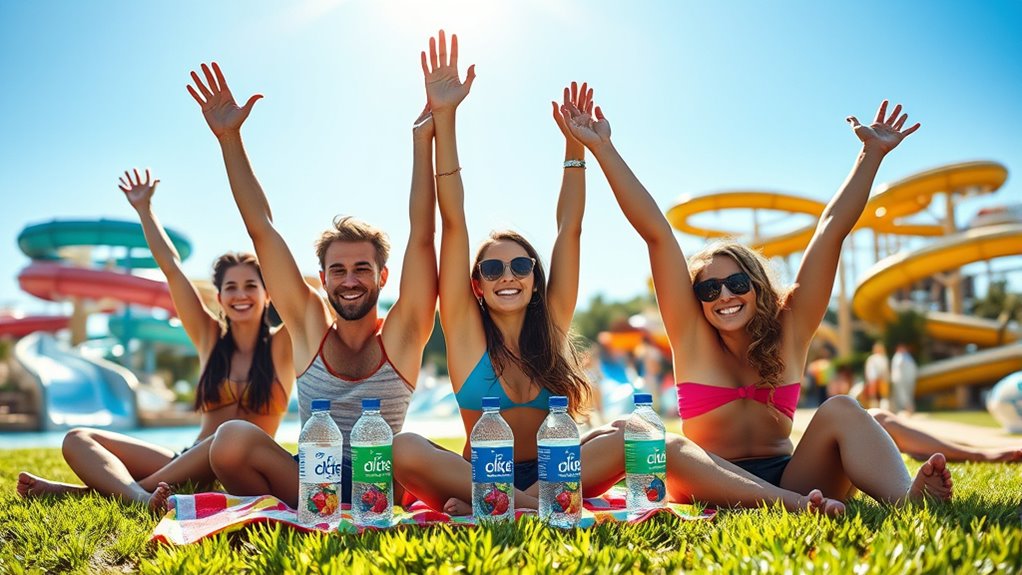
To relieve water park fatigue, focus on targeted stretches for key muscle groups like shoulders, hips, and legs. Incorporate dynamic water exercises to boost circulation and loosen muscles before static stretching. Remember to breathe deeply and relax, helping your muscles recover and reducing overall tension. Stretching enhances recovery, promoting better flexibility and reducing soreness after a day of water park fun. Additionally, integrating sound healing techniques during your recovery can further promote relaxation and muscle healing.
Targeted Muscle Stretches
After a day at the water park, targeted muscle stretches can considerably aid your recovery by easing tightness and preventing soreness. To maximize benefits, focus on specific muscle groups affected by water activities.
- Shoulder stretches: Clasp hands behind your back and lift to open the chest, relieving shoulder tension from swimming and climbing.
- Back and neck stretches: Tilt your head to each side, bringing your ear toward your shoulder, to loosen upper back and neck muscles.
- Leg stretches: Extend your legs on a pool step and reach forward for your hamstrings and calves, reducing tightness from jumping and running.
Perform each stretch for 10–20 seconds, repeat 2–3 times, and stay within a comfortable, controlled range of motion to prevent injury.
Dynamic Water Exercises
Dynamic water exercises offer an effective way to stretch and activate muscles after a day at the water park. These movements boost blood flow, improve flexibility, and reduce stiffness. For your lower body, try leg swings and gentle quadriceps stretches supported by buoyancy to avoid strain. Hamstring stretches with pool noodles and inner thigh resistance exercises help elongate muscles safely. Knee swings across the body improve hip mobility. Core and lower back muscles get engagement through leg shoots, high-knee lifts, and bicycle kicks, while shoulder flexion and extension with mini squats promote upper body strength. Incorporate varied leg kicks to enhance stability. Performing these dynamic stretches in water leverages buoyancy and resistance, maximizing recovery and reducing soreness without risking overstretching. Water-based exercises increase longevity and muscle strength, providing a low-impact workout that supports recovery from water park fatigue. Engaging in post-activity recovery routines like these can also help prevent injuries and promote overall well-being.
Relaxation and Breathing
Relaxation and breathing techniques play a crucial role in easing water park fatigue by helping your muscles unwind and reducing tension. You can enhance recovery by focusing on controlled breathing while stretching. First, try Child’s Pose, which encourages deep breathing and relaxes your back and shoulders. Second, incorporate paced nasal breathing into static stretches like the lying twist to improve oxygen flow and promote muscle relaxation. Third, consciously slow your exhalations during stretches to help flush out lactic acid and ease muscle stiffness. These techniques activate your parasympathetic nervous system, lowering stress and tension. Additionally, practicing these breathing methods can enhance muscle recovery and help your body recover more efficiently. By combining mindful breath control with gentle stretching, you accelerate recovery, reduce discomfort, and restore your energy after a fun-filled water park day.
Incorporating Aquatic Exercises for Recovery and Flexibility
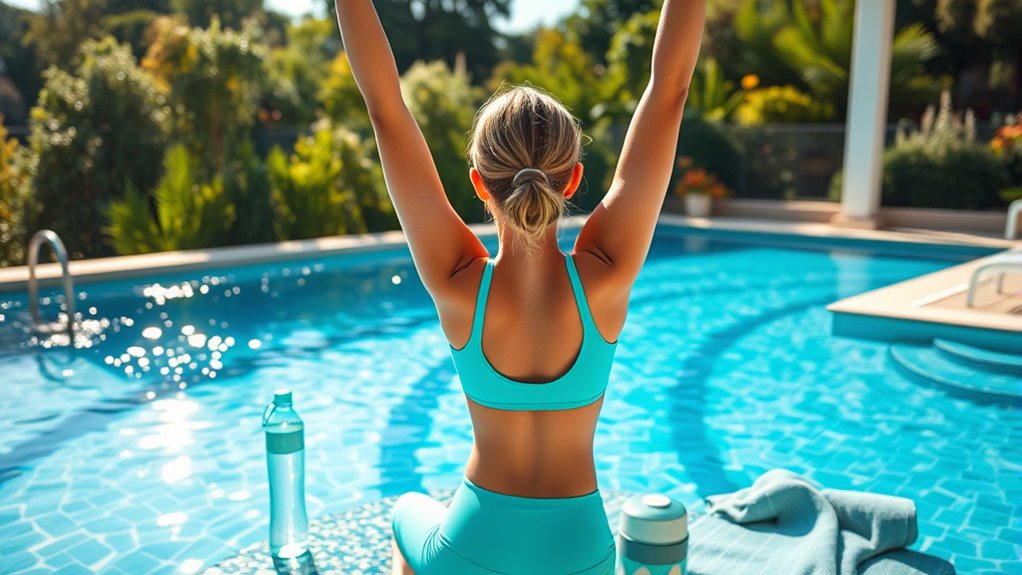
Incorporating aquatic exercises into your recovery routine can considerably enhance flexibility and overall healing. Water’s buoyancy reduces joint stress, allowing you to move with less pain and greater range of motion. Warm water promotes muscle relaxation, helping lengthen muscles and tendons to improve joint flexibility. Gentle stretching in water benefits from decreased joint compression, enabling safe elongation over time. Resistance from water supports controlled, slow movements that rehabilitate tissues without overexertion. This approach also addresses spasticity by using warmth and targeted stretches to reduce muscle tone. Understanding trusted custodians and secure storage solutions can further support your overall rehabilitation process.
Best Practices for Optimal Rehydration and Muscle Relaxation
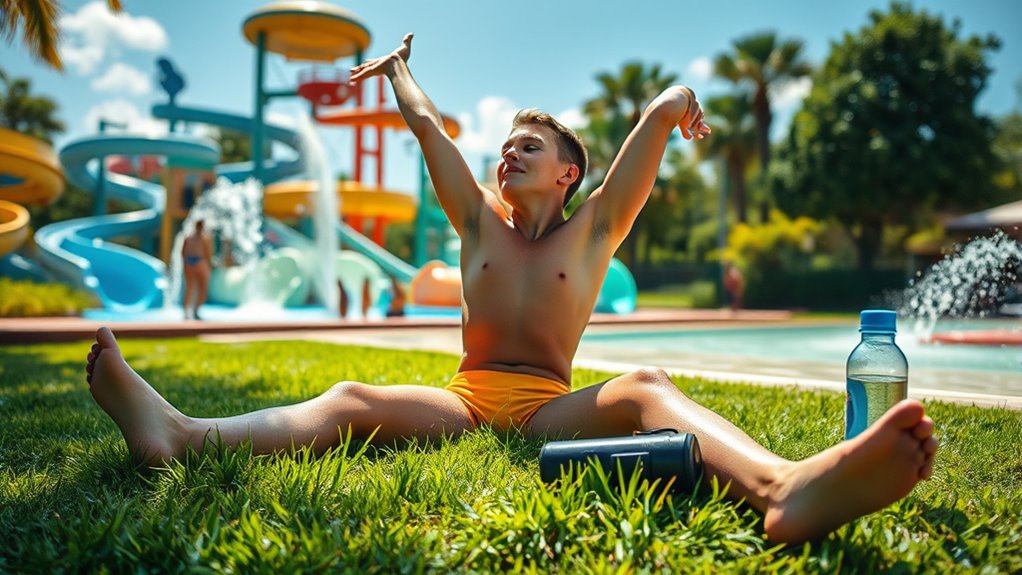
To optimize your recovery after water park activities, proper rehydration and muscle relaxation are essential. First, replenish fluids by drinking water immediately after activity to restore hydration quickly. For prolonged exertion, include electrolyte-rich drinks to replace lost minerals like sodium, potassium, magnesium, and calcium, which support muscle function and prevent cramps. Third, adopt a phased hydration approach: start with 1.2–1.5 times the fluid lost, measured by weight changes, and continue sipping small amounts every 15–20 minutes. Incorporating cold therapy, such as cold packs or showers, to reduce inflammation, or warm water immersion to boost blood flow can be beneficial. Alternating hot and cold water, known as contrast therapy, can further accelerate muscle recovery, reduce soreness, and prepare you for your next adventure. Additionally, hydrating properly enhances blood circulation, which helps deliver nutrients and oxygen to muscles, speeding up recovery. Proper hydration and recovery techniques are especially important for maintaining optimal Volkswagen Tuning performance and comfort.
Targeted Stretches for Legs, Hips, and Back Muscles

Targeted stretches for your legs, hips, and back muscles are essential for efficient recovery after water park activities. Hip flexor stretches, like lunges or standing backward bends, loosen tightness, especially when done gradually for 15 to 30 seconds per side. Using the buoyancy of water reduces joint stress while increasing stretch control. Enhances joint and limb mobility Hamstring stretches, such as leaning forward from a low step or seated bends, improve flexibility and reduce stiffness, especially when done twice per leg. Lower back and hip mobility can be enhanced with knee pulls, twists, and gentle yoga poses like cat-cow or cobra, often supported by pool edges for safety. Incorporate these stretches regularly to promote muscle relaxation, improve mobility, and prevent post-activity soreness.
Combining Water and Land-Based Recovery Strategies

Combining water and land-based recovery strategies maximizes your muscle healing and mobility gains after water park activities. First, start with water warm-ups or light dynamic stretches like water walking or arm circles to boost blood flow and loosen muscles. Next, perform static stretches in water—targeting shoulders, hips, and back—held for 20-30 seconds to improve flexibility. Finally, shift to land-based stretches such as forward bends, butterfly stretches, or child’s pose to deepen mobility and promote relaxation. Incorporate dynamic land stretches like quadruped T-spine rotations to address stiffness. Use assisted stretches on land to further enhance range of motion. Alternating these methods creates a balanced recovery, reducing soreness and supporting fast, effective muscle repair. Water buoyancy decreases joint impact, making these stretches easier and safer during your recovery. Additionally, incorporating post-water activities helps sustain the benefits of your stretching routine and promotes continued muscle recovery.
Tips for Preventing Soreness and Enhancing Mobility Post-Visit

Starting your post-water-park routine promptly can considerably reduce muscle soreness and improve mobility. Engage in gentle stretching within 10-15 minutes after your visit to target key areas. Focus on shoulder and chest openers like wall presses, arm circles, and noodle press-downs to loosen upper body muscles. Lower back tension can be eased with knee-to-chest stretches, while balancing on one leg against water resistance builds core stability. Incorporate full-body poses such as forward bends and downward dogs to improve flexibility and reduce tightness. Hydrate with water and replenish electrolytes to prevent cramps, and include protein and carbs to support muscle repair. Avoid alcohol and caffeine. Using smart technology features like auto and air quality sensors can help optimize your recovery routine. Use the table below for targeted stretches and their benefits:
| Stretch | Target Area | Benefits |
|---|---|---|
| Wall press | Shoulders/Chest | Prevents stiffness, enhances mobility |
| Knee-to-chest | Lower back | Releases tension, improves flexibility |
| Arm circles | Shoulders | Loosens joints, increases range of motion |
| Forward bend | Back/Legs | Eases tightness, boosts flexibility |
| Child’s pose | Back/Shoulders | Relaxes muscles, reduces soreness |
Frequently Asked Questions
How Soon After Water Park Activities Should I Start Stretching?
You should start stretching immediately after a short cool-down of 5-10 minutes with light activity like walking or slow swimming. This keeps your muscles warm and pliable, reducing stiffness and soreness. Avoid stretching right after intense activity without cooling down, as muscles are still fatigued. Focus on static stretches for major muscle groups, holding each for 20-30 seconds, to enhance flexibility and recovery efficiently.
Can Hydration Alone Prevent Muscle Soreness After Water Park Visits?
Hydration alone can’t prevent muscle soreness after water park visits. While staying well-hydrated supports muscle function, it doesn’t fully stop delayed onset muscle soreness caused by strain and microtrauma. To minimize soreness, you should combine proper hydration with stretching, balanced nutrition, and rest. Electrolytes help in recovery, but an all-encompassing approach ensures your muscles recover faster and reduces discomfort after intense activity.
Are There Specific Stretches for Preventing Water Slide Injuries?
Yes, specific stretches can dramatically prevent water slide injuries! You should start with dynamic arm and leg swings to awaken your joints, then do targeted stretches like hamstring and quadriceps stretches to keep muscles flexible. Don’t forget calf stretches to avoid cramps, and finish with static stretches like child’s pose to relax your lower back and shoulders. These moves could be the superhero armor your body needs against injury!
How Can I Tell if I’M Properly Rehydrated After Swimming?
You can tell you’re properly rehydrated after swimming if your urine is pale to light yellow, resembling lemonade, and your mouth feels moist. You shouldn’t feel dizzy, overly tired, or thirsty. Your skin should bounce back quickly when pinched, and you won’t experience muscle cramps or mood swings. Drinking more fluids than you sweat out and allowing time for rehydration helps make certain you’re fully restored.
What Are the Best Recovery Exercises for Extreme Water Park Fatigue?
When you’re battling extreme water park fatigue, think of recovery exercises as your gentle tide washing over a tired sea. Walking in water eases stiffness, while sidestepping revitalizes muscles with minimal impact. Wall squats build strength silently, and pool planks stabilize your core. Deep water running clears lactic acid like a fresh breeze. Combining these with stretching and hydration turns exhaustion into renewed energy, ready to ride the waves again.
Conclusion
By staying hydrated, stretching thoroughly, and incorporating gentle exercises, you’ll recover faster, feel better, and stay active longer. Drink water to rehydrate, stretch to loosen muscles, and move mindfully to prevent soreness. Prioritize recovery just as you enjoy the thrill of water parks, and you’ll boost your flexibility, reduce fatigue, and enhance your overall well-being. Make hydration, stretching, and gentle movement your post-adventure routine for a healthier, happier you.