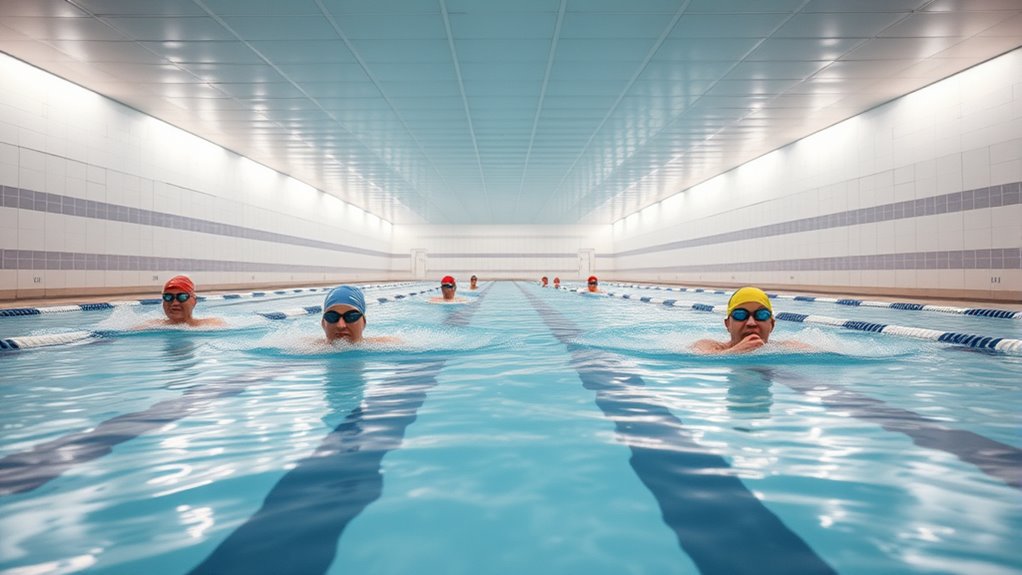

To choose the right lane for your fitness swim, start by evaluating your pace and selecting a lane that matches your speed—slow, intermediate, or fast. Signal your intentions clearly, wait for a safe gap before entering, and follow established circle swimming rules. Respect others’ routines, communicate non-verbally, and maintain proper body positioning. By staying mindful of lane etiquette, you’ll create a safe, smooth environment for everyone. If you want more tips, keep exploring how to stay courteous and efficient.
Key Takeaways
- Assess your swimming speed and select lanes matching your pace to avoid disrupting others.
- Signal your intentions clearly before entering or overtaking to ensure safe lane sharing.
- Maintain proper body position, stay in your designated zone, and rest at lane corners to promote flow.
- Follow pool rules, shower beforehand, and use appropriate swimwear to uphold hygiene and safety.
- Respect other swimmers’ routines, avoid socializing during laps, and adapt to lane traffic for courteous shared use.

75 Feet Pool Safety Rope with Blue & White Buoys, Lane Divider for Swimming Pools, Durable Pool Lane Markers Float Rope Kit with Hooks – Perfect for Racing & Training
Introducing our Premium Pool Lane Divider, crafted from durable Nylon and Steel Wire Rope, featuring HDPE Plastic Buoys….
As an affiliate, we earn on qualifying purchases.
As an affiliate, we earn on qualifying purchases.
Assessing Your Swimming Pace and Selecting the Right Lane
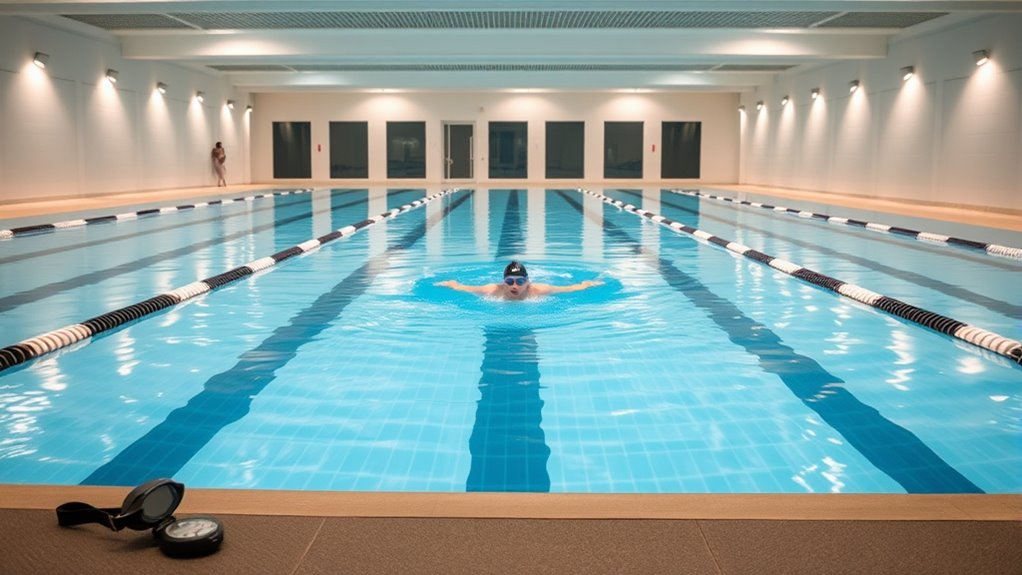
To choose the right lane, start by honestly evaluating your swimming pace. Observe how you swim without rushing or pushing too hard. Are you leisurely swimming breaststroke or relaxed backstroke? If so, a slow lane is suitable. If you maintain a steady, moderate pace, an intermediate lane fits well; it’s the most common choice for many swimmers. For those training intensely or racing, the fast lane offers a high-speed environment. Look at others in each lane to judge if your pace matches theirs—there are no strict standards, so it’s relative. Avoid slow strokes like breaststroke in fast lanes, and don’t disrupt the rhythm by swimming considerably slower than others. Start in the lane that feels right and adjust as needed based on your speed and comfort. Additionally, monitoring your swimming pace regularly helps ensure you are in the appropriate lane as your fitness improves.

FibroPool Floating Pool Safety Rope – 20 Foot – Adjustable Length Lane Divider With Hooks for Swimming Pools – Equipment to Divide Swim Race Lanes – Buoy Line With 8 Integrated Floats
SAFETY FIRST – Our pre-assembled safety ropes are thoughtfully designed to prioritize the safety of your family, especially…
As an affiliate, we earn on qualifying purchases.
As an affiliate, we earn on qualifying purchases.
Proper Entry and Lane Sharing Protocols
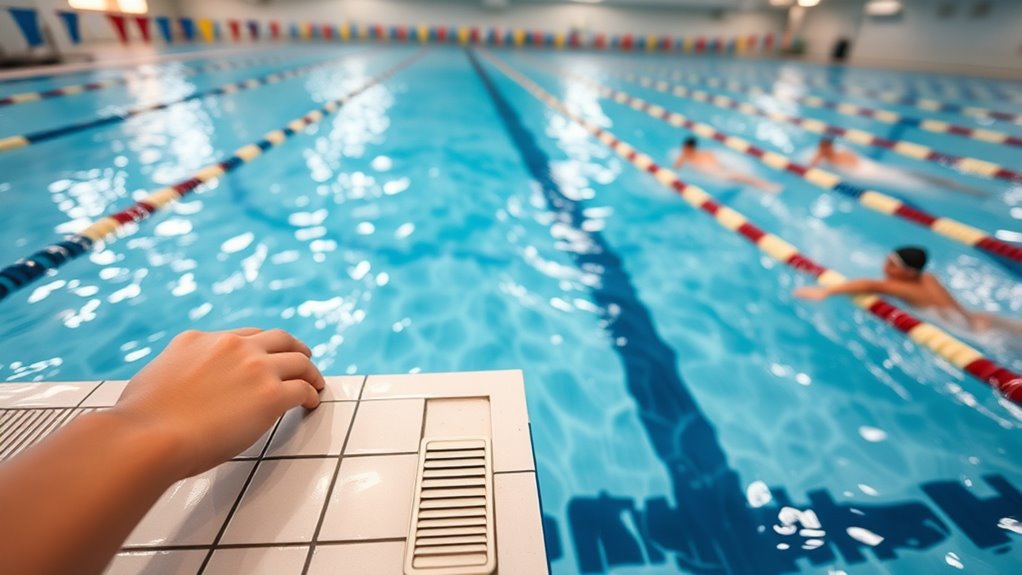
You should always enter the pool feet-first to keep the environment safe for everyone. Wait for a swimmer to rest at the wall or take a break before joining their lane, and signal your intentions clearly beforehand. By following these steps, you help maintain smooth and respectful lane sharing. Respecting other swimmers’ pace and set ensures a more enjoyable experience for everyone involved. Additionally, being aware of lane etiquette helps prevent misunderstandings and promotes a courteous swimming environment.
Feet-First Entry Only
Entering the pool feet first isn’t just a rule—it’s vital for your safety and the safety of others. This method helps you avoid head, neck, and spinal injuries, especially in shallow or murky water. It also allows you to sense water depth and detect obstacles before fully entering. Most pools enforce this rule to prevent accidents and liability issues. To follow proper feet-first entry protocols, remember:
- Observe posted signs indicating feet-first entry requirements
- Sit down and slide feet first from the poolside, not jump or dive
- Use ladders or steps with proper tread for safe entry and exit
- Avoid scooting into the pool facing the water at unknown depths
- When using slides, lie down, cross arms and legs, and enter feet first
- The “feet first” rule applies to built-in slides to avoid collisions and injuries. Adhering to these practices ensures a safer, more respectful swimming environment. Additionally, understanding the pool safety rules can help prevent accidents and promote a secure swimming experience.
Wait for Resting Moment
Waiting for a resting moment before entering a lane is essential to guarantee safety and respect other swimmers’ routines. You should only enter when the current swimmer is taking a break or resting at the wall. Avoid jumping or dropping into the lane mid-stroke or flip turn; instead, wait patiently until they stop or move away from the wall. Sitting on the pool edge with your feet in the gutter is a good way to wait. Do not push off simultaneously with a swimmer already underway, as this creates dangerous collisions. If the swimmer doesn’t stop, delay your entry until it’s safe. Respect their workout flow and avoid rushing in, ensuring everyone can swim comfortably without interruption or hazard. Waiting for the appropriate moment also helps prevent pushing off just before a swimmer turns, which can lead to collisions or discomfort. Being aware of swimming lane etiquette can further promote a safe and respectful environment for all swimmers.
Signal Before Joining
To guarantee a safe and respectful lane sharing environment, it’s important to signal your intention before joining a swim lane. Clear communication helps prevent collisions and disruptions. You can do this by waving a hand, using a kickboard, or making eye contact with current swimmers so they notice your intent. Verbal calls can also work if appropriate. Always avoid sudden or unexpected entries to respect others’ rhythm. If you’re unsure, ask pool staff or lifeguards for guidance. Remember to:
- Signal visually with a wave or kickboard
- Make eye contact with swimmers already in the lane
- Verbally alert, if suitable
- Enter during a natural gap or break
- Respect the current swimmers’ pace and space
- Be aware that pool etiquette promotes a harmonious environment for all swimmers
- Understanding lane sharing protocols can further enhance safety and respect during your swim. Following these steps ensures smooth, safe lane sharing for everyone.

Arena Unisex Adult Powerfin Pro II Swim Training Fins Men and Women Silicone Short Blade Flippers Left/Right Customized, Black, Size 9.5-10.5
Optimal training tool for improving leg technique and power, designed for professional and competitive swimmers aiming to improve…
As an affiliate, we earn on qualifying purchases.
As an affiliate, we earn on qualifying purchases.
Navigating Shared Lanes and Overtaking Safely
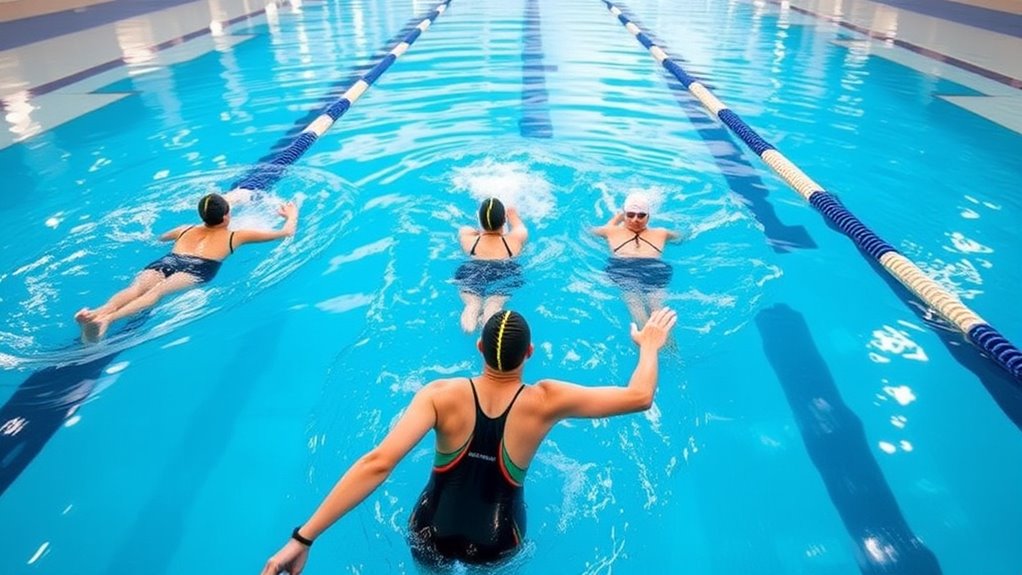
Following shared lanes safely requires awareness of swimmer signals and proper positioning. Recognize foot tap signals from swimmers ahead, which request a pass. When you receive a tap, pause at the next wall to allow overtaking. Understand that circle swimming protocols keep traffic flowing smoothly—swim on the right, overtake on the left, and stagger turns to prevent crowding. When overtaking, maintain at least a five-second gap and avoid forcing passes mid-lap. Always enter lanes feet first from the pool end, signaling presence if necessary, and rest at lane corners out of the way. Choose a lane matching your pace to reduce overtaking needs, and stay aware of surrounding swimmers’ positions and speeds to ensure safe, efficient sharing of the pool. Judging your own speed is essential for selecting the appropriate lane and avoiding unnecessary overtaking. Developing good swimming etiquette can also help foster a respectful and safe environment for all users.

PASOY Unisex Simple Outdoor Sports Watch Big Dial Digital Light Swim Waterproof Rubber Band Alarm Black LED Watches for Mens and Women 50MM
WATERPROOF FUNCTION: 164 ft waterproof (50 M) – 5ATM. NOTE: please DO NOT press any buttons in the…
As an affiliate, we earn on qualifying purchases.
As an affiliate, we earn on qualifying purchases.
Positioning Strategies to Maintain Flow and Safety

To keep the lane flowing smoothly and safely, you need to focus on proper positioning techniques, like staying centered and aligned to reduce drag. Be mindful of designated resting and waiting zones, so you avoid blocking others or causing congestion. By maintaining consistent pace and awareness of your surroundings, you help guarantee a safe, efficient swim for everyone. Strategic positioning at various race stages ensures that swimmers can optimize their flow and minimize disruptions during shared pool use. Additionally, practicing space management can contribute to a more organized and harmonious swimming environment.
Proper Lane Positioning Techniques
Ever wonder how swimmers stay in their lane without causing chaos? Proper lane positioning guarantees flow and safety. Focus on maintaining a streamlined body position by:
- Keeping your head neutral and looking downward to reduce drag
- Engaging your core with a gentle belly button pull for a tight, smooth torso
- Aligning hips and chest horizontally, pressing your chest down and floating evenly
- Keeping your feet high near the surface with steady kicks to stabilize
- Avoiding pushes off walls or swimming at an angle that disrupts your streamline
Additionally, swim counter-clockwise from the right side, stay within your lane segment, and pass on the left swiftly. After finishing, move right to clear the lane quickly, ensuring smooth, safe flow for everyone. Water resistance is over 800 times greater than air resistance, so maintaining proper body alignment is essential to minimize drag and promote efficient movement. Being aware of Ford Tuning principles such as precise adjustments and proper positioning can help optimize your swimming technique and reduce unnecessary resistance.
Resting and Waiting Zones
Where you rest and wait in the pool can substantially impact the flow and safety of everyone. To avoid disrupting swimmers, rest in the corner of your lane, preferably the left one, and stay close to the lane line instead of the center or on the “T.” Move quickly to the side after stopping so others can continue smoothly. Be aware of neighboring lanes to prevent encroaching on their space. Rest periods should suit your needs but avoid monopolizing the lane during busy times; consider leaving the pool if taking extended breaks. When waiting for others, stay at the wall with feet on the gutter until swimmers pause. Use non-verbal signals to communicate your intentions, and always stay alert to maintain safety and flow. Proper positioning can help prevent accidental collisions and ensure a respectful environment for all swimmers. Incorporating mindfulness techniques such as focused attention can further enhance awareness and safety during your swim sessions.
Respecting Other Swimmers’ Workout Routines
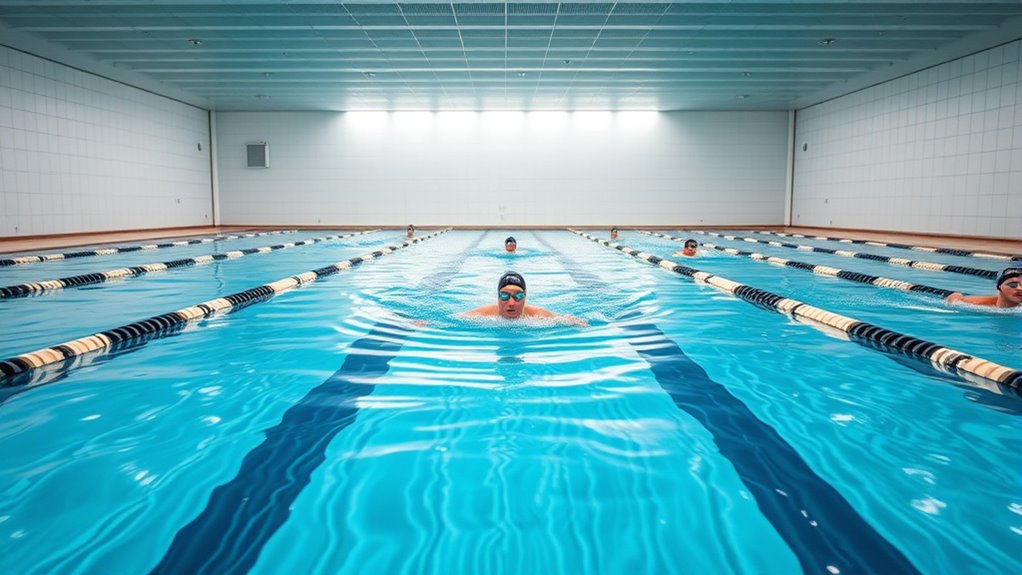
Respecting other swimmers’ workout routines is essential for creating a positive and efficient pool environment. You can do this by being mindful of their pace and goals. Here are some tips:
- Recognize that swimmers have different speeds and purposes; adjust your expectations accordingly.
- Avoid socializing during laps to keep focus and prevent disruptions.
- Give space when someone is using equipment like snorkels or doing specific drills.
- Allow resting swimmers to stay undisturbed and avoid encroaching on their area.
- Be patient if someone needs to slow down or change lanes—courtesy fosters a smooth shared space.
- Remember that pool etiquette promotes safety and respect, ensuring everyone can achieve their fitness goals comfortably.
- Understanding shared space principles can further enhance mutual respect among swimmers.
Maintaining Hygiene and Poolside Conduct
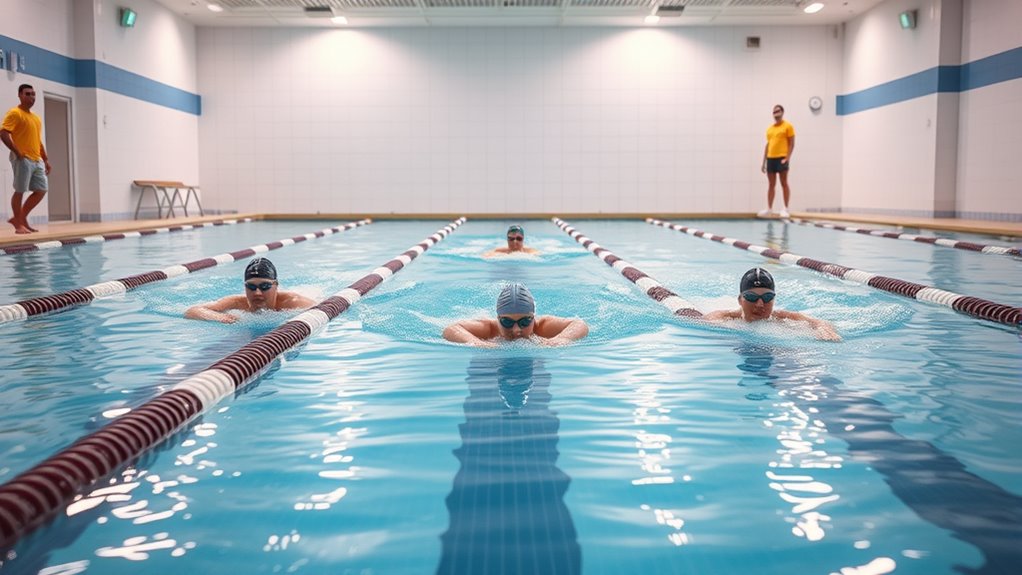
Maintaining proper hygiene and poolside conduct helps guarantee a safe, clean environment for everyone. Before entering, shower thoroughly to remove sweat, oils, cosmetics, and lotions that can contaminate the water. Use swim diapers if you’re non-potty-trained or have continence issues, and avoid swimming if you’re sick with gastrointestinal illnesses or open sores. Proper swimwear is required—no cutoffs or non-swimming clothes. Keep the pool deck tidy by disposing of trash properly and storing belongings in designated areas. No spitting, urinating, or defecating on the deck or in the gutters. Use designated walkways, follow staff instructions, and avoid horseplay. Remember, hygiene practices are essential in preventing the spread of infections and ensuring a pleasant experience for all swimmers.
Understanding Lane Rules and Signaling Intentions
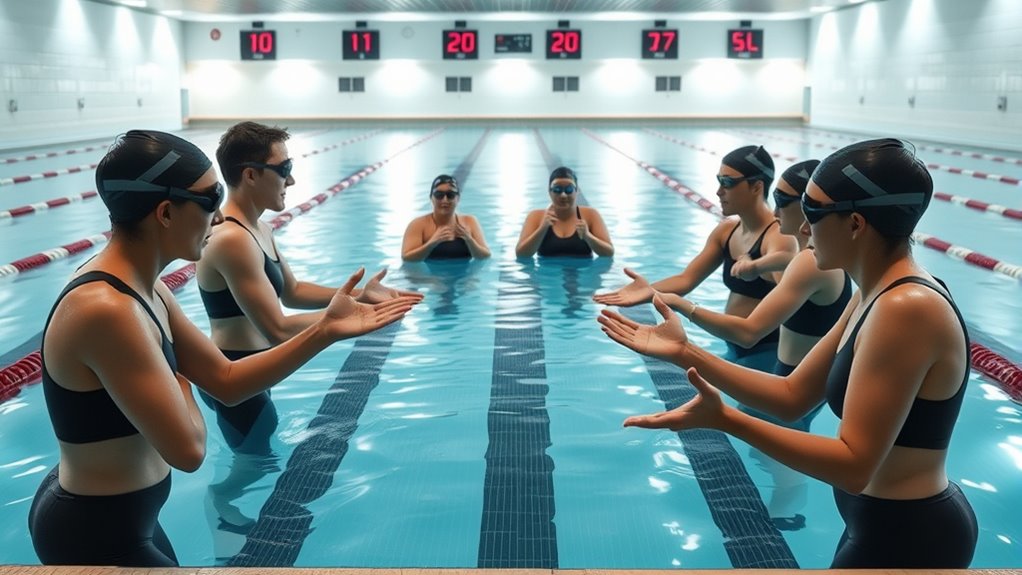
Understanding lane rules and signaling intentions are essential for safe and efficient shared swimming experiences. Clear communication helps prevent collisions and maintains a smooth flow. For example, most pools follow a circular pattern, usually counter-clockwise, so everyone stays predictable. Swimmers should stay on the designated side for safe passing and avoid disrupting the flow. Signaling your intentions is simple:
- Tap the toes of the swimmer ahead to signal a pass.
- Signal presence by dangling legs at the pool edge before entering.
- Avoid trying eye contact mid-lap; use physical cues instead.
- Wait for gaps and be patient when entering occupied lanes.
- Yield to faster swimmers and push off behind them to avoid crowding.
- Proper signaling ensures that all swimmers are aware of each other’s intentions and can react accordingly, preventing accidents and confusion. Additionally, understanding the 16PF traits can help swimmers recognize different behaviors and adapt their communication style for a more harmonious experience.
Following these practices ensures everyone can swim comfortably and safely.
Adapting to Pool Traffic and Crowd Levels
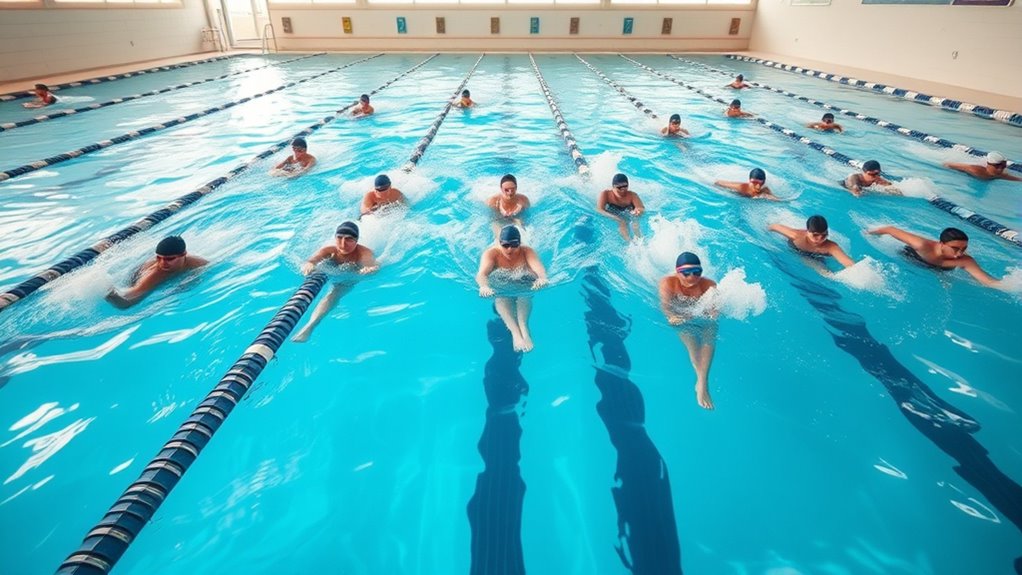
When pool traffic is heavy, it’s important to adapt your swimming habits to guarantee safety and smooth flow. Recognize that lane assignments are flexible, so judge current swimmers’ speeds before choosing a lane. When lanes are crowded, sharing lanes with swimmers of different paces is common; selecting a lane matching your speed helps prevent disruptions. Enter the pool carefully, waiting for a break in traffic, and avoid splashing or rushing in. Use circle swimming when three or more swimmers share a lane, staying to the right and signaling if you need to pass. Rest at the wall corners instead of the middle, and avoid stopping mid-lane. Always enter from the pool ends, signaling your presence to avoid collisions and maintain harmony in busy conditions. Lane configurations may change to accommodate the pool’s schedule or special events. Being aware of pool safety protocols helps ensure a safe and enjoyable experience for everyone.
Frequently Asked Questions
How Do I Determine My Swimming Skill Level for Lane Selection?
To determine your swimming skill level for lane selection, honestly assess your endurance, technique, and comfort swimming alongside others. If you can swim 25 meters legally, hold a steady pace, and perform multiple strokes, you’re likely at an intermediate or advanced level. If you’re still working on endurance or basic skills, opt for beginner lanes. Be honest with yourself about your capabilities to stay safe and match the right lane.
What Should I Do if a Lane Is Too Crowded?
If a lane is too crowded, you should look for a less busy one or wait for a break in traffic. If you’re already swimming, consider sharing the lane by splitting it in half and communicating clearly with others. Maintain a safe distance, avoid stopping mid-lane, and signal passing intentions politely. Be patient and flexible, adjusting your pace or location as needed to make certain of safety and smooth flow for everyone.
How Can I Signal to Overtaking Swimmers Politely?
You can politely signal to overtaking swimmers by tapping their toes near the end of the lane, signaling your intention to pass. Accompany the tap with a gentle wave or nod if needed. Stay calm and friendly, avoiding sudden touches or splashes. Once signaled, yield quickly and clearly, making the passing smooth and safe. Remember, patience and respectful communication help everyone enjoy the pool.
When Is It Appropriate to Rest in the Lane During a Workout?
You should rest in the lane during natural breaks in your workout, such as after completing a lap or a flip turn, when you’re near the wall. Rest should be brief and taken at the lane’s ends or corners to avoid blocking others. Avoid resting mid-lane or during continuous swimming, and always make certain you’re not interfering with faster swimmers or disrupting the flow of others.
What Are the Best Practices for Sharing a Lane With Multiple Swimmers?
When sharing a lane with multiple swimmers, you should communicate clearly and be considerate. Signal your intent to pass with gentle taps or eye contact, and pause at the end of the lane if needed. Maintain safe distances, stay close to your designated side, and coordinate turns and passing to avoid conflicts. Adjust your pace to match others and avoid sudden speed changes that disrupt the flow, ensuring a smooth workout for everyone.
Conclusion
Think of the pool as a bustling highway—you’re both a driver and a passenger. By understanding lane etiquette, you keep the flow smooth and everyone safe, turning a busy pool into a harmonious dance. Respect your fellow swimmers, follow the rules, and adapt to traffic, so your workout stays effective and enjoyable. When everyone plays their part, the pool becomes a sanctuary where you can glide confidently toward your fitness goals.