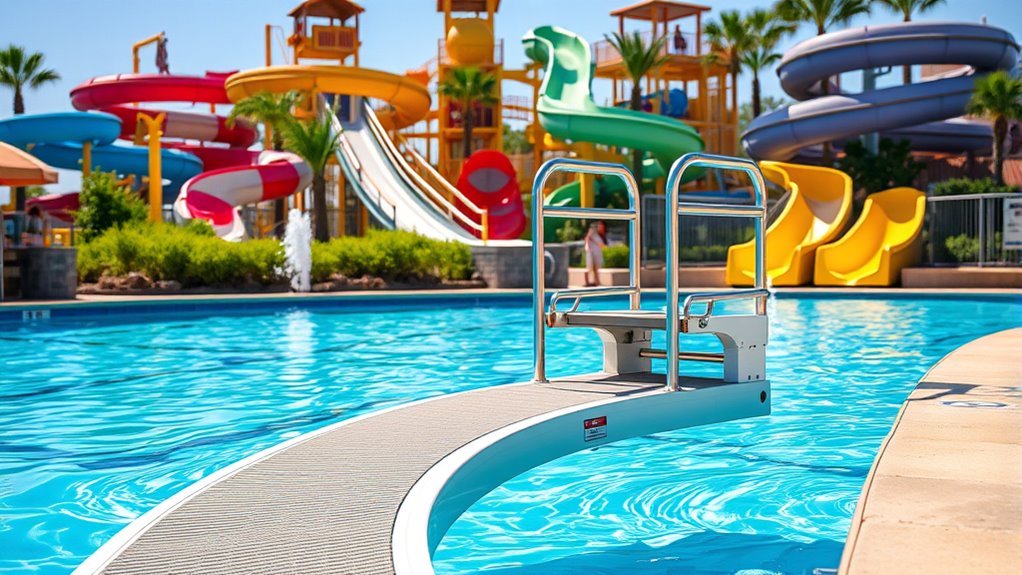

Water parks are designed with accessible features like ramps, zero-depth entry pools, and dedicated entrances to help you move easily. Pool lifts and waterproof wheelchairs make water activities safe and comfortable, often operated by staff for your convenience. Innovative features like support straps and sensory-friendly zones enhance inclusivity. With clear signage and barrier-free pathways, you’ll find steering effortless. Keep exploring to discover how these features can make your experience more enjoyable and accessible.
Key Takeaways
- Water parks feature wide ramps, zero-depth entry pools, and accessible pathways for easy wheelchair navigation.
- Pool lifts and waterproof wheelchairs enable safe, independent water access without transfers.
- Support devices like harnesses and cushions enhance stability and comfort during water activities.
- Clear signage and designated accessible entrances help guests locate entry points quickly.
- Ongoing innovations improve safety, comfort, and inclusivity through technological upgrades and barrier-free infrastructure.

5-in-1 Reclining Wheelchairs, Waterproof Shower Bathroom Wheelchair, Transport Wheelchairs with Elevating Leg Rests and Potty- 18.5" Wide Seat Heavy Duty Recliner Wheel Chair for Seniors & Adults
【5-in-1 Care Wheelchair】Wheelchair/self-propelled wheelchair/lying/toilet/bath full scene coverage, upgrade one-touch reclinable adjustment,90-180° recline for full-body relaxation and pressure relief….
As an affiliate, we earn on qualifying purchases.
As an affiliate, we earn on qualifying purchases.
Accessible Entry Points and Zero-Depth Areas

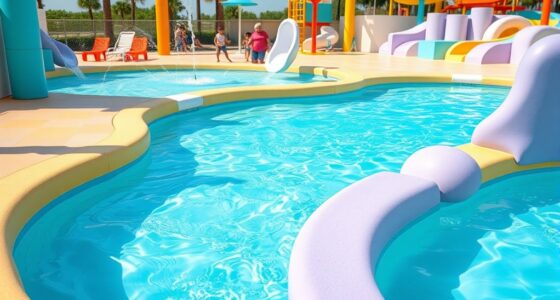
Accessible entry points and zero-depth areas are essential features that make water parks more inclusive for visitors with mobility challenges. Wide entrances designed for wheelchairs, along with ramps equipped with handrails, ensure easy access at main gates and dining areas. Parks like DelGrosso’s and H2OBX even have designated accessible entrances, simplifying entry for those with limited mobility. Clear signage and staff guidance help visitors locate these entrances quickly. Zero-depth entry pools and splash zones are common, allowing gradual water entry without steps, mimicking a beach slope. These areas often feature handrails and non-slip surfaces for safety. Connecting pathways are thoughtfully designed to provide smooth navigation from entry points to attractions, making the entire experience more accessible and enjoyable for everyone. This thoughtful design ensures that guests of all mobility levels can fully participate in water park activities. Incorporating universal design principles helps create an environment that accommodates diverse needs and promotes inclusivity.

EZ Assistive Universal Full Body Patient Lift Sling with Commode Opening for Elderly & Disabled, Safe Working Load 500 lbs, Large Grey
EZ Assistive UNIVERSAL FULL BODY TRANSFER LIFT SLING : The universal full body transfer lift sling is designed…
As an affiliate, we earn on qualifying purchases.
As an affiliate, we earn on qualifying purchases.
Mechanical Assistance and Support Devices
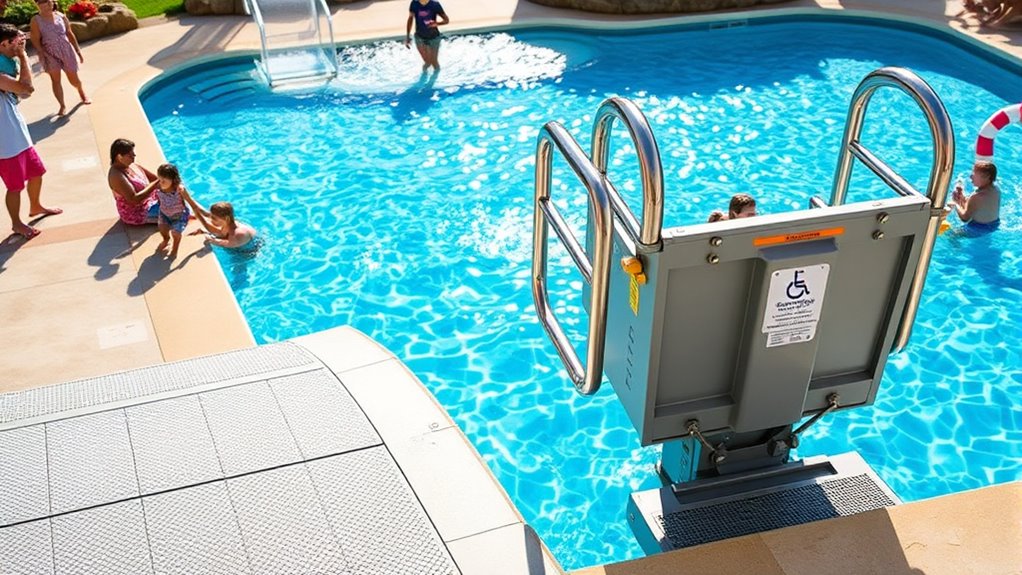
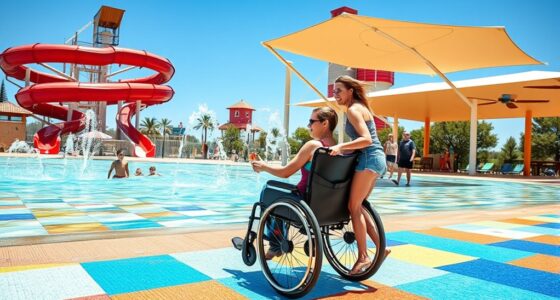
Mechanical assistance and support devices play an essential role in making water parks more inclusive by helping visitors with mobility challenges enjoy aquatic activities safely and independently. Waterproof and air-powered wheelchairs like the PneuChair are designed specifically for water environments. They run on compressed air, preventing water damage and allowing full water access without transferring out of the wheelchair. Waterproof, air-powered wheelchairs for full aquatic access are capable of being fully submerged, which means users can seamlessly participate in water activities without the risk of damaging electronic components or battery failure. Durable pool wheelchairs with safety features and accessories—such as corrosion-resistant frames, support straps, and cushioned seats—enhance comfort and safety. Water-resistant features also help prolong the lifespan of equipment in humid or wet environments. Pool lifts provide safe vertical transfers from wheelchair to water, often with remote controls for ease of use. Support devices such as neck supports, harnesses, and specialized cushions improve stability and comfort during water activities, ensuring a more enjoyable experience for everyone.
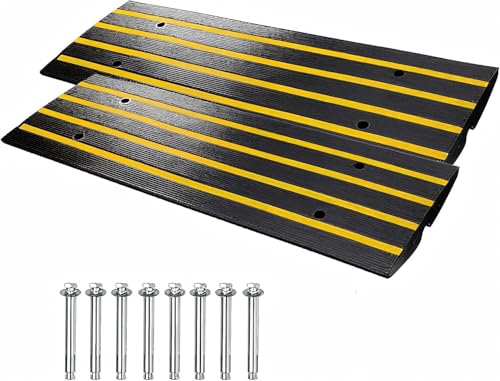
2 Packs 48" Car Driveway Rubber Curb Ramps, Heavy Duty Driveway Gutter Slope Ramp, Low Profile Design for Cars, Water Channel for Drainage, Curbside Bridge Ramp for Loading Dock Garage Sidewalk
Smooth Driveway Transition Solution: Designed for seamless vehicle access, these rubber curb ramps feature a precision-graded slope to…
As an affiliate, we earn on qualifying purchases.
As an affiliate, we earn on qualifying purchases.
Additional Features and Innovations for Inclusivity

Innovative mobility solutions are pushing the boundaries of inclusion in water parks by offering new ways for guests with diverse needs to enjoy aquatic activities. Compressed air-powered wheelchairs let you move freely and get wet without risking battery damage, boosting independence. Waterproof fabrics make transferring and using wheelchairs more comfortable in wet environments. Specialized transfer hoists in changing rooms help safely move guests with muscular disabilities into waterproof chairs. Lightweight, non-electric devices navigate water-rich areas easily, offering greater freedom. Sensory-inclusive features, like varied water effects, high-contrast colors, and quiet zones, accommodate different sensory needs. Additionally, accessible infrastructure—obstacle-free pathways, supportive amenities, and clear signage—ensures full circulation and comfort. Recent technological advancements have also enabled remote monitoring of water quality, further enhancing safety and guest confidence. These innovations create a truly inclusive water park experience for all guests, demonstrating how accessible design continues to evolve to meet diverse needs.

Vive 4 Wheel Mobility Scooter – Electric Powered Wheelchair Device – Compact Heavy Duty Mobile for Travel, Adults, Elderly – Long Range Power Extended Battery with Charger & Basket
SAFELY NAVIGATE SMOOTH SURFACES: Easily maneuver over smooth indoor surfaces and rough outdoor surface with the Vive 4-Wheel…
As an affiliate, we earn on qualifying purchases.
As an affiliate, we earn on qualifying purchases.
Frequently Asked Questions
Are There Any Age Restrictions for Using Pool Lifts?
There aren’t specific age restrictions for using pool lifts, but water parks typically set safety policies based on age, size, and ability. Children under a certain age, like 6 or 12, often need adult supervision and may require assistance from staff. Safety considerations focus on weight and size limits, ensuring that young children or infants use lifts safely. Always follow park rules and listen to staff guidance for proper and safe use.
How Do I Reserve Accessible Features or Equipment in Advance?
Getting ahead of the game is key, so you should reserve accessible features or equipment by purchasing tickets early and contacting Guest Services ahead of time. Many parks allow you to make reservations for pool lifts, ramps, and other assistive devices via phone, email, or their online platforms. Be sure to provide detailed information and any necessary documentation, so your needs are met smoothly—saving you from last-minute surprises.
Are Waterproof Wheelchairs Available for All Water Park Attractions?
Not all water park attractions are accessible with waterproof wheelchairs, but many are. You can usually enjoy splash pads, wave pools, and lazy rivers with them. However, thrill rides and slides often require transfers to different devices like rafts. Parks like Morgan’s Inspiration Island are designed for full inclusion, allowing waterproof wheelchairs on most attractions, but it’s best to check with each park beforehand to confirm which attractions are compatible.
What Safety Measures Are in Place for Guests With Cognitive Disabilities?
You benefit from numerous safety measures designed for guests with cognitive disabilities. Staff receive specialized training to recognize distress signals and respond appropriately, while attractions feature clear signage and visual aids to aid understanding. Quiet zones and sensory accommodations help manage overload, and caregivers are encouraged to supervise closely using communication devices. Adaptive flotation devices and support equipment guarantee safe water access. These combined efforts create a safer, more inclusive environment for everyone.
Can Caregivers Assist With Transfers Using the Provided Equipment?
Like a knight in shining armor, you might wonder if caregivers can assist with transfers using the equipment. Usually, water parks don’t require staff to help with transfers; they’re designed for your independence. You can bring your own companion to assist, but staff typically won’t perform lifts due to liability. It’s best to verify with the park beforehand to understand their policies and ensure a safe, smooth transfer experience.
Conclusion
Ensuring wheelchair access at water parks isn’t just about compliance—it’s about creating a fun, inclusive experience for everyone. Did you know that nearly 20% of Americans have some form of disability? By utilizing ramps, pool lifts, and innovative features, you can make sure all guests enjoy the water safely and comfortably. Your efforts help break down barriers, making water parks welcoming for all. Plunge in and prioritize accessibility—you’re making a splash!