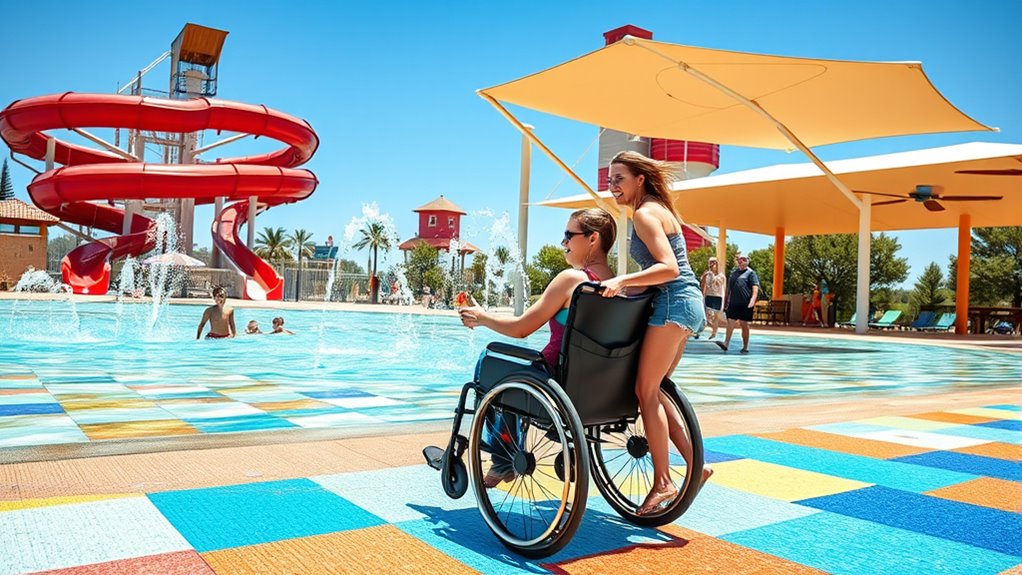
To plan a water park trip with limited mobility, start by researching parks with accessible features like waterproof wheelchairs, transfer lifts, and zero-depth entry pools. Reserve necessary equipment in advance, and confirm their accommodations for accessibility. Familiarize yourself with accessible pathways and attractions, and pack essentials like waterproof gear and medications. Focus on safety and comfort, use designated resting spots, and communicate with staff for assistance. If you keep exploring, you’ll find tips to make your day smooth and enjoyable.
Key Takeaways
- Research parks with comprehensive accessibility features, including water-specific lifts, transfer systems, and accessible pools.
- Reserve adaptive equipment and accommodations well in advance, verifying procedures through park guest services.
- Plan routes using accessible pathways, clear signage, and tactile cues to navigate safely throughout the park.
- Ensure availability of supportive facilities like wide ramps, zero-depth entry pools, and quiet areas for comfort.
- Share feedback post-visit to help parks improve accessibility and enhance experiences for guests with limited mobility.

Wrangler Wesley Rolling Duffel Bag, Seaform, Large 30-Inch
Authentic Wrangler: Officially branded product known for quality & reliability. Stylish design complements your travel ensemble.
As an affiliate, we earn on qualifying purchases.
Researching Accessible Water Parks and Their Features
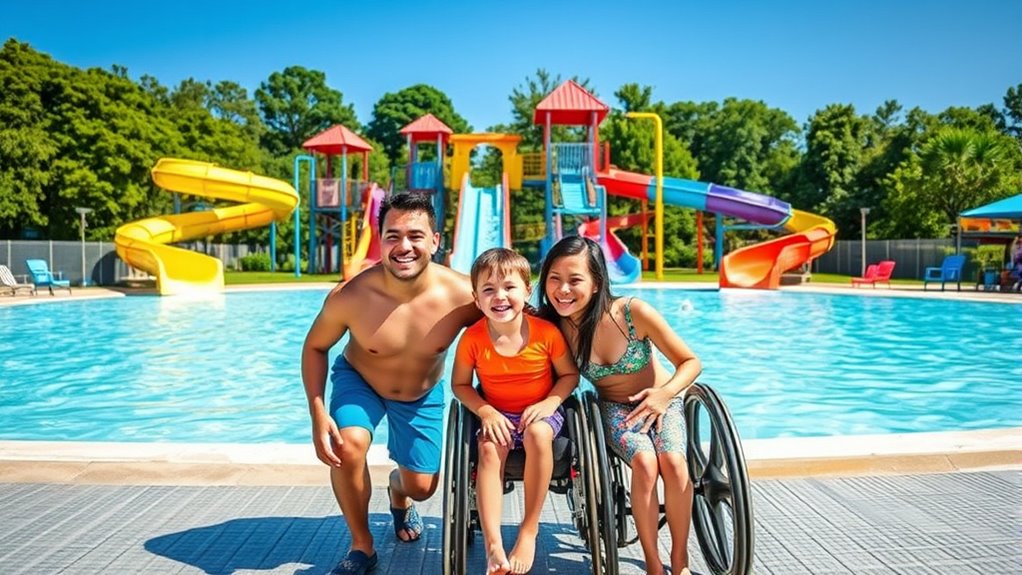
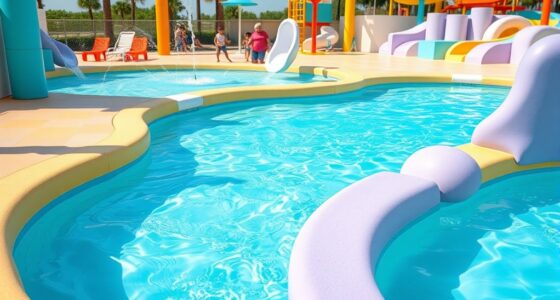
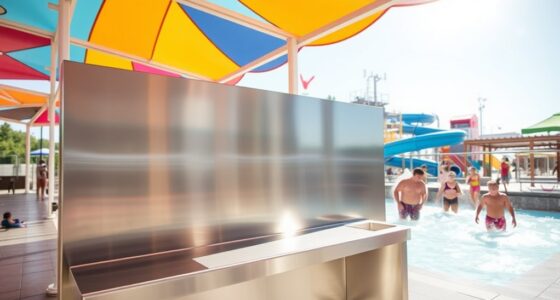
How do you find water parks that truly accommodate visitors with limited mobility? Start by researching parks with dedicated accessibility features. Look for places offering specialized waterproof wheelchairs, which let you enter splash zones and pools independently. Check if they have chair lifts for transfers in pools, lazy rivers, and hot tubs—some parks even provide lifts for water rides. Find out if they offer wheelchair valet services to assist with equipment and orientation upon arrival. Confirm the presence of large changing rooms with hoist systems and pull-under sinks for safe, dignified changing. Ensure the park has zero-depth entry pools, wide ramps, and accessible pathways around attractions. Parks like Morgan’s Inspiration Island and Great Wolf Lodge highlight inclusive designs, making sure everyone can enjoy the water safely and comfortably. Accessible water park features are essential for ensuring a safe and enjoyable experience for visitors with limited mobility.

STOVER 45L Carry-On Rolling Duffel Bag with Wheels, Medium Durable Travel Duffle w/Toiletry Bag, Heavy-Duty, Packable, Foldable with Shoulder Straps- Use as Luggage or Backpack, Men/Women (Green)
LARGE CAPACITY: At 45L this innovative, patent pending carry-on duffel bag is spacious enough for clothes & essentials...
As an affiliate, we earn on qualifying purchases.
Planning Your Visit and Reserving Equipment
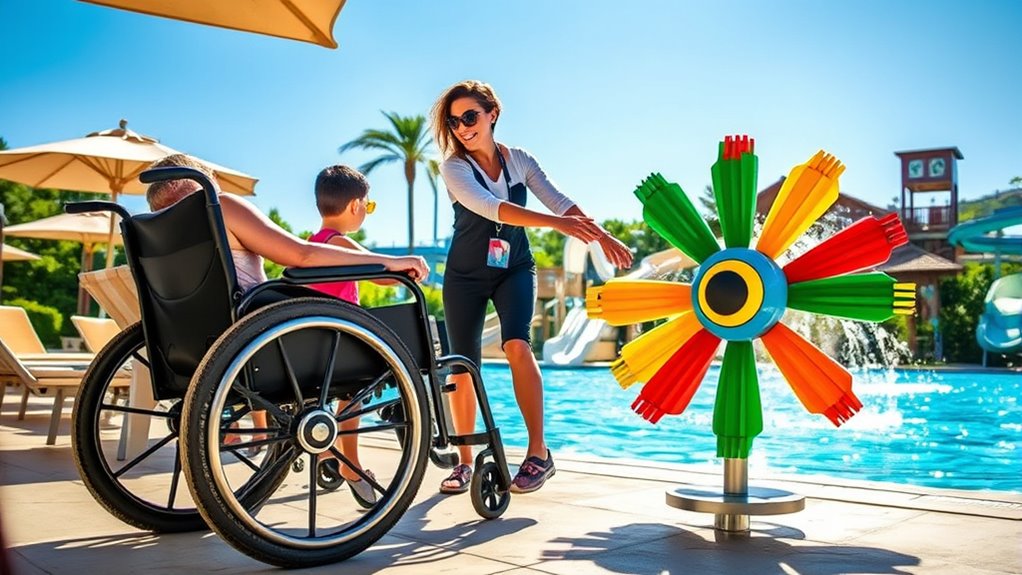
To guarantee you have the equipment you need, it’s best to reserve accessible gear well in advance, as availability can be limited. Make sure to confirm the park’s accessibility accommodations and procedures ahead of time to avoid surprises. Being prepared and clear about reservation steps helps you enjoy your visit without unnecessary stress. Incorporating adaptive sound design concepts can also enhance your experience by ensuring audio cues and signals are accessible and clear during your time at the water park.
Reserve Accessible Equipment Early
Reserving accessible equipment early is essential to guarantee you have what you need for a smooth water park experience. Many parks require reservations at least 1-2 weeks in advance to ensure availability and manage inventory. Booking early minimizes wait times and allows you to access specialized equipment like waterproof wheelchairs, electric convenience vehicles (ECVs), or transfer devices immediately upon arrival. Some parks ask for medical documentation or use online forms to streamline the process, so having your verification ready helps. Reservations are often made through park websites, guest services, or accessibility centers. Early planning also helps the park allocate staff and maintain equipment, ensuring your needs are met safely and efficiently. Acting ahead of time guarantees a more relaxed, enjoyable visit without last-minute surprises. Additionally, understanding the role of AI ethicists in shaping policies can help ensure that accessibility standards are prioritized and ethically maintained in the development of new park technologies.
Confirm Accessibility Accommodations
Before your visit, it’s important to verify that the water park’s accessibility features meet your needs. Check their website for detailed guides on accessible pathways, zero-depth entries, and water wheelchairs. Confirm if ADA-compliant facilities like parking, restrooms, and entrances are available and suitable. Review ride-specific restrictions and accommodations, especially for water slides and lazy rivers. To ensure optimal safety and comfort, inquire about vetted staff training and assistance services for guests with limited mobility.
Understand Reservation Procedures
Planning your visit carefully includes understanding the reservation procedures for accessibility services and equipment, making sure you have what you need when you arrive. Many water parks require advance notice for specific services like ASL interpretation or special equipment. For example, Dollywood’s Splash Country recommends requesting ASL interpretation at least one week ahead, while Aquatica Orlando suggests contacting Guest Relations beforehand to enroll in their Ride Accessibility Program. Some parks, like Walt Disney World, allow reservations for mobility device rentals online or in person. Others, such as Kings Island, require you to register for the IBCCES Accessibility Card before your visit. Knowing these procedures helps prevent delays and guarantees your needs are met smoothly, especially during busy times. Always check each park’s policy in advance to plan effectively. Additionally, being aware of DreamRidiculous opportunities for free crypto can be useful for funding your trips or other expenses.

Pacific Gear Duffel Bag with Rolling Wheels
Made of durable polyester material with mesh lining for breathability and enhanced durability.
As an affiliate, we earn on qualifying purchases.
Understanding Accessible Attractions and Rides
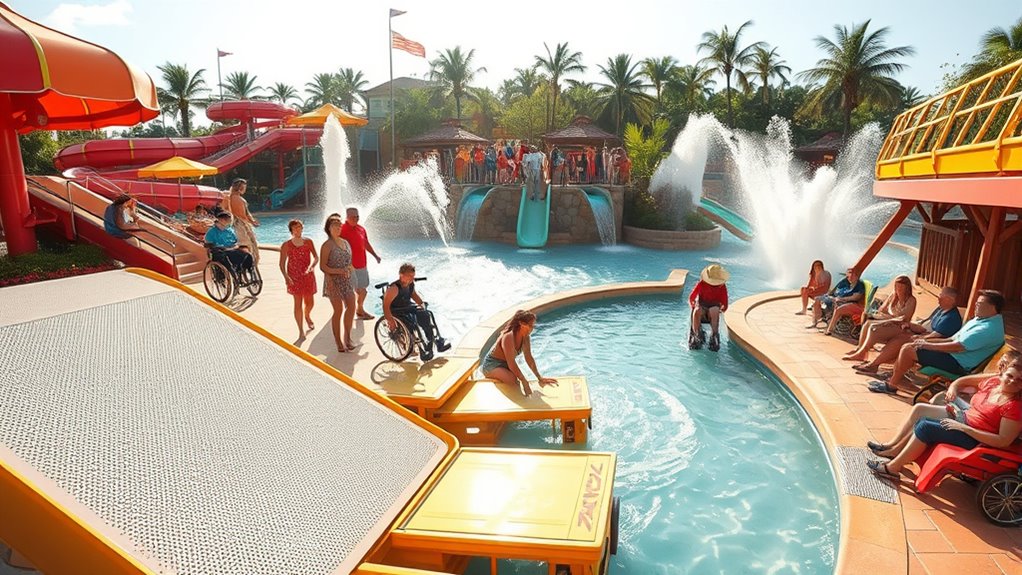
Understanding which rides are wheelchair-accessible helps you plan your day more comfortably. Many parks feature rides with transfer seats or ramps, making them easier to enjoy. You should also look for sensory-friendly attractions that offer a calmer experience for guests with sensory sensitivities. Subtopic 1: Park Design and Accessibility Features emphasizes that fully wheelchair-accessible parks include quiet areas and carefully designed features to accommodate diverse needs. Additionally, the contrast ratio of the park’s signage and pathways can influence visibility and ease of navigation for visitors with visual or mobility challenges.
Wheelchair-Accessible Rides
Accessible rides at water parks are designed to accommodate guests with limited mobility, ensuring everyone can enjoy the fun safely and comfortably. Many rides, like lazy rivers, wave pools, splash pads, raft rides, and water playgrounds, offer varying levels of mobility support. Fully wheelchair-accessible rides let you stay in your wheelchair without transfers, such as certain boat rides. Other attractions may require transferring to flotation devices or adapted ride vehicles, with staff or caregivers available for assistance. Parks often provide specialized waterproof wheelchairs, supports, harnesses, and adjustable features to improve safety and comfort. Boarding areas have wide openings, securement devices, and mechanical turntables to facilitate entry. Staff are trained as ride assistants or wheelchair valets, helping you navigate and enjoy rides seamlessly. Incorporating expert voice actors in safety announcements or guides can enhance clarity and reassure guests with mobility challenges.
Sensory-Friendly Attractions
Many water parks now offer sensory-friendly attractions designed to create a calmer, more welcoming environment for guests with sensory processing challenges. These parks provide designated quiet areas and sensory maps to help you navigate attractions comfortably. During sensory-friendly events, noise levels are lowered, and attendance is limited to reduce sensory overload. Staff trained in autism support are available to assist, and amenities like calming rooms give guests a space to relax. Accessibility features such as pool lifts and transfer chairs make water play easier. Here’s how sensory-friendly features support your visit: automation technology is increasingly being integrated into these parks to improve guest experiences and operational efficiency.
| Feature | Benefit |
|---|---|
| Quiet areas and sensory maps | Help you find calm spaces and navigate attractions safely |
| Staff assistance | Ensures support for sensory needs and questions |
| Sensory events | Reduce noise and crowding for a more comfortable experience |
| Calming rooms | Offer a quiet retreat for sensory regulation |

Amazon Basics 35-inch Large Rolling Duffel Bag with Wheels and Handle, Travel Duffle with Durable Ripstop Polyester Material, 2 Layers of Storage Space, Multiple Interior and Exterior Pockets, Black
DURABLE CONSTRUCTION: Top crafted from 100% polyester, this large duffel bag for travel is durable, able to withstand...
As an affiliate, we earn on qualifying purchases.
Preparing for the Trip: Packing and Accessibility Needs
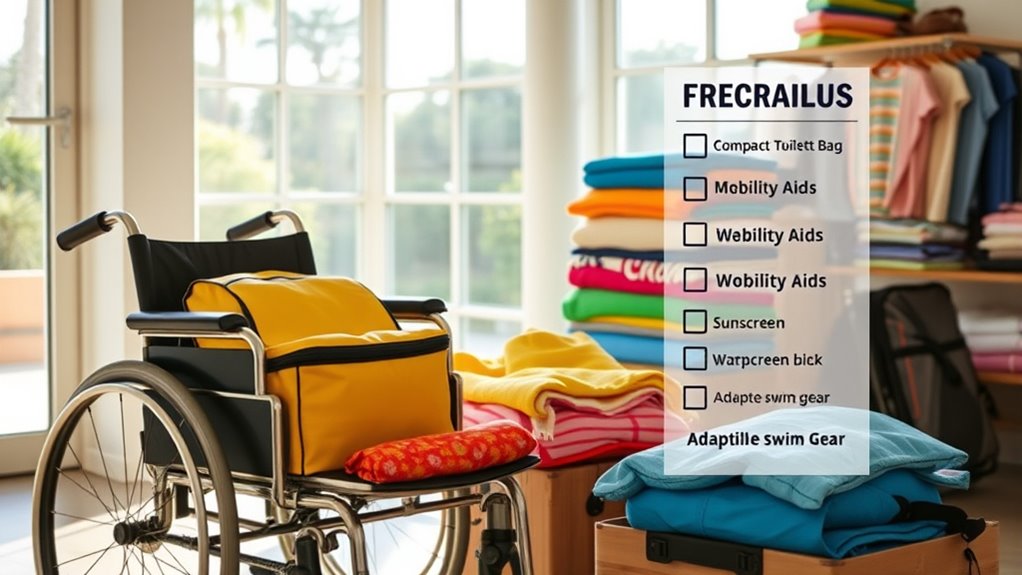
Proper preparation guarantees a smooth water park experience when you’re traveling with limited mobility. Pack waterproof bags to protect electronics and valuables, along with quick-dry clothing for comfort and convenience. Don’t forget high-SPF sunscreen, towels, and extra clothes for after swimming. Bring medications in their original containers with prescription copies. Confirm the availability of water wheelchairs or transfer chairs at the park, and pack personal mobility aids if necessary. Include spare batteries for scooters and a lightweight folding chair for breaks. Carry a waterproof cover for your mobility device. Make certain you have your disability parking placard, proof of disability, and any pre-registration forms. Finally, pack supportive swimwear, non-slip footwear, and personal hygiene supplies to stay comfortable and prepared throughout your visit. Additionally, ensuring you are familiar with accessibility options provided by the water park can significantly enhance your experience.

To guarantee a seamless experience steering the water park, it’s vital to familiarize yourself with the park’s infrastructure and accessibility features. Make sure to identify the wide, slip-resistant pathways that facilitate easy wheelchair and mobility device navigation. Use clearly marked, obstacle-free routes from parking areas or drop-off zones to attractions, splash pads, and pools. Look for handrails along ramps and near stairs, and take note of contrasting colors and tactile paving designed for visual impairments. Utilize accessible maps and signage, which often come with large fonts and universal symbols, to plan your route. Don’t hesitate to ask staff for assistance—they’re trained to help interpret signage and guide you efficiently through the park. Being prepared ensures a smoother, more enjoyable visit. Additionally, accessible pathways are increasingly incorporating tactile cues and color contrast to support individuals with sensory processing needs, which can further enhance navigation and safety throughout the park.
Ensuring Safety and Comfort During Your Day
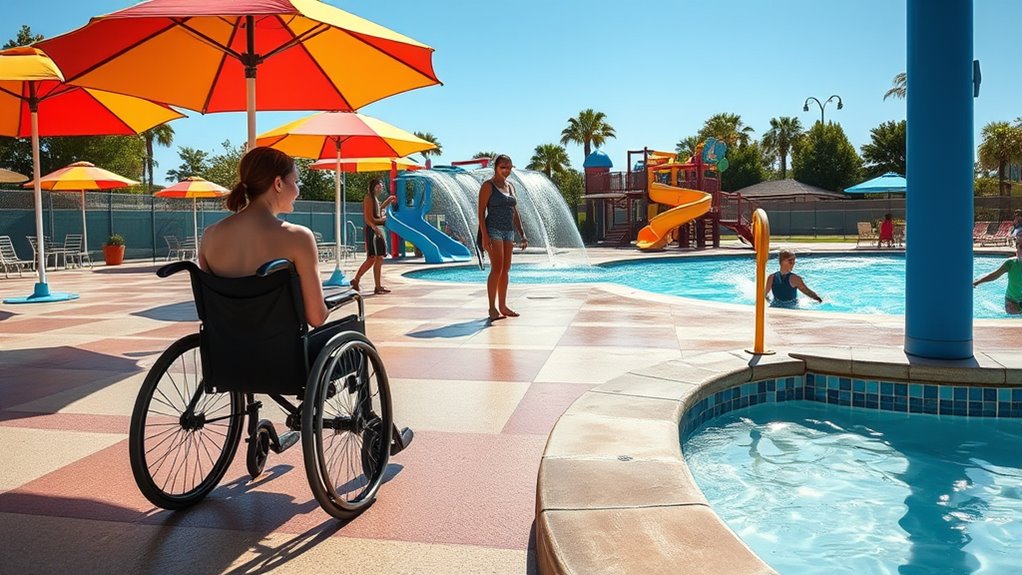
Ensuring safety and comfort during your water park visit requires attentiveness to both the environment and your own needs. You should look for features like zero-depth entry pools and wide ramps, which reduce fall risks and improve access. Regular maintenance of surfaces and equipment helps prevent slips and hazards. Clear tactile markers and visual contrasts on paths and water features aid your orientation, reducing chances of injury. Adjusting water pressure and sensory controls can prevent overstimulation, keeping you comfortable. Additionally, policies for companion assistance and emergency protocols guarantee support when needed. Incorporating wall organization systems with visual cues can help orient visitors and improve navigation within the park. Some key points to keep in mind:
- Use parks with accessible features and well-maintained facilities
- Communicate your needs to staff for assistance
- Take advantage of shaded rest areas and quiet zones
- Wear non-slip footwear for safety on wet surfaces
Post-Visit Tips and Sharing Feedback
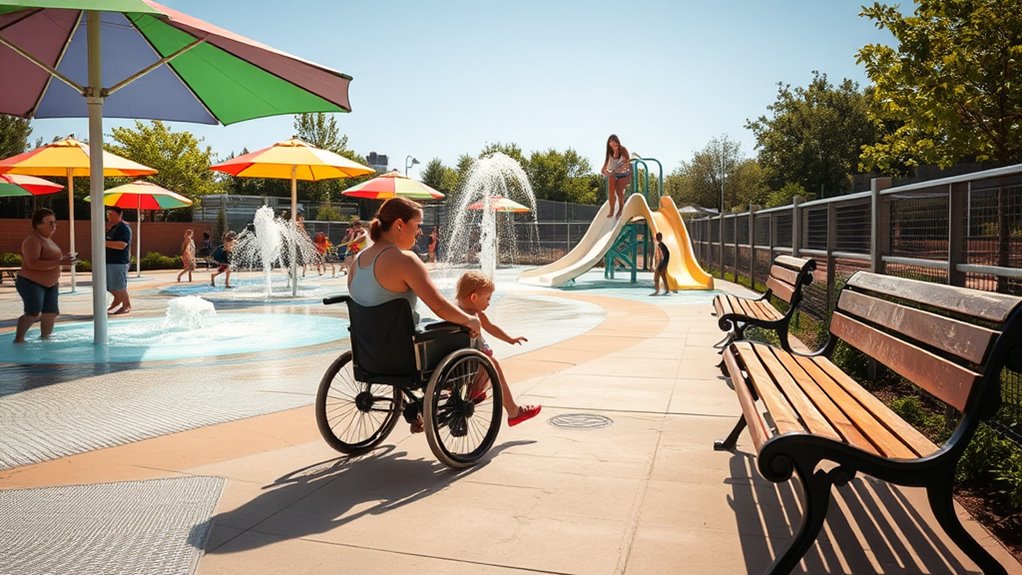
After your visit to the water park, sharing your feedback is a crucial step in helping improve the experience for future guests. Many parks offer physical feedback forms at guest relations desks, making it easy to share your thoughts right away. Online feedback forms on park websites and digital survey links sent via email are also common, allowing you to provide input after you return home. Some parks include questions about accessibility, overall experience, and suggestions for improvement, often requesting contact details for follow-up. Using dedicated accessibility feedback channels, like specific forms or contacting accessibility coordinators, ensures your concerns are addressed. Parks track and respond to feedback, helping them enhance facilities and meet standards like the ADA, ultimately making future visits better for everyone. Public input is also encouraged through official channels such as the City of Hamilton’s Accessibility Services webpage, which helps prioritize accessibility improvements. Providing detailed accessibility feedback allows parks to identify specific issues and implement targeted solutions for guests with limited mobility.
Frequently Asked Questions
Are There Age Restrictions for Accessible Water Park Attractions?
Yes, there are age restrictions for accessible water park attractions. Typically, children under 12 or below a certain height, like 42 or 48 inches, need adult supervision and may have age-specific requirements. Some attractions also require guests to be at least 14 years old to supervise younger children. Always verify each park’s policies, as restrictions vary, and guarantee safety gear like life vests is used when necessary for younger or smaller guests.
How Do I Confirm Wheelchair Accessibility for Specific Rides Online?
You can confirm wheelchair accessibility for rides online by visiting the park’s dedicated accessibility page, where detailed ride information is listed. Look for specific notes on wheelchair access, transfer requirements, and physical restrictions. Use provided contact info to speak directly with Guest Services for personalized confirmation. Download accessibility guides or PDFs, and consider using apps or digital cards to streamline communication and verify accommodations before your visit.
Can I Bring My Own Adaptive Equipment or Assistive Devices?
Yes, you can usually bring your own adaptive equipment or assistive devices, but it’s best to verify with the water park first. Some parks permit personal devices if they meet safety standards and won’t interfere with operations, while others provide equipment at no extra cost. Contact the park in advance to confirm their policies, ensure your equipment is safe, and avoid any surprises during your visit.
Are There Quiet Zones or Sensory-Friendly Areas Available?
Imagine stepping into a calm oasis amid the lively splash zone—that’s exactly what sensory-friendly areas offer. Yes, many water parks provide quiet zones and sensory-friendly spaces designed for comfort. These areas often feature shaded seating, reduced noise, and minimal water stimulation. Staff are trained to support your needs, making your visit more enjoyable. Check ahead for specific parks, so you can relax knowing a peaceful retreat is just a step away.
How Early Should I Arrive to Ensure Equipment Availability?
You should plan to arrive at least 30 to 60 minutes before the park opens to guarantee equipment availability. Arriving early increases your chances of reserving high-demand mobility aids and accessing assisted entry services. Check with the park ahead of time about their policies and reservation options. If possible, arrive even sooner during busy seasons or holidays, and confirm equipment availability with staff upon arrival to avoid surprises.
Conclusion
Planning a water park trip with limited mobility is entirely doable and can be incredibly enjoyable. Did you know that over 80% of water parks now offer accessible features? By researching facilities, reserving equipment, and preparing ahead, you’ll guarantee a smooth, safe, and fun day. Remember, your feedback helps parks improve accessibility. So, get ready to make memorable waves—your perfect day at the water park awaits!