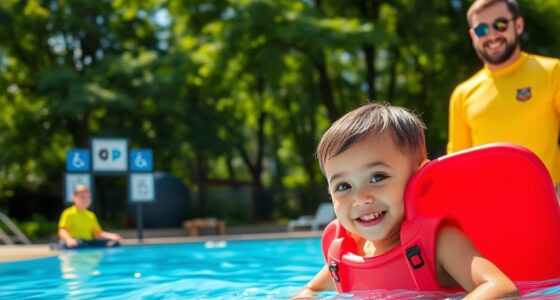
Visual schedules and social stories are great tools to help you prepare a child for water park days. They provide clear, visual steps and cues that build understanding, reduce anxiety, and boost confidence. By customizing these supports to your child’s needs and using waterproof materials, you can promote independence and safety. Incorporating choice and practice ensures routines become familiar, making the experience more enjoyable. Keep exploring to get tips on creating effective visual supports tailored for your water adventures.
Key Takeaways
- Visual schedules outline water park routines step-by-step, reducing anxiety and promoting independence for children with sensory challenges.
- Social stories use simple visuals and narratives to prepare children for water activities, increasing comfort and understanding.
- Customizable visual supports, like choice boards and activity icons, help children make decisions and stay engaged during water park visits.
- Waterproof and durable materials ensure visual supports withstand water splashes and outdoor conditions, maintaining usability.
- Repeated practice with visual schedules and social stories builds familiarity, safety awareness, and confidence for a positive water park experience.
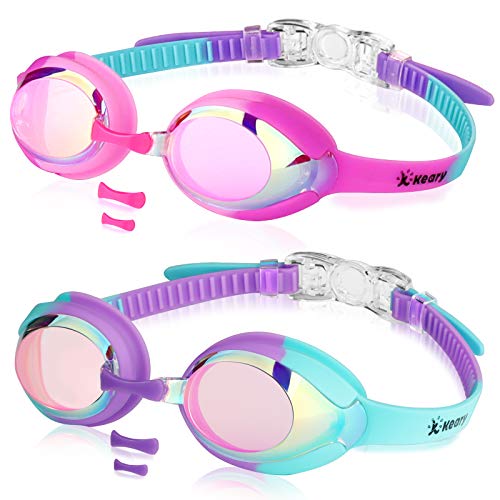
Keary 2 Pack Kids Swim Goggles Swimming Goggles for Toddler Children Girls Boys Youth, Anti-Fog Waterproof Anti-UV Clear Vision Mirror Flat Lens Water Pool Goggles with 3 Nose Piece, Pink Kids Goggles …
🐳【3 Interchangeable Nose Pieces & COMFORTABLE FIT】Comes with 3 interchangeable curved nose pieces made of sturdy and unbreakable...
As an affiliate, we earn on qualifying purchases.
Understanding the Role of Visual Supports in Water Play
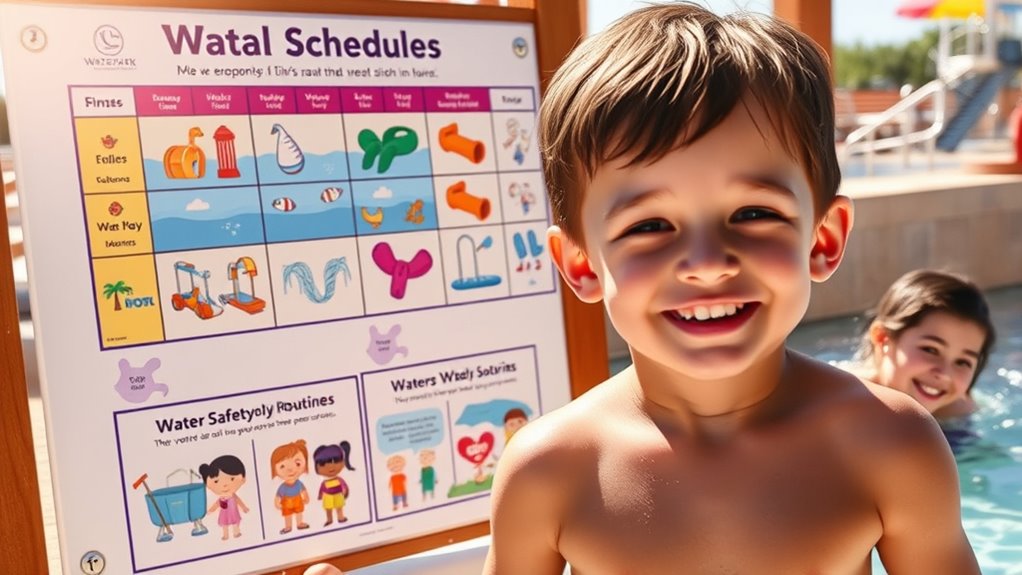
Visual supports play an essential role in helping children understand and engage with water play, especially for those with sensory processing challenges or autism. They provide clear, visual cues that guide children through activities, reducing confusion and anxiety. Using pictures, symbols, or visual schedules, you can help children anticipate what’s coming next, making water play feel safer and more predictable. Visual supports also help children focus on specific tasks, such as pouring or splashing, by highlighting steps or behaviors. This encourages independence and confidence during water activities. Additionally, visuals can serve as calming tools, offering reassurance when sensory input becomes overwhelming. Incorporating Visual supports into water play can also foster better communication skills and social interaction among children. Overall, visual supports facilitate smoother, more engaging water play experiences tailored to each child’s needs.
Zeligerstar Kids Swim Goggles,Swimming Goggles for Kids 6-14, Anti-Fog UV Protection Pool Glasses for Boys Girls (Pink/Blue+Clear Lens)
Comfortable Fit - Our kids goggles for swimming 8-12 provide a snug and comfortable fit for children of...
As an affiliate, we earn on qualifying purchases.
Designing Effective Visual Schedules for Water Park Outings
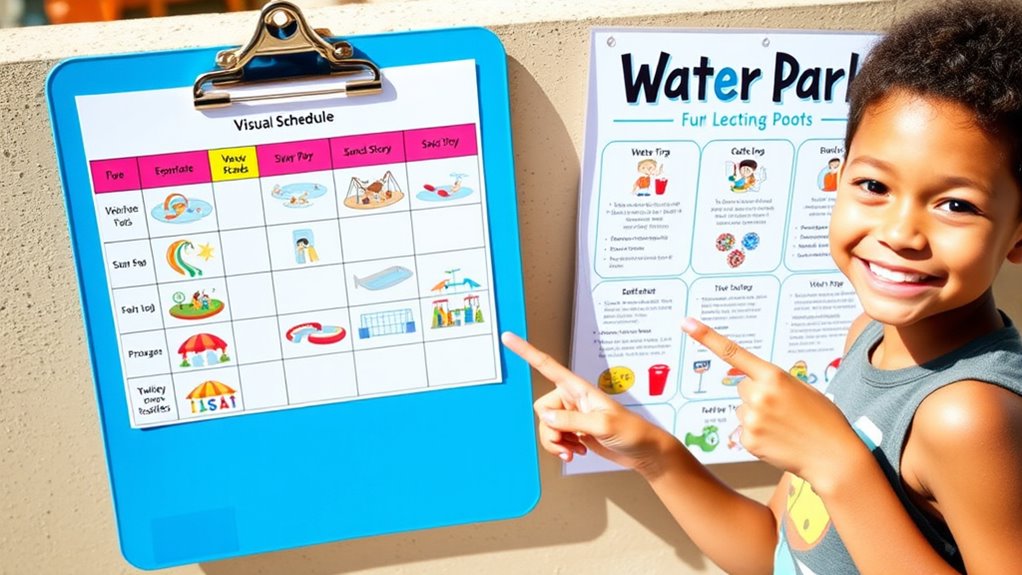
Creating effective visual schedules for water park outings involves carefully selecting and organizing images that clearly represent each activity, such as slides, splash pads, and rest areas. Use simple, recognizable pictures arranged in chronological order to guide children through the day smoothly. Incorporate transition cues like “Next: Locker Room” to ease changes and reduce anxiety. Add choice boards for optional activities, like “Which ride next?” and color-code symbols to differentiate water slides, rest areas, and other zones. To accommodate diverse needs, offer multiple versions reflecting different skin tones or genders and provide tactile elements for children with motor challenges. Pair visuals with minimal text for non-verbal kids, and review the schedule at key points. Using durable, waterproof materials guarantees the schedule stays intact throughout the day. Visual schedules can also include elements of choice and control to empower children and encourage active participation during the outing. Additionally, understanding the importance of emotional support can help caregivers tailor the visuals to reduce anxiety and make the experience more enjoyable.

Konohan 12 Pairs Summer Swimming Goggles No Leaking Wide View Swim Glasses Pool Clear Water Goggles with Adjustable Strap for Youth Teens women men, 4 Colors
Satisfy Your Swimming Needs: there are 12 pairs swim goggles in the package, available in green, pink, yellow...
As an affiliate, we earn on qualifying purchases.
Crafting Social Stories to Prepare Children for Water Experiences
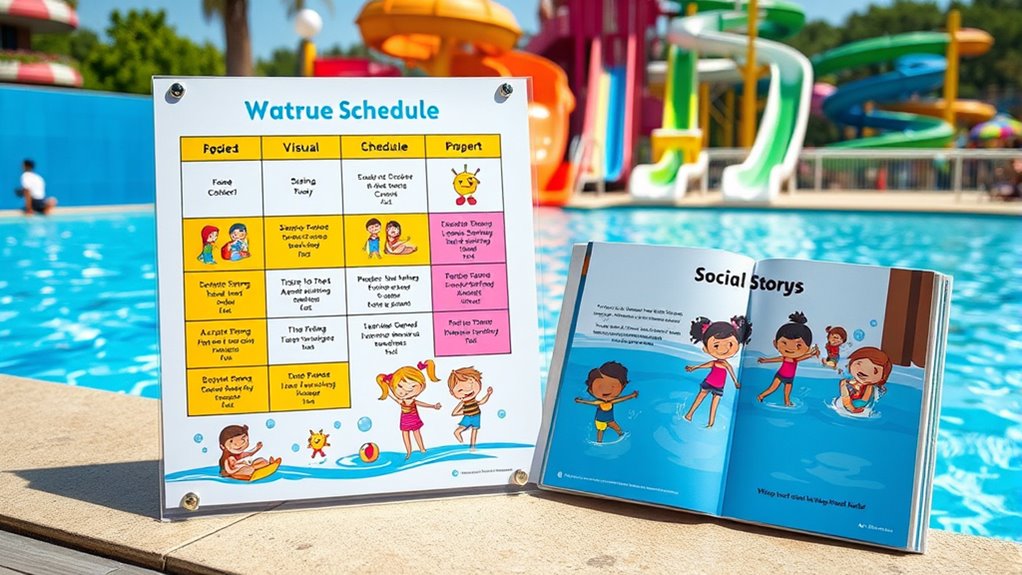
When you craft social stories for water experiences, focus on creating clear, step-by-step sequences that children can follow easily. Use visuals and simple language to help them understand what to expect and how to stay safe. This approach builds emotional readiness and reduces anxiety before water outings. Incorporating visual aids can enhance understanding and retention of safety tips and routines.
Visual Sequence Clarity
Clear and simple language is essential when crafting social stories to prepare children for water experiences, as it helps them understand each step in the sequence. Use straightforward words and short sentences to clearly depict activities like putting on a swimsuit, applying sunscreen, or entering the water. Incorporate pictorial supports, such as photographs or clipart, to reinforce understanding, especially for children with autism or cognitive delays. Present the steps in a logical order, showing arrival, waiting, entering, playing, and exiting procedures. Keep the environment distraction-free during learning to improve focus. Repeating the story often helps children become familiar with the sequence, reducing anxiety and building confidence. Remember to frame activities positively to motivate participation and promote safety. Additionally, Kia Tuning modifications can be tailored to enhance vehicle safety and performance, which can be especially helpful if children need to be transported in a customized or adapted vehicle.
Emotional Readiness
Preparing children emotionally for water park days helps them feel more comfortable and confident about the experience. Social stories reduce anxiety by providing predictable narratives about unfamiliar environments and activities. They help children with autism and developmental differences understand what to expect, which increases participation and engagement. Preparing emotionally can also prevent meltdowns and behavioral challenges. These stories model appropriate emotional responses and coping strategies, like deep breathing or asking for help, to manage excitement or overwhelm. Incorporating payment processing principles such as clear, consistent messaging can enhance the effectiveness of these stories.

Aegend Kids Swim Goggles, Pack of 2 Swimming Goggles for Children Boys & Girls Age 3-14
✅Anti-Fog & Clear Vision for Endless Fun: These kids swim goggles feature a permanent anti-fog lens coating. Whether...
As an affiliate, we earn on qualifying purchases.
Choosing the Right Materials for Water-Resistant Visual Tools
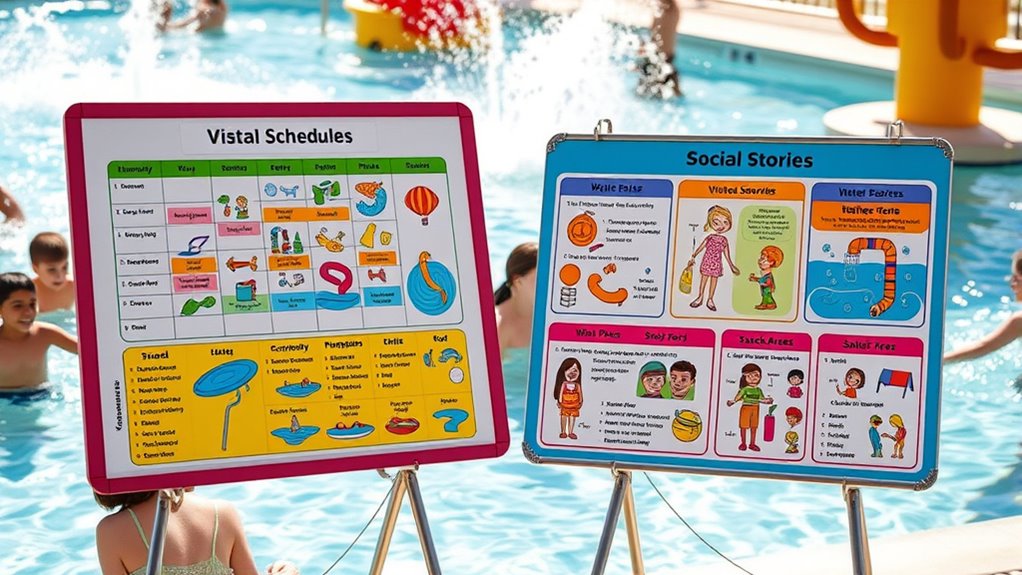
Choosing the right materials for water-resistant visual tools is essential to guarantee they withstand the wet, active environment of water parks. PVC is a popular choice because it’s durable, waterproof, tear-resistant, and resists deformation, making it ideal for schedule cards. Waterproof coated paper offers vibrant visuals with water resistance and durability, while laminated paper creates wipeable, waterproof surfaces suitable for repeated use. Thick cardboard with waterproof coating provides sturdy backing, often combined with magnetic strips for easy placement. These materials resist water splashes, tears, fading, stains, and smudges, ensuring longevity in humid, wet conditions. PVC’s versatility and resilience make it a top material choice for maintaining visual tool integrity in water environments. Selecting these options helps keep visual supports functional, clear, and safe for repeated handling in busy water park environments. Using appropriate waterproof materials also helps prevent damage caused by humidity and frequent contact with water, extending the lifespan of visual supports.
Incorporating Choice and Independence Into Visual Supports
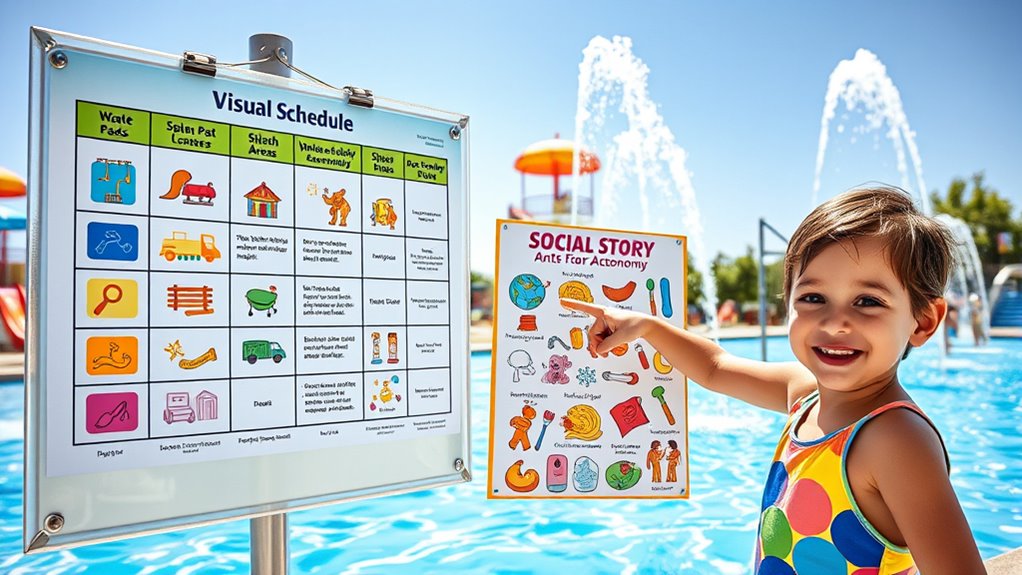
Incorporating choice and independence into visual supports empowers you to help individuals with ASD communicate their preferences and make decisions confidently. Choice boards allow them to visually express what they want, increasing autonomy during activity selection. Visual choice boards reduce frustration and support successful navigation of daily challenges, especially for those with limited language skills. Using tools like first-then boards helps structure choices, making sequences clearer and reinforcing understanding of consequences. These visual supports promote decision-making and enable individuals to communicate their desires effectively. Choice-based tools are among the most common interventions used for children with ASD, alongside PECS and social stories. Research shows that incorporating choice and independence into visual supports can significantly improve engagement and skill acquisition. By integrating these supports, you’re fostering independence, building confidence, and helping individuals feel more in control during water park visits. Additionally, visual supports can be tailored to each person’s unique preferences and needs, further enhancing their effectiveness and personal relevance.
Rehearsing and Reinforcing Water Park Routines Through Visuals

You can strengthen water park routines by practicing them with visuals before the day of the visit. Repeating these visual cues helps reinforce understanding and builds confidence in the expected activities. Using consistent reinforcement techniques encourages children to stay engaged and remember each step of the routine. Incorporating visual aids related to water park safety and activities can further enhance comprehension and retention.
Visual Practice Strategies
Visual practice strategies are essential for helping children on the spectrum become familiar with water park routines and reduce anxiety. Using picture-based visual schedules, you can outline the entire visit, from arrival to departure, helping your child understand what to expect. Make sure these schedules are waterproof and durable, so they withstand wet conditions. Reviewing the visuals before the outing builds familiarity and confidence, easing progressions and reducing surprises. Video modeling is also effective—showing routines or safety behaviors helps reinforce expectations through observation. By repeatedly practicing these visual supports, your child can better anticipate activities and safety rules, which promotes calmness and independence. Incorporating these strategies prepares your child for the water park experience, making it enjoyable and less overwhelming. Understanding water safety risks is crucial; including safety tips within visual supports can further enhance your child’s awareness and response in water-related situations. Additionally, consistent use of visual supports can help develop communication skills, enabling your child to express needs and concerns more effectively during the outing.
Reinforcement Techniques
Reinforcing water park routines through visuals enhances compliance and reduces anxiety by providing clear, predictable cues. Using visual supports helps children understand what to do next, making shifts smoother. Pairing visuals with immediate rewards, like stickers or tokens, boosts motivation and encourages participation. Consistent reinforcement across visits helps solidify routines, making them more automatic over time. Visual schedules can include a “reward step” at the end to celebrate success and motivate continued engagement. Incorporating timers or countdowns reinforces transitions between activities, helping children anticipate upcoming events. Visual supports are especially effective because they cater to different learning styles and provide a universal method of communication. Additionally, visual supports can serve as a form of visual prompting, which has been shown to be effective in teaching new routines. By regularly reviewing and updating visuals, you reinforce learned routines and support skill retention. Effective reinforcement techniques foster independence, reduce challenging behaviors, and create positive water park experiences for children with autism.
Tips for Customizing Visual Supports to Meet Individual Needs
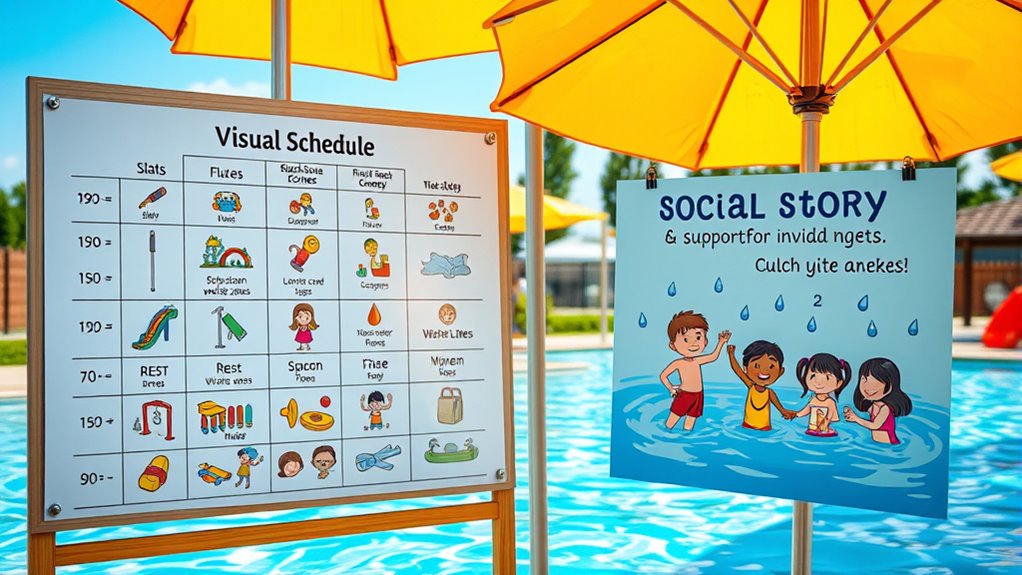
Customizing visual supports to meet individual needs involves selecting and adapting symbols, schedule length, and presentation methods that align with each learner’s developmental level, sensory preferences, and interests. To do this:
Personalize visual supports by selecting symbols, schedule length, and presentation methods tailored to individual needs and preferences.
- Choose symbols like line drawings, real photos, or clipart based on the learner’s response and visual processing strengths.
- Adjust schedule complexity by keeping it short for younger children or those with limited attention, and expanding for older or more advanced learners.
- Incorporate sensory-friendly icons and waterproof materials to suit environmental needs and sensitivities.
- Personalize supports with choice boards, preferred activities, and relevant photos, updating them regularly to stay engaging and relevant.
- Use line drawing pictures (Boardmaker, Smarty Symbols, LessonPix) as the primary option. These are generally preferred initially for most students because they are easier to produce and interpret, but switching to real pictures or objects can enhance understanding over time. Additionally, aligning visual supports with visual processing strengths can improve comprehension and engagement.
These steps help create effective, individualized visual supports that foster understanding and independence.
Frequently Asked Questions
How Can Visual Supports Be Adapted for Children With Varying Sensory Sensitivities?
You can adapt visual supports by using calming imagery and avoiding overstimulating patterns, making visuals adjustable in complexity to match your child’s tolerance. Include choice options for engagement levels, and highlight sensory-friendly features like quiet zones or textured play areas. Incorporate visual cues for sensory breaks and coping strategies, ensuring the visuals are clear and predictable. This approach helps your child feel more comfortable and in control during water park visits.
What Strategies Ensure Consistency of Visual Supports Across Different Water Environments?
You can’t afford to let visual supports become confusing messes—so, make consistency your superhero! Use the same symbols, style, and format in every water environment, from locker rooms to splash pads. Train staff to reinforce visuals with the same language, and prepare for shifts with “check your schedule” prompts. Regularly review and update visuals, ensuring they stay clear and reliable, no matter where your water adventure takes you.
How Do Visual Schedules Support Children With Language Delays During Water Outings?
Visual schedules help children with language delays understand and anticipate water outing activities, reducing confusion and anxiety. You can pair images with spoken words to reinforce understanding and build vocabulary. They also act as nonverbal communication tools, helping kids follow routines independently. By providing clear visual cues, you make it easier for children to grasp what’s happening next, boosting their confidence and supporting smoother, more enjoyable water park experiences.
What Are Effective Ways to Involve Children in Creating Their Own Visual Supports?
Want to boost your child’s engagement and understanding? You can involve them by letting them choose images or symbols that represent activities, routines, or preferences. Encourage them to arrange or customize their visual supports, like drawing or selecting photos. Ask questions about their choices to promote decision-making. This collaborative process makes supports more meaningful, increases independence, and helps your child feel confident using their personalized visual tools.
How Can Parents Monitor and Update Visual Supports as Children Develop?
You can monitor and update visual supports by regularly observing your child’s comprehension, communication, and engagement levels. Keep track of their behavior and progress, and gather feedback from teachers or therapists. When you notice changes, simplify or add complexity to visuals accordingly. Involve your child in the updates to foster ownership, and use tools like digital apps or timers to keep supports current and effective, ensuring they grow with your child’s development.
Conclusion
So, after all this, it turns out that your shiny new visual supports might just become your child’s best friends at the water park—until they decide to run off with them, of course. But in all seriousness, with the right tools and a little patience, you’ll find that these visual aids not only prepare your child for water adventures but also make your day a whole lot easier. Who knew a picture could save the day?