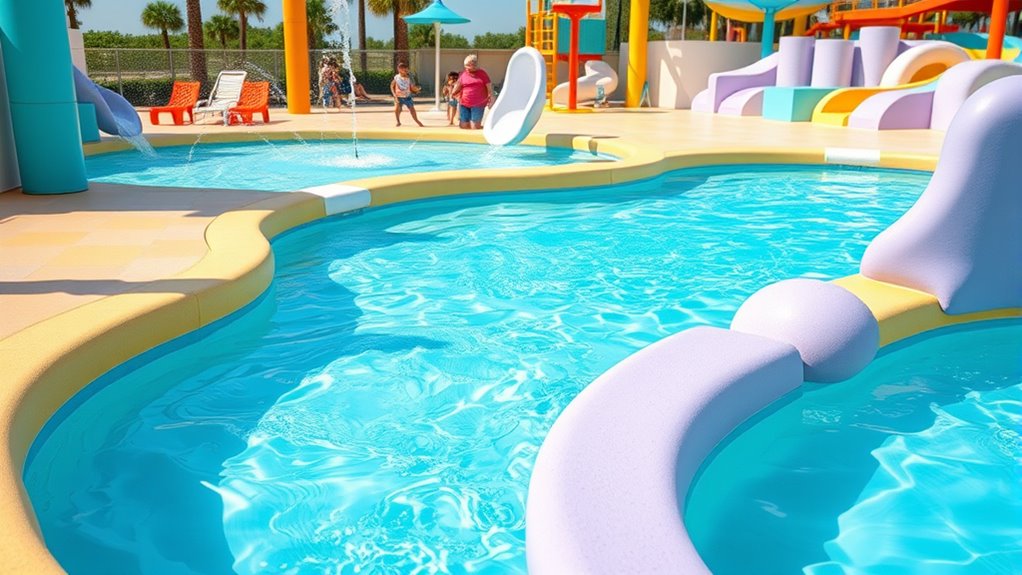
To plan a sensory-friendly water park, start by evaluating your community’s needs through surveys and focus groups. Design inclusive, multisensory environments with calming spaces, accessible water features, and visual or tactile cues. Prioritize safety with proper signage, social distancing, and trained staff. Incorporate environmental modifications like shading and noise control, and develop staff training on sensory needs. Focus on sustainability and maintenance for long-term success. Keep exploring further to discover detailed strategies and practical steps to bring your vision to life.
Key Takeaways
- Conduct community assessments and stakeholder engagement to identify specific sensory needs and design inclusive water features.
- Incorporate safety and accessibility features such as gentle water zones, ramps, non-slip surfaces, and adaptive equipment from the start.
- Integrate multisensory elements like calming visuals, tactile textures, and adjustable water flows to create a stimulating yet soothing environment.
- Train staff extensively on sensory processing differences, safety protocols, and effective communication with diverse visitors.
- Develop programs with targeted activities, sensory-friendly hours, and resource guides to ensure ongoing accessibility and community involvement.
Assessing Community Needs and Setting Goals

How can you guarantee your water park effectively meets the needs of the community? Start by understanding local demographics, including the prevalence of sensory processing disorders and autism spectrum disorders. Knowing that about 1 in 36 children in the U.S. has autism helps you anticipate safety risks and design appropriate accommodations. Recognizing signs like ear covering can help staff identify children with sensory sensitivities or autism, allowing for timely support. Additionally, considering essential oils for sensory regulation can inform the development of calming spaces or products to support children with sensory needs. Identify age ranges, family structures, and cultural or linguistic diversity to tailor outreach and communication. Evaluate existing recreational options to find gaps or successes in sensory-friendly programming. Conduct surveys, focus groups, and interviews with families and advocacy groups to gather nuanced needs and preferences. Setting clear, measurable goals—like reducing sensory overload incidents and increasing participation—ensures your water park remains inclusive, safe, and engaging for all community members.
Designing Inclusive and Sensory-Diverse Environments
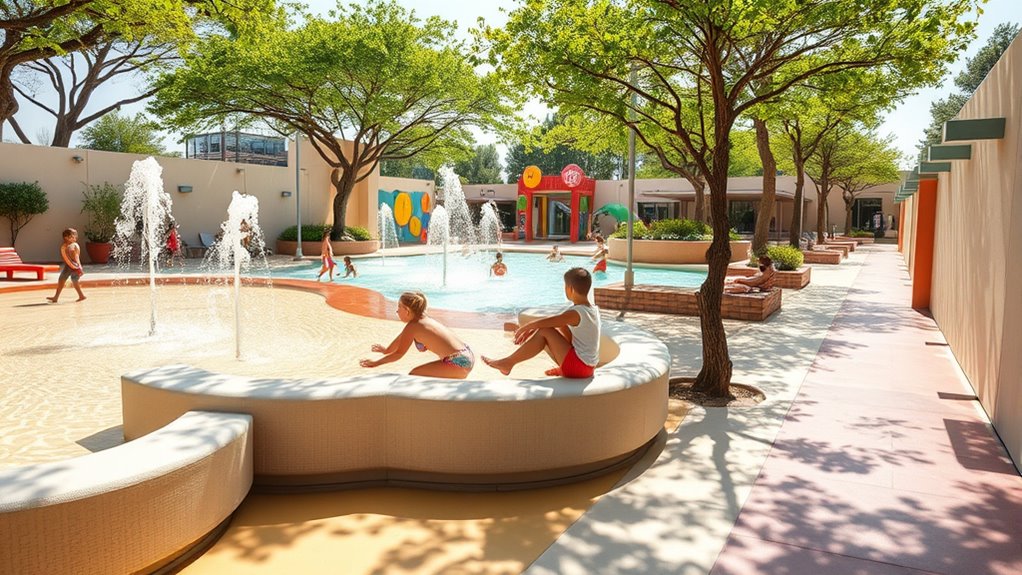
Creating an inclusive and sensory-diverse water park environment involves thoughtfully selecting features that cater to a wide range of sensory preferences and abilities. Incorporate low-profile water elements like ground-level sprayers and gentle fountains for mobility challenges, alongside taller features such as dumping buckets and water towers for visual stimulation. Misting zones provide calming sensory input, while streaming water and sheets of water create immersive experiences. Guarantee water features are spaced for easy navigation, including access for mobility devices. Offer both active and quiet interactive products—like spinning wheels and sensory tables—designed for all abilities, with accessible heights and reachable from seated positions. Use high-contrast colors, simple visual cues, and tactile indicators to support visual impairments. Position seating strategically for supervision and independence, maintaining clear sight lines and accessible paths throughout. Additionally, incorporating adjustable water flow controls can help cater to individual sensory sensitivities and preferences. Understanding sensory processing differences is crucial for creating environments that are welcoming and enjoyable for everyone.
Prioritizing Safety, Comfort, and Accessibility Features
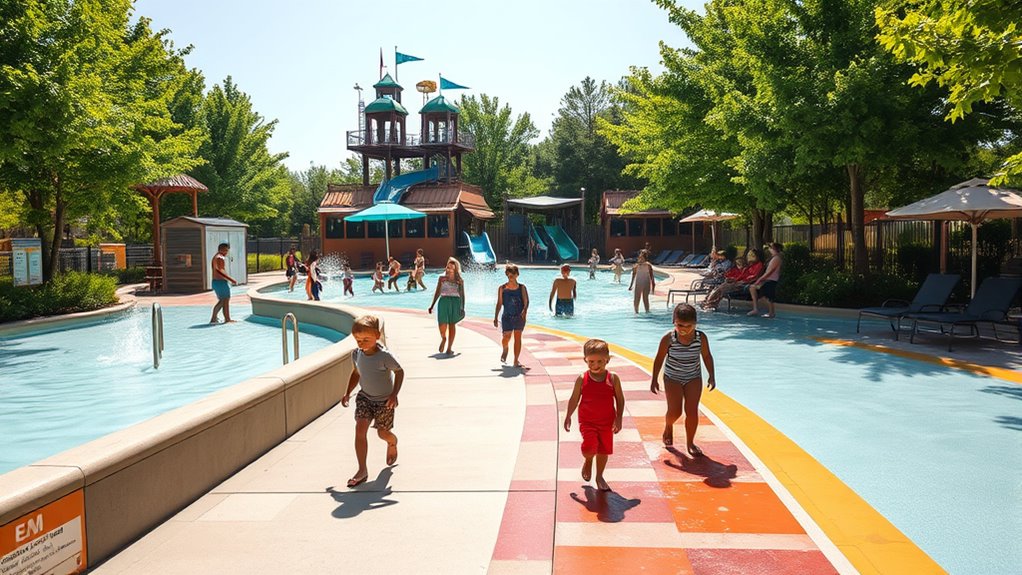
Prioritizing safety, comfort, and accessibility in a water park requires implementing clear protocols, thoughtful design features, and trained staff to support all guests effectively. You’ll want safety measures like water depth limits for young children and non-slip surfaces in play zones to prevent accidents. Accessibility features such as ramps, grab bars, and adaptive facilities ensure everyone can enjoy the park. Trained staff, including disability support personnel, are essential for inclusive safety. Use the following table to visualize key features:
| Safety & Protocols | Accessibility & Comfort |
|---|---|
| Water depth limits | Ramps & grab bars |
| Non-slip surfaces | Shallow zones |
| Service animals | Adaptive changing rooms |
| Trained staff | Rest & shaded areas |
Additionally, incorporating Universal Accessibility from the initial design phase ensures that all features, from entry points to water play elements, are seamlessly accessible to everyone. A focus on safety standards helps maintain a secure environment for all visitors.
Integrating Sensory Elements and Environmental Modifications
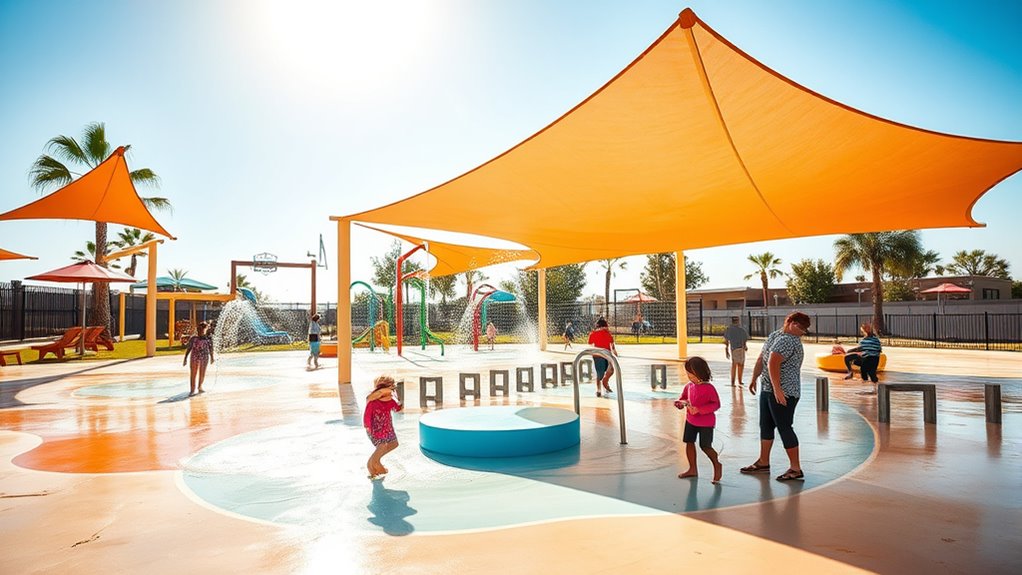
To create a truly sensory-friendly water park, you need to thoughtfully incorporate multisensory features and environmental modifications. This means adding water sounds, tactile textures, and visual effects that can be tailored to individual needs. By balancing stimulating elements with calming spaces, you guarantee all visitors can enjoy the experience comfortably and safely. Multi-sensory experiences support neural connections, which further enhances cognitive development and creativity for visitors of all ages. Additionally, implementing AI security measures ensures the safety and protection of sensitive data related to visitor health and preferences, fostering trust and peace of mind.
Engaging Multi-Sensory Features
In designing sensory-friendly water parks, integrating diverse multi-sensory features plays a crucial role in accommodating a wide range of sensory needs. You can create zones with different sensory intensities, such as calm areas with gentle water flows and energetic zones with jets, to offer tailored experiences. Tactile aquatic elements like water wheels and interactive spray toys stimulate exploration and cognition. Visual stimulation can come from reactive LED lighting systems and shimmering water domes, engaging sight alongside touch and sound. Auditory features, like immersive sound diffusion and water splashing sounds, add layered sensory input. These features benefit neurodivergent children by providing calming or stimulating options tuned to their sensory processing needs. The project in Winterville, NC, features the HydroLogix® system with 60 GPM flow rate, which supports these sensory experiences by efficiently operating water features without power. Additionally, understanding the operating hours of nearby parks can help plan visits that maximize sensory-friendly experiences in less crowded environments.
Thoughtful Environmental Adjustments
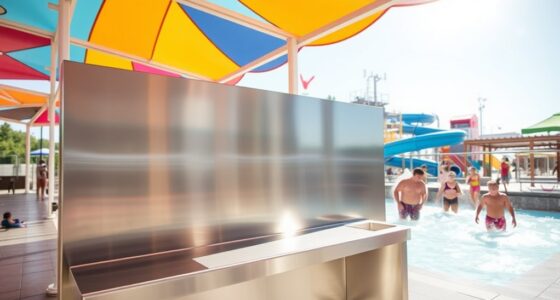
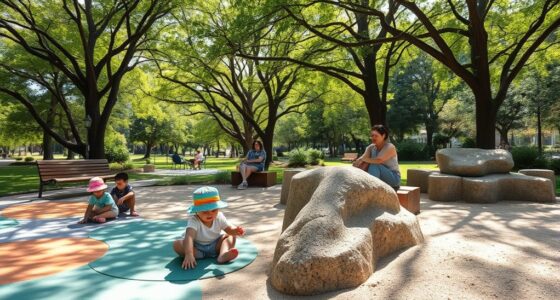
Thoughtful environmental adjustments are essential for creating a sensory-friendly water park that accommodates diverse needs. You can incorporate shaded seating zones to offer relief from bright sunlight and allow visitors to take breaks comfortably. Installing noise-canceling headphones or sound-dampening materials helps reduce auditory overload, making the environment calmer. Using soft, non-slip surfaces like rubber mulch or artificial grass minimizes fall risks and tactile discomfort. Offering pop-up tents or quiet shelters provides safe retreats during sensory overload. Limiting background music and loud announcements maintains a peaceful atmosphere. These modifications create a safer, more comfortable space, helping visitors regulate their sensory input while enjoying the water park. Research shows that incorporating natural elements and textures can further enhance sensory engagement and promote emotional regulation. Creating a calming environment with thoughtful design features can significantly improve the overall experience for visitors with sensory sensitivities.
Developing Staff Training and Programmatic Strategies

You need to guarantee your staff understands sensory processing differences and how to recognize guests’ individual needs. Providing ongoing, inclusive training helps your team communicate effectively and respond appropriately to sensory overload or distress. By developing targeted strategies and certifications, you create a more welcoming, safe environment for all visitors. Sensory-friendly swimming lessons are particularly effective when staff are knowledgeable about sensory sensitivities and can adapt their approach accordingly. Incorporating principles of sensory-friendly environment design into staff training ensures staff are prepared to support guests with diverse sensory needs.
Staff Disability Awareness
Effective staff disability awareness is essential for creating a safe and inclusive water park environment. You need to guarantee staff understand various disabilities, common challenges, and effective communication strategies. Training should include hands-on water sessions where staff experience adaptive equipment and scenarios firsthand. Topics must cover understanding adaptive aquatic tools, recognizing sensory sensitivities, and addressing elopement risks. Recognizing behavioral cues and de-escalating sensory overloads are critical safety skills. Additionally, incorporating recent training programs like the upcoming aquatic disability workshop can provide valuable, up-to-date insights and practical skills. Training programs can enhance staff preparedness by focusing on: – Thorough training on disability definitions, challenges, and communication methods – Practical, scenario-based exercises with adaptive equipment – Strategies for emergency response, rescue procedures, and sensitivity awareness. Understanding ethical hacking principles can also inform secure and safe operational practices in staff training environments. This approach promotes confidence in staff and fosters respectful, supportive interactions with all patrons.
Inclusive Program Development
Developing inclusive programs requires integrating accessibility strategies into every aspect of the water park’s activities and events. You should design programs that address sensory, cognitive, and physical needs across all guest groups. Partnering with organizations like IBCCES can help standardize accessibility and offer certification, ensuring your staff are properly trained. Training must cover supporting guests with sensory processing disorders, autism, and other disabilities, including communication and emergency protocols. Regularly review and update your offerings to stay aligned with evolving standards. Incorporate adaptive activities like sensory-friendly hours, tactile water play, and quiet zones. Provide accessible resources such as sensory guides, accessibility passes, and sensory accommodations. Engaging families and the community fosters a welcoming environment, ensuring everyone enjoys an inclusive water park experience. Creating a sensory-friendly environment supports a positive experience for all visitors and demonstrates a commitment to inclusive program development.
Ensuring Sustainability and Long-Term Maintenance
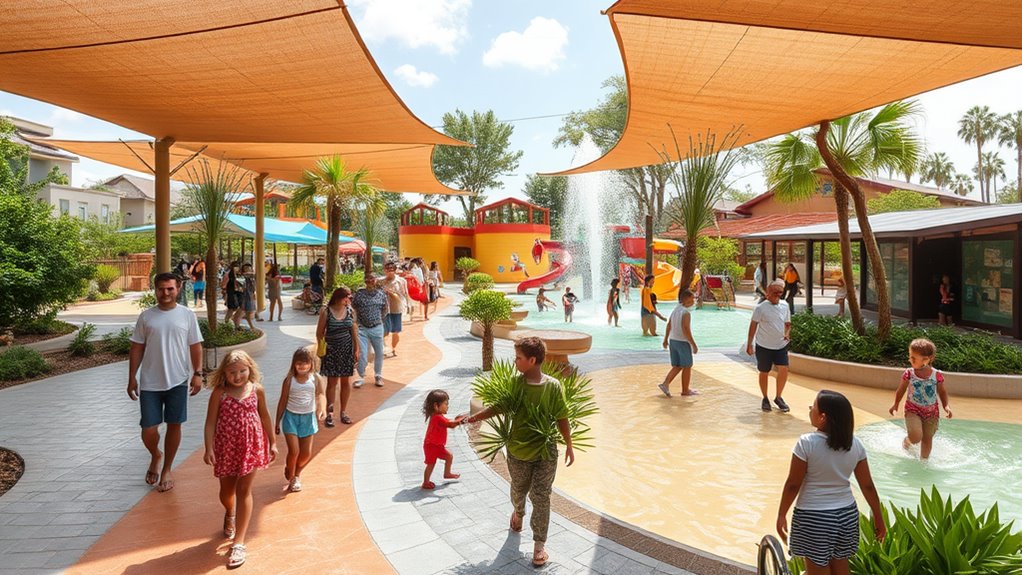
Ensuring the sustainability and long-term maintenance of a sensory-friendly water park requires implementing water-saving technologies, establishing routine upkeep, and selecting durable materials. You should install recirculation systems to cut water use by up to 90%, and use programmable timers and sensors to control flow and reduce waste. Incorporate low-flow nozzles and rainwater collection for irrigation to boost conservation. Regular maintenance is vital—set schedules for daily checks, weekly inspections, and annual safety audits. Keep water features, pumps, and circulation systems clean and well-maintained, and document all activities. Choose materials like stainless steel and marine-grade plastics that resist wear and environmental damage. Proper water quality monitoring, accessibility, and staff training further guarantee safety, efficiency, and sustainability over the long term. Vetted water-efficient systems ensure optimal resource use and longevity of the park infrastructure.
Frequently Asked Questions
How Can Funding Be Secured for Sensory-Friendly Water Park Projects?
You can secure funding by applying for grants from local and national foundations, corporate social responsibility programs, and government agencies. Partner with non-profits and local governments to share costs. Organize community fundraisers and seek sponsorships from local businesses. Additionally, pursue certification as a Certified Autism Center and collaborate with advocacy groups. Document your project’s impact to attract donors and explore online crowdfunding to reach broader supporters.
What Are Effective Ways to Measure Visitor Satisfaction for Inclusive Design?
You can effectively measure visitor satisfaction by using a mix of surveys, including Likert scales and open-ended questions, to gather both quantitative and qualitative insights. Conduct on-site intercepts and online surveys to capture immediate and post-visit feedback. Incorporate technology like RFID wristbands and digital kiosks for real-time data. Analyzing satisfaction related to sensory-friendly features guarantees your design meets diverse needs and continuously improves, even if some visitors hesitate to share openly.
How Do Zoning Strategies Support Different Sensory and Ability Levels?
You support different sensory and ability levels by creating distinct zones that cater to varying needs, such as calm areas for low stimulation and dynamic zones for more intense experiences. Clear spatial separation minimizes overload, while graded accessibility guarantees everyone can enjoy the space comfortably. This approach allows visitors to choose environments that match their comfort, promoting inclusivity, self-regulation, and a positive experience tailored to their individual sensory and ability requirements.
What Are Best Practices for Integrating Sensory-Friendly Signage and Communication?
Imagine a lighthouse guiding visitors safely through your water park. You should use high-contrast signs with simple icons and tactile features like braille to guarantee clarity. Position signs at key points, avoiding glare and overwhelming colors, and include sensory guides. Train staff to support communication, offering quiet zones for breaks. This approach creates navigational landmarks that foster comfort, safety, and understanding for all visitors, especially those with sensory sensitivities.
How Can Partnerships Enhance Accessibility and Sensory Inclusivity Initiatives?
Partnerships boost your accessibility and sensory inclusivity efforts by providing specialized expertise and resources. You can access adaptive equipment, design guidance, and staff training from disability organizations and healthcare providers. Collaborating with these partners helps you create sensory-friendly features like tailored water experiences and clear signage. They also assist in outreach, ensuring diverse visitors feel welcomed and supported, which ultimately makes your water park more inclusive and enjoyable for everyone.
Conclusion
By blending bold barriers and building welcoming, wellness-focused water parks, you create spaces that truly cater to every guest. Embrace empathy, enhance experiences, and guarantee safety with thoughtful planning and inclusive design. With dedication and detail, your sensory-friendly water park becomes a sanctuary of smiles and sensory serenity. Start with awareness, implement intentional ideas, and inspire inclusivity. Together, you can transform tides of turbulence into tranquil, truly tailored aquatic adventures.