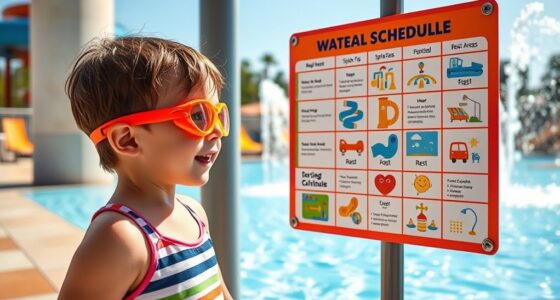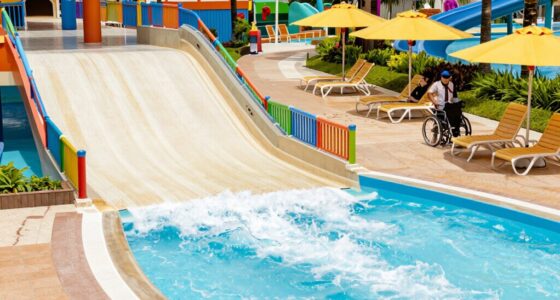
To reduce overstimulation at a busy water park, take regular sensory breaks in quiet areas or shaded spots to help your nervous system reset. Bring noise-canceling headphones to block loud sounds and communicate your needs clearly. Plan visits during less crowded times and keep a flexible schedule with plenty of downtime. Dress comfortably, stay hydrated, and bring calming items. Following these tips can make your day more enjoyable; discover more approaches to stay comfortable all day long.

Get pool and patio gear delivered free with Prime
- Fast, free delivery on millions of items
- Prime Video, Amazon Music and more included
- Member-only deals all year
Key Takeaways
- Visit during off-peak hours and plan frequent sensory breaks in quiet, shaded areas.
- Use noise-canceling headphones to manage loud sounds and communicate your needs clearly.
- Bring calming items like a favorite toy or book for comfort during overstimulating moments.
- Wear comfortable clothing, stay hydrated, and take regular snacks to maintain energy levels.
- Adjust your schedule as needed, prioritizing downtime and avoiding rushing through activities.

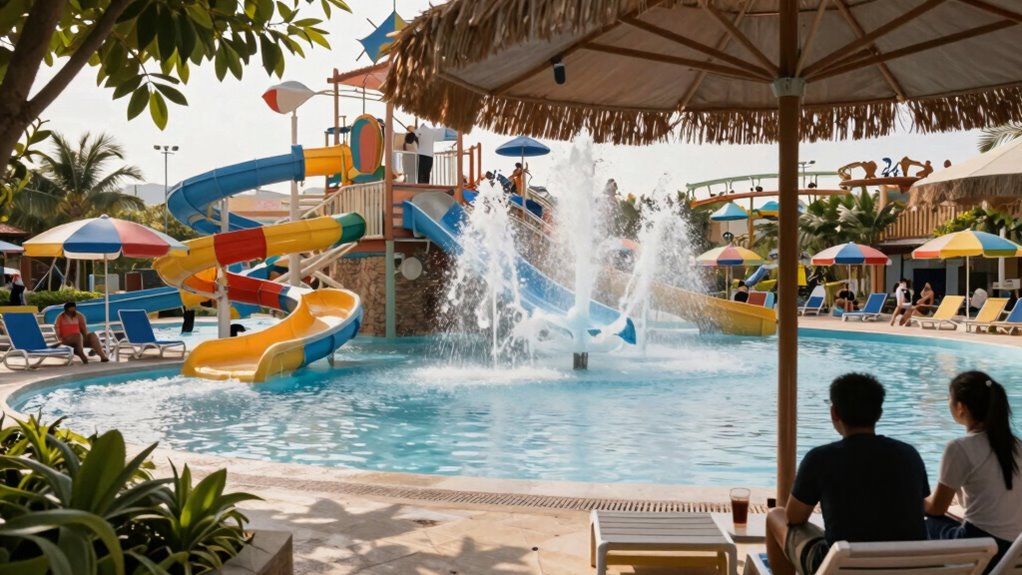
Visiting a busy water park can be exciting, but the loud noises, bright lights, and crowds often lead to overstimulation, especially for sensitive individuals or young children. To make the experience more comfortable, it’s important to plan ahead and incorporate strategies that help reduce sensory overload. One effective method is taking regular sensory breaks. When you notice signs of discomfort—such as covering ears, fidgeting, or becoming withdrawn—step away from the busy areas. Find a quiet corner or shaded spot where you can sit for a few minutes to regain your composure. These brief breaks help your nervous system process the overwhelming stimuli and prevent escalation of stress. Incorporating mind-body healing techniques can also promote relaxation during stressful moments.
Bringing noise canceling headphones is another smart move. These headphones can considerably diminish the loud sounds of splashing, shouting, and loud music, creating a more manageable auditory environment. Slip them on when things feel too noisy, and you’ll notice a stark difference in your comfort level. Noise canceling headphones aren’t just for kids; they’re valuable tools for anyone sensitive to sound. They allow you to control your auditory environment, making it easier to enjoy the water park without feeling overwhelmed. When using headphones, communicate clearly with others so they understand your needs and won’t mistakenly think you’re ignoring them. Additionally, understanding the importance of sensory processing can help you better manage overstimulation. Being aware of your sensory sensitivities can guide you in choosing the most effective strategies for your individual needs.
In addition to sensory breaks and noise-canceling headphones, consider planning your visit during less crowded times, such as early mornings or weekdays. Fewer people mean less noise, shorter lines, and a calmer atmosphere. Keep a schedule that includes plenty of downtime—don’t try to do everything at once. This prevents exhaustion and sensory overload. Incorporating ergonomic designs such as comfortable seating or supportive footwear can also help reduce physical discomfort that may contribute to overstimulation. Bring along calming activities or items, like a familiar stuffed animal or a favorite book, to help you or your child stay grounded during breaks.
Hydration and proper nutrition are also essential. Overstimulation can cause fatigue, and dehydration might worsen sensory sensitivity. Take breaks to hydrate and snack regularly, helping your body stay balanced. Wearing comfortable clothing and sun protection can prevent physical discomfort, which might add to sensory overload. Remember, it’s okay to adjust your plans based on how you’re feeling. If the noise or crowds become too much, prioritize your well-being by heading to a quieter area or leaving early. Your comfort and mental health should always come first, so listen to your body and take proactive steps to enjoy your time at the water park without feeling overwhelmed.
Products Worth Considering

Sony WH-1000XM6 Wireless Noise-Canceling Over-Ear Headphones, Blue, Bundle

Bose QuietComfort Headphones (2nd Gen), Wireless Noise-Cancelling Over-Ear Headphones, Eucalyptus Green

Bose QuietComfort Wireless Noise Cancelling Headphones, Black
As an affiliate, we earn on qualifying purchases.
Frequently Asked Questions
What Are the Signs of Overstimulation in Children at Water Parks?
You’ll notice signs of overstimulation in children at water parks through behavioral cues like covering their ears, whining, or trying to leave busy areas. They might become overwhelmed by sensory overload, showing signs of irritability, fussiness, or withdrawal. Watch for excessive fussiness, difficulty focusing, or sudden quietness, which all indicate they’re struggling with the noisy, vibrant environment. Recognizing these cues helps you ease their discomfort quickly.
How Can I Prepare My Child Before Visiting a Busy Water Park?
Before visiting a busy water park, establish a pre-visit routine to help your child feel prepared. Talk about what to expect, review park rules, and go over safety measures. Bring sensory tools like noise-canceling headphones or a fidget toy to comfort your child amid the noise and crowds. Ensuring your child knows the plan and has calming tools can make the experience smoother and more enjoyable for everyone.
Are There Specific Times to Visit to Avoid Overstimulation?
Think of the water park as a lively symphony; visiting during off-peak hours lets you enjoy the melody peacefully. Aim for early mornings or late afternoons when peak hours are over. Seek out quiet zones, like shaded loungers or less crowded slides, to give your child a calming space. By timing your visit wisely, you help your child avoid overstimulation and create a more enjoyable experience for everyone.
How Does Noise Level Impact Overstimulation at Water Parks?
Noise level greatly impacts overstimulation at water parks, especially if you’re sensitive to noise. High noise levels can trigger auditory overload, making you feel overwhelmed or anxious. If you’re noise sensitive, you might find loud crowds or loud rides exhausting. To manage this, seek quieter areas or wear noise-canceling headphones. Keeping track of noise levels helps you avoid situations that could lead to auditory overload, making your visit more enjoyable and less stressful.
What Are Some Calming Techniques for Children During Overstimulation Episodes?
When your child feels overwhelmed, you can help by guiding them through calming techniques like deep breathing exercises to slow their racing thoughts. Offer sensory breaks by finding a quiet spot away from the noise, allowing them to reset. Use gentle words and a soothing touch to reassure them. These strategies create a peaceful pause amid chaos, helping your child regain control and feel safe during overstimulation episodes.
Conclusion
By keeping these tips in mind, you might just find yourself enjoying the water park without feeling overwhelmed. Sometimes, the loud laughter and splashing can seem like a coincidence of chaos, but with a little preparation, you can create your own calm amidst the excitement. Remember to take breaks, stay hydrated, and listen to your body. Before you know it, those moments of overstimulation become just another part of your fun-filled adventure.