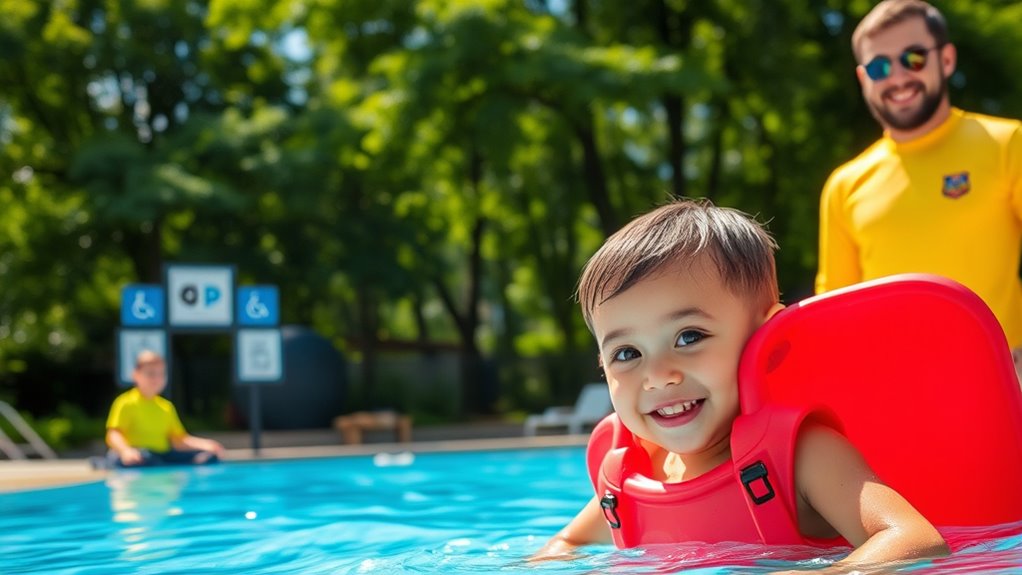
To guarantee inclusive aquatic experiences, parks often use adaptive swim aids like pool lifts, flotation devices, and stable chairs to help individuals with disabilities access and enjoy the water safely. Policies typically include ADA compliance, accessible entrances, and proper equipment maintenance. While challenges like staff training and resource limitations exist, many facilities implement strategies to improve safety and accessibility. Continuing this overview will reveal how these measures promote confidence, independence, and fun for all swimmers.
Key Takeaways
- Ensure park facilities include ADA-compliant accessible pool entries, lifts, and pathways for individuals with disabilities.
- Implement and maintain adaptive swim aids like pool lifts, flotation devices, and adjustable seating to promote safe, inclusive aquatic access.
- Develop inclusive policies that address the use, maintenance, and availability of adaptive equipment during park hours.
- Incorporate stakeholder input to establish clear guidelines for adaptive swimming programs and equipment use.
- Provide staff training on adaptive aids, safety protocols, and inclusive practices to ensure equitable access and support.
Types of Adaptive Swim Aids and Equipment
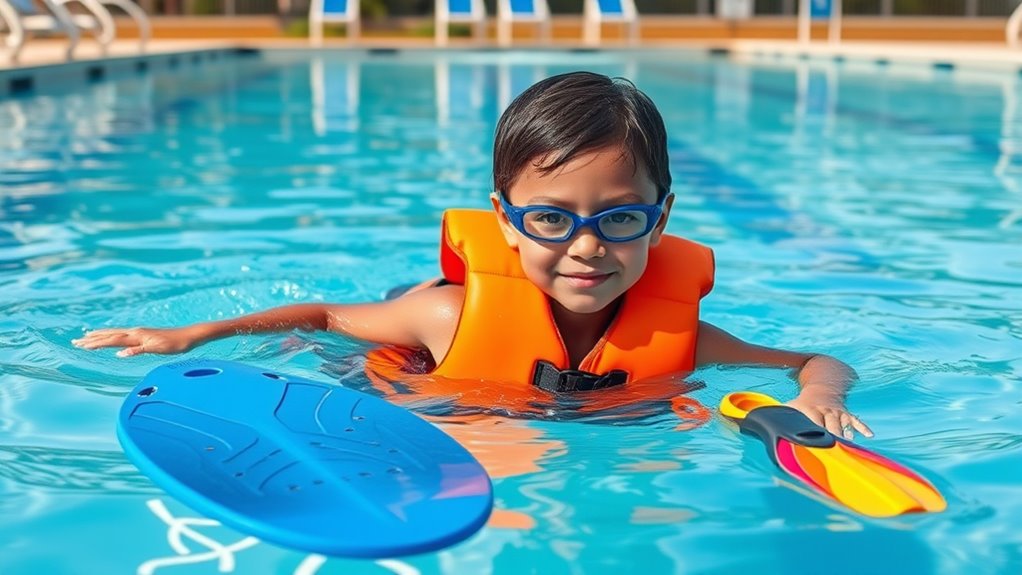
Adaptive swim aids and equipment come in a variety of designs to meet different needs, ensuring swimmers with disabilities can access and enjoy the water safely. Pool lifts like the Pool Pod allow wheelchair users to enter the pool without transferring out of their chairs, making entry easier and more comfortable. The EdgeMate Pool Chair provides safe, stable access for those with limited mobility. Portable lifts enable independent pool entry and exit, fostering confidence and autonomy. Hydrotherapy hoists assist therapists in safely moving individuals during aquatic sessions. Flotation devices such as collars, suits, and life jackets support head and body buoyancy, offering stability and safety. Specialized floats like cerebral palsy square floats or buoyancy belts help maintain proper positioning, making water activities accessible and enjoyable for everyone. Portable Pool Lift devices are often designed to be easily transportable, allowing for use in various locations or during travel. Additionally, adaptive equipment can be customized to suit individual needs, maximizing comfort and safety during water activities.
Benefits for Swimmers With Disabilities
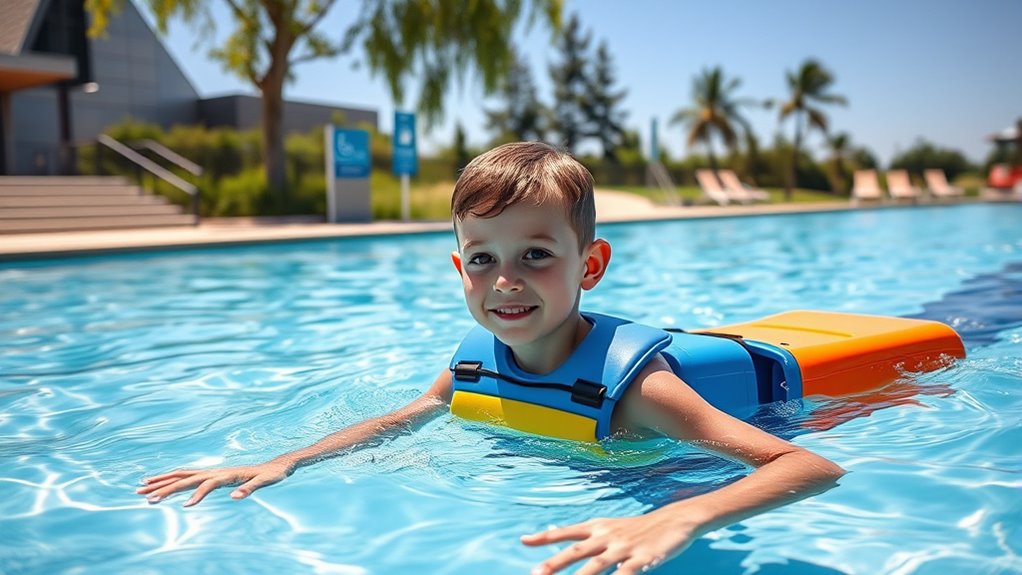
Swimmers with disabilities gain numerous benefits from aquatic activities that go beyond just physical exercise. Swimming engages multiple muscle groups, boosting cardiovascular health and muscular strength. The water’s buoyancy provides low-impact support, easing joint stress and improving mobility. For example, children with cerebral palsy often see better motor function and walking capacity after swimming programs. The aquatic environment enables movements difficult on land, enhancing coordination and body awareness. Additionally, consistent participation in adaptive swim programs can contribute to wealth accumulation, as access to specialized coaching and equipment may require financial resources. Beyond physical gains, swimming reduces stress and anxiety through sensory stimulation and social interaction. It also builds confidence, fostering independence and self-efficacy. Participating in adaptive swim programs creates a sense of community, promoting social inclusion. Overall, aquatic activities support mental, emotional, and physical well-being, empowering individuals with disabilities to lead more active and autonomous lives.
Policies for Inclusive Aquatic Facilities

Creating inclusive aquatic facilities requires implementing policies that prioritize accessibility and safety for everyone. You should ensure compliance with ADA standards, including accessible entrances, door widths, hand-rails, pool lifts, and entry points. Facilities must maintain ADA-approved devices like pool lifts in working condition and available during all hours. Consider developing inclusive swimwear policies that balance safety with accommodations, clearly defining enforcement and contact points. Incorporate stakeholder input, including staff and community groups, to shape effective policies. Program modifications, such as allowing caregivers or alternative flotation devices, are essential for full participation. In conclusion, design principles should follow universal accessibility practices, like zero-depth entries and tactile surfaces, with ongoing maintenance to uphold safety and compliance. Additionally, ongoing staff training on emotional support and inclusive practices can enhance the overall experience for all visitors.
Challenges in Implementing Adaptive Swim Programs

Implementing effective adaptive swim programs faces numerous challenges, particularly in establishing consistent instructor training standards. Developing national minimum standards is complex because disabilities vary widely, making “one size fits all” approaches ineffective. Differentiating training content and certification levels for instructors, therapists, and staff adds further complexity. No clear agency owns or certifies adaptive swim disciplines, slowing standardization. Participant-specific issues, like fear or age, require tailored approaches, but matching lessons to individual needs remains difficult. Additionally, resource constraints hinder progress. Limited trained instructors, lack of adaptive equipment, and the need for personalized lessons strain facilities and staff. The table below highlights these challenges:
| Challenge | Explanation |
|---|---|
| Training Standardization | Lack of unified, flexible instructor certification |
| Participant Needs | Diverse disabilities demand customized approaches |
| Resources & Equipment | Limited staff, adaptive gear, and facility support |
Furthermore, ongoing industry collaboration is essential to develop comprehensive solutions to these obstacles.
Strategies for Enhancing Accessibility and Safety

Enhancing accessibility and safety in adaptive swim programs requires thoughtful modifications to facilities, equipment, and instructional practices. You can improve access by ensuring ADA-compliant entrances, pool lifts, and appropriate door widths. Maintaining warm water temperatures (86–92°F) helps comfort and safety. Sensory-friendly environments, with controlled noise and lighting, support swimmers with sensitivities. Including caregivers during lessons without extra charges fosters support and safety. Implementing Universal Design Principles can further promote inclusivity for diverse needs.
In addition, adaptive equipment like ramps, flotation devices, and modified tools increase confidence and independence. Properly maintained gear, such as swim belts and paddle fins, enhances safety and propulsion. Tailoring instruction with specialized training, multisensory cues, and small-group sessions ensures effective learning. Clear policies on supervision, emergency procedures, and caregiver involvement further strengthen safety measures.
Frequently Asked Questions
How Do Adaptive Swim Aids Differ for Various Disabilities?
You’ll find that adaptive swim aids differ based on specific disabilities. For paraplegics and quadriplegics, portable lifts and full-body suits support independence and buoyancy. Those with cerebral palsy benefit from head floats and shoulder-strap rafts for stability. Individuals with developmental or sensory disabilities use brightly colored, tactile aids and swim vests to boost confidence and safety. Tailoring aids to each person’s needs guarantees a safe, comfortable, and enjoyable water experience.
What Training Do Staff Need for Inclusive Aquatic Programs?
You need specialized training in adaptive aquatic instruction, including understanding diverse disabilities, learning styles, and behavioral traits. This involves certification from reputable organizations like the Red Cross, Ellis and Associates, or IBCCES, focusing on safety, communication, and behavior management. You should also learn adaptive techniques such as sensory integration, communication strategies, and behavior support, along with evaluating swimmer abilities and modifying lessons to ensure a safe, inclusive, and welcoming environment for all participants.
Are There Funding Options for Adaptive Swimming Equipment?
You can access a vast universe of funding options for adaptive swimming equipment! Grants from organizations like the Challenged Athletes Foundation or Kelly Brush Foundation can cover costs, while local community groups, Rotary Clubs, and city programs often provide small grants or sponsorships. Crowdfunding platforms and equipment loan programs also help you raise or try out gear before buying. With so many avenues, funding your adaptive swim aids becomes an achievable reality.
How Is Safety Monitored With Diverse Adaptive Devices?
You guarantee safety by constantly supervising swimmers with adaptive devices, never relying solely on the equipment. Use waterproof ID wristbands for quick identification, and visually check aids regularly for wear or improper fit. Maintain clear communication with simple instructions and visual cues, reinforcing safety rules consistently. Stay attentive to signs of distress or discomfort, and intervene immediately if needed. Always combine adaptive devices with vigilant supervision to prevent accidents and ensure a secure swimming experience.
What Community Resources Support Adaptive Swimming Initiatives?
You’ll find community resources like YMCA programs, SNAPkids, and ShowMe Aquatics as guiding stars, lighting the way for adaptive swimming initiatives. These organizations offer tailored lessons, aquatic therapy, and social opportunities for individuals with special needs. Backed by local government, private foundations, and trained instructors, they create a safety net that guarantees everyone can immerse themselves confidently, building skills and confidence in a supportive, inclusive environment.
Conclusion
By embracing adaptive swim aids and inclusive policies, you can create a welcoming environment for all swimmers. Imagine a community pool where a young girl with mobility challenges confidently enjoys the water thanks to accessible ramps and flotation devices. Your efforts in improving accessibility and safety not only transform lives but also foster a sense of belonging. With continued commitment, you can make every aquatic space a place of joy and inclusion for everyone.