
TL;DR

Get pool and patio gear delivered free with Prime
- Fast, free delivery on millions of items
- Prime Video, Amazon Music and more included
- Member-only deals all year
A House Beautiful gardening report says gardeners can still plant five established autumn-flowering perennials: heleniums, heliopsis, penstemons, crocosmias and Japanese anemones. Plant only when the ground is workable, not frozen or waterlogged, and keep new plants watered as their roots establish.
Gardeners may still be able to add autumn color by planting established perennials, according to a House Beautiful report featuring advice from Charlotte McGrattan, a hardy nursery stock buyer at Hillier Garden Centers. The five plants named are heleniums, heliopsis, penstemons, crocosmias and Japanese anemones, but the advice comes with a condition: the ground must be workable, rather than waterlogged or frozen.
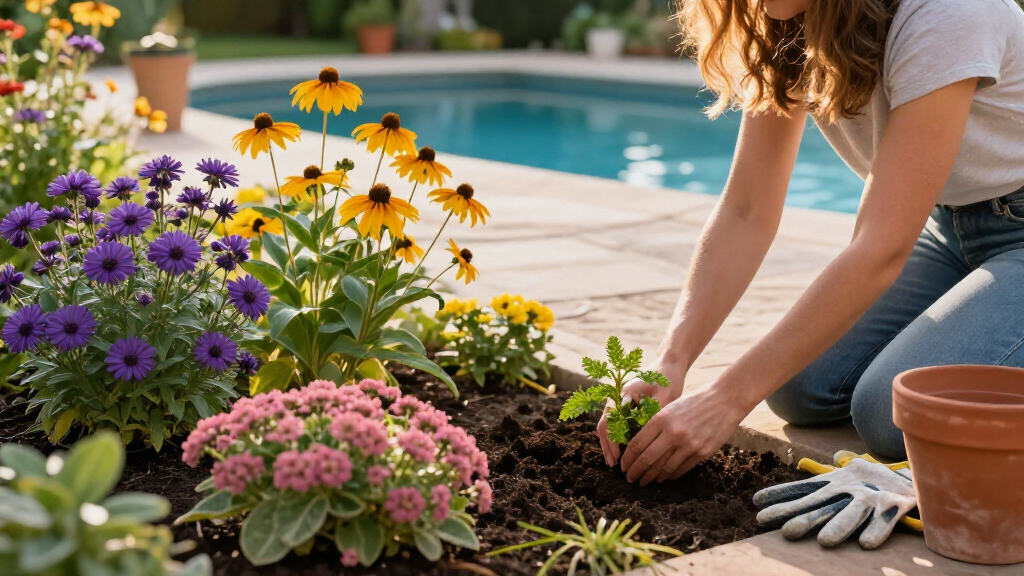
The report recommends planting established plants rather than starting all five from seed or bulbs late in the season, much like choosing established plants for containers. A mild, wet spell can help new roots settle, but very wet soil can leave plants short of air around their roots. If soil is too wet to work, the article suggests using pots with good drainage and keeping them in a sheltered place away from strong winds.
The choices offer different forms of seasonal interest. Heleniums bring yellow, red and orange flowers and can bloom from mid-summer into autumn. Heliopsis, also called false sunflower, has colorful flowers that can attract pollinators and serve as cut flowers; its flowering period is six to eight weeks, and the report recommends deadheading spent flowers to encourage buds.
Penstemons are usually best planted in spring, but the report says they can still go into pots now; their flowers come in purple, pink, white and blue, and they need well-drained soil. For crocosmias, the advice is to choose established, rooted plants rather than corms. Japanese anemones can also be planted as potted plants in late autumn if the soil is not frozen or waterlogged; they have pink or white flowers and can spread rapidly.
Late Planting Depends on Soil
The guidance gives gardeners a way to fill bare areas and retain seasonal color as summer-flowering plants fade, without suggesting that late planting will work in every garden. The practical limit is the condition of the ground: planting into soil that is waterlogged or frozen is not advised. That makes checking drainage and local weather more useful than following a calendar date alone.
Container planting offers an alternative when beds are too wet to work, but pots bring their own care needs. McGrattan says new perennials need thorough watering while they establish. Rainfall does not necessarily mean a plant has enough water, particularly in a container, so the report advises checking the soil rather than relying on the weather.
Products Worth Considering

Samsonite Freeform 2-Piece Luggage Set, Carry-On and Large Checked Suitcase, Navy

Travelpro Maxlite 5 Softside Expandable Spinner Carry-On, 21-Inch, Slate Green

Bose QuietComfort Wireless Noise-Cancelling Over-Ear Headphones, Black
As an affiliate, we earn on qualifying purchases.
Five Plants, Different Planting Needs
The report is practical seasonal gardening advice, not a claim that all five plants will thrive in all autumn conditions. Its recommendations distinguish between species and planting methods: rooted crocosmias are preferred over corms, while potted Japanese anemones and penstemons are options for late-season planting. Heleniums may be better in a sheltered pot where the soil is compacted or very wet.
McGrattan’s comments also describe features rather than guarantee results in a particular garden. Heleniums come in many varieties and colors; heliopsis grows in clumps with branching stems. Japanese anemones can spread quickly, a useful trait for filling a border but one gardeners may want to account for when choosing a planting spot.
“Newly planted perennials “require watering well while they establish.””
— Charlotte McGrattan, hardy nursery stock buyer at Hillier Garden Centers, as quoted by House Beautiful
Local Conditions Set the Limit
The report does not give a single cutoff date or temperature for autumn planting. Whether planting is suitable will vary with local weather, soil drainage and ground conditions. It also does not promise that every plant will establish or flower on the same schedule after late planting.
Readers should treat the plant descriptions as general guidance, not a site-specific assessment. The source does not identify particular varieties, regional growing zones or detailed care plans for each plant. Gardeners with persistently wet or compacted soil may need to use containers or wait until conditions improve.
Check Beds Before Planting
Before buying or planting, gardeners can check whether the ground is workable and well drained. Avoid planting in frozen or waterlogged soil; if a bed is too wet, consider a well-drained pot in a sheltered position. After planting, check soil moisture regularly and water new perennials while they establish, with particular attention to containers.
The next step is choosing plants suited to the space and the desired effect: heleniums for warm-toned flowers, heliopsis for pollinator-attracting blooms and cut flowers, or Japanese anemones where their tendency to spread can be accommodated. The report offers no follow-up results for specific gardens, so establishment and flowering will depend on local conditions and care.
Key Questions
Which perennials does the report say can still be planted in autumn?
It names heleniums, heliopsis, penstemons, crocosmias and Japanese anemones, with recommendations that differ by plant and planting method.
Can these perennials be planted in waterlogged or frozen ground?
No. The report advises avoiding planting when the ground is waterlogged or frozen. If soil is too wet to work, it suggests pots with good drainage in a sheltered spot.
Do newly planted perennials need watering if it has rained?
Yes, they may. McGrattan says new plants need watering while they establish. The report advises checking the soil rather than assuming rainfall was sufficient, especially for container plants.
Are crocosmias planted from bulbs or established plants in this advice?
The report recommends using established, rooted crocosmias for autumn planting rather than growing them from corms.
Source: housebeautiful.com