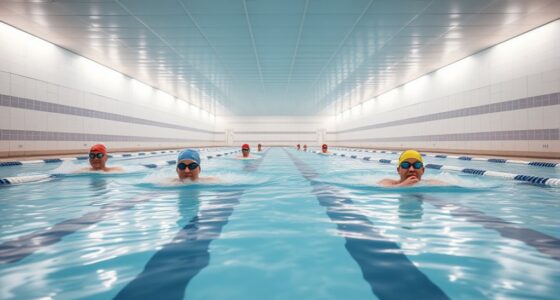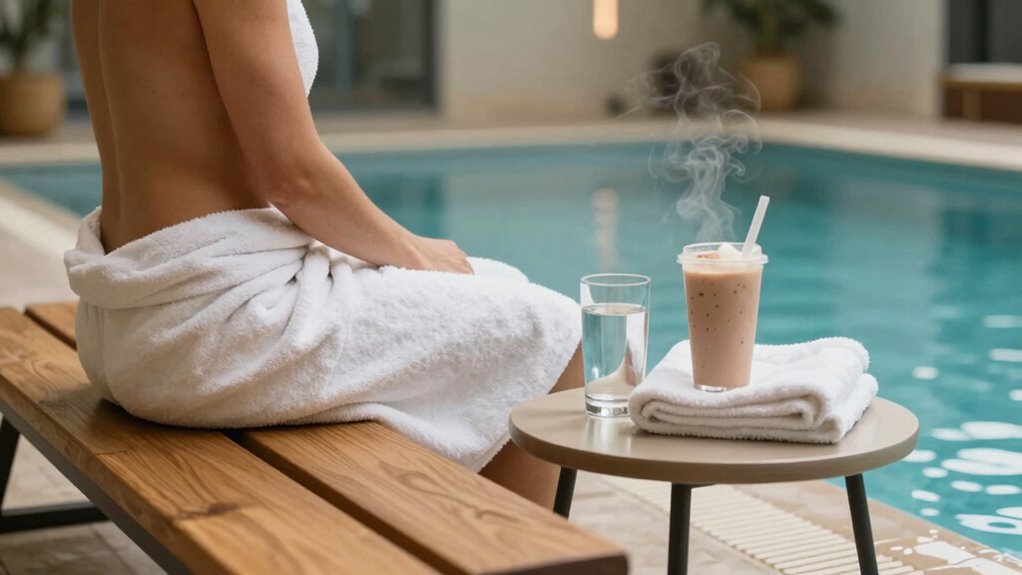

Practicing good post-swim recovery habits keeps you consistent by preventing fatigue, injuries, and muscle tightness. Hydrating properly replaces lost fluids and maintains energy levels, while eating a balanced snack helps your muscles recover faster. Incorporating stretching, cool-down routines, and rest guarantees your body stays flexible and ready for the next session. When you prioritize recovery, you’re more likely to stay motivated and avoid setbacks. Keep exploring to discover how these habits can turn your swimming routine into a sustainable success.
Key Takeaways
- Proper hydration replenishes fluids, preventing fatigue and enabling consistent training sessions.
- Nutritional intake within 30-60 minutes supports muscle recovery and maintains training momentum.
- Effective recovery techniques, like stretching and foam rolling, reduce soreness and promote ongoing progress.
- Adequate rest and sleep repair tissues, ensuring readiness for regular workouts without injury.
- Establishing routine habits fosters discipline, helping maintain consistency and long-term swimming success.
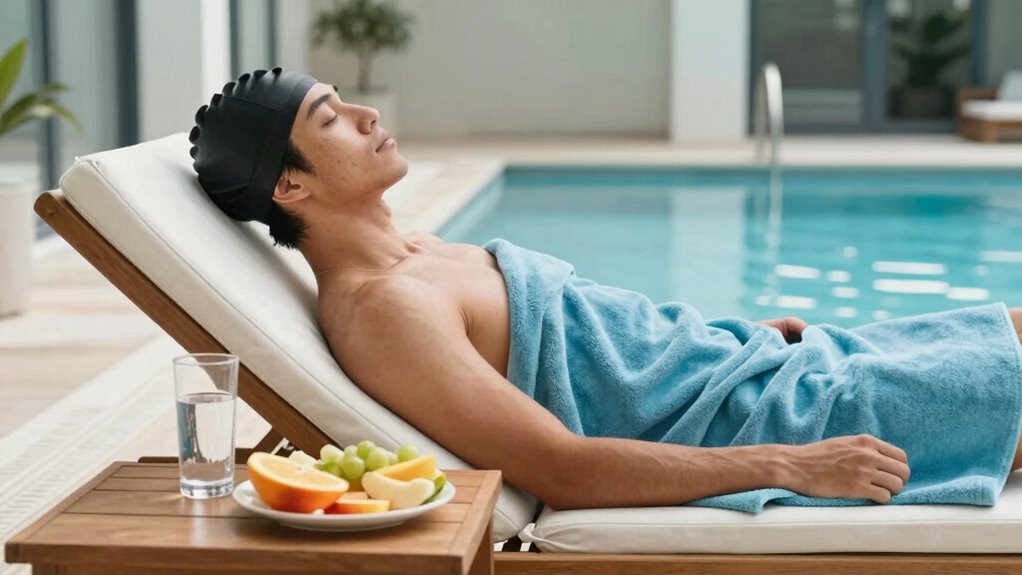
After you finish swimming, establishing effective recovery habits can greatly enhance your performance and prevent injuries. One of the most crucial aspects of recovery involves hydration strategies. As you swim, your body loses fluids through sweat and respiration, even if you don’t feel excessively thirsty. Ignoring hydration can lead to fatigue, muscle cramps, and slower recovery times. To stay on top of your game, drink water immediately after your swim, and consider electrolyte-rich beverages if you’ve been in the water for an extended period or if it’s hot outside. Proper hydration helps replenish lost fluids, supports muscle repair, and keeps your energy levels steady, making it easier to stick to your training schedule consistently. Developing healthy habits around hydration and recovery can further improve your overall swimming performance. Nutritional timing also plays a vital role in your post-swim routine. Right after you exit the pool, aim to consume a balanced snack or meal that includes carbohydrates and protein. Carbohydrates replenish glycogen stores in your muscles, which get depleted during intense workouts, while protein provides the amino acids necessary for muscle repair and growth. Timing is key—try to eat within 30 to 60 minutes after swimming to maximize recovery benefits. If you wait too long, your muscles may become more prone to soreness and fatigue, which can disrupt your training rhythm and diminish your motivation to get back in the pool. Additionally, understanding the importance of contingency plans can help you adapt your recovery routines when unexpected challenges arise, ensuring consistency regardless of circumstances. Incorporating evidence-based recovery techniques can optimize your post-swim routine and help prevent overtraining. Recognizing the role of muscle recovery techniques can further enhance your routine and prevent overtraining.
Effective post-swim hydration prevents fatigue and supports quick recovery. Drink water and electrolyte beverages as needed.
In addition to hydration and nutrition, good recovery habits also involve gentle stretching and cool-down routines. Stretching helps maintain flexibility and reduces muscle tightness, making future workouts more effective and less painful. Cooling down with light activity, like walking or slow swimming, gradually lowers your heart rate and prevents blood pooling in your muscles, which can cause soreness. Incorporating recovery strategies such as foam rolling or massage can also aid in reducing muscle tension and speeding up recovery.
Finally, getting enough rest is fundamental. Sleep allows your body to repair tissues and consolidate the benefits of your training. When you prioritize recovery through hydration, nutritional timing, stretching, and rest, you create a sustainable cycle that keeps you motivated and minimizes injury risks. Over time, these habits become second nature, making it easier to stay committed to your swimming goals. By paying close attention to how you recover, you set yourself up for continual progress and a more enjoyable, injury-free swimming journey.
As an affiliate, we earn on qualifying purchases.
Frequently Asked Questions
How Long Should Post-Swim Recovery Take?
Post-swim recovery should take about 10 to 20 minutes. During this time, focus on muscle relaxation and breathing techniques to help your body recover effectively. Gentle stretching can ease muscle tension, while deep breathing restores oxygen levels and calms your mind. By dedicating this short period to recovery, you support muscle repair, reduce soreness, and maintain consistency in your swimming routine.
Can Recovery Habits Prevent Injuries?
Yes, recovery habits can prevent injuries by reducing muscle soreness and promoting healing. When you stretch, hydrate, and cool down properly after swimming, you help your muscles recover faster and stay strong. This decreases the risk of strains or overuse injuries. Consistent recovery routines keep your body balanced, ensuring you stay injury-free and ready for your next swim. Prioritizing these habits supports long-term training consistency and overall health.
What Are Quick Recovery Snacks?
Think of quick recovery snacks as your secret weapon, fueling your body like a lightning bolt. You should reach for foods rich in carbs and protein, like a banana with peanut butter or Greek yogurt with fruit. These snacks promote energy replenishment and muscle repair fast, helping you bounce back quickly. Keep these handy after your swim to stay consistent and prevent fatigue from slowing you down.
Is Stretching Necessary After Every Swim?
Stretching after every swim isn’t always necessary, but it can be beneficial. It helps improve muscle flexibility, reducing tightness and soreness. Plus, stretching encourages mental relaxation, helping you wind down and reflect on your workout. By incorporating gentle stretches, you support your recovery process, which can boost your consistency over time. Listen to your body—if you feel tight or sore, stretch; if not, focus on other recovery habits.
How Does Hydration Affect Recovery?
Hydration plays a vital role in your recovery by maintaining electrolyte balance, which prevents cramps and fatigue. When you hydrate properly after swimming, you support muscle repair and reduce soreness, helping you recover faster. Drinking water with electrolytes replenishes lost minerals and keeps your body functioning at its best. Consistent hydration guarantees your muscles heal efficiently, making it easier to stay committed to your swim routine and overall fitness goals.
electrolyte hydration drinks for athletes
As an affiliate, we earn on qualifying purchases.
As an affiliate, we earn on qualifying purchases.
Conclusion
Incorporating effective post-swim recovery habits can boost your consistency and overall performance. Did you know that athletes who prioritize proper recovery are 30% more likely to maintain their training routines? By stretching, hydrating, and resting adequately after each swim, you support your muscles and prevent injuries. These simple habits make a big difference in your progress. Stay committed to recovery, and you’ll see your skills improve steadily while staying motivated for every swim ahead.
muscle recovery stretching bands
As an affiliate, we earn on qualifying purchases.
As an affiliate, we earn on qualifying purchases.
swimming cool-down exercise equipment
As an affiliate, we earn on qualifying purchases.
As an affiliate, we earn on qualifying purchases.