
Pool heat pumps excel in energy efficiency and eco-friendliness, making them a great choice if you’re looking to reduce your carbon footprint and lower energy bills. They work well in moderate climates by drawing heat from the air, offering safe and simple operation without combustion gases or the need for ventilation. While gas heaters might perform better in colder conditions, heat pumps shine in sustainable, cost-effective heating. Keep exploring to see which option suits your pool environment best.

Get pool and patio gear delivered free — and shop member deals
- Fast, free delivery on millions of items
- Access to Prime Big Deal Days deals on October 6–7
- Prime Video, Amazon Music and more included
Key Takeaways
- Pool heat pumps excel in energy efficiency, reducing operating costs compared to gas heaters.
- They are environmentally friendly, producing no emissions or combustion gases.
- Heat pumps are safer and easier to operate, eliminating risks like carbon monoxide.
- They perform well in moderate climates, providing reliable heating with lower energy consumption.
- Heat pumps require less maintenance due to fewer moving parts and no fuel refilling.
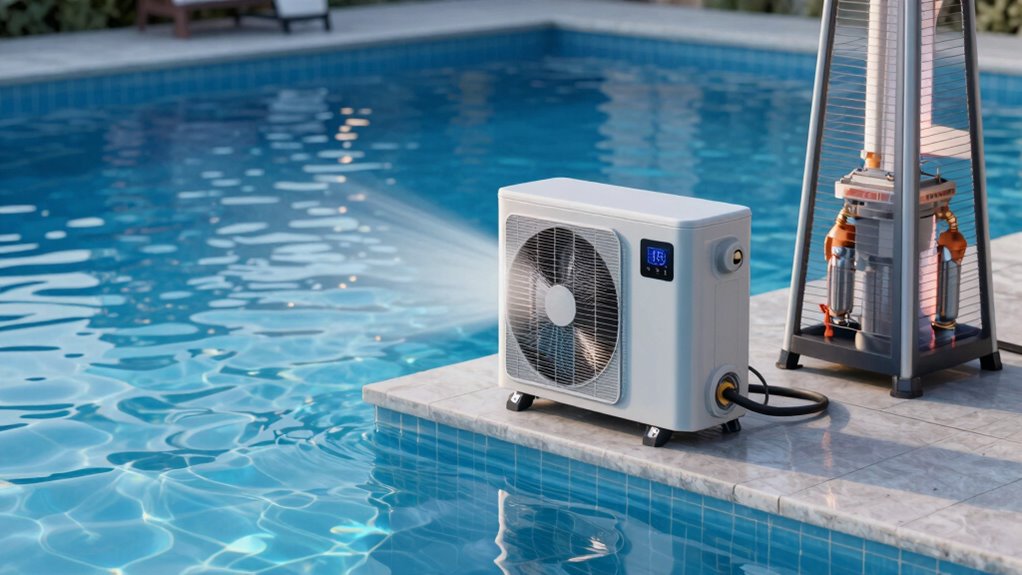
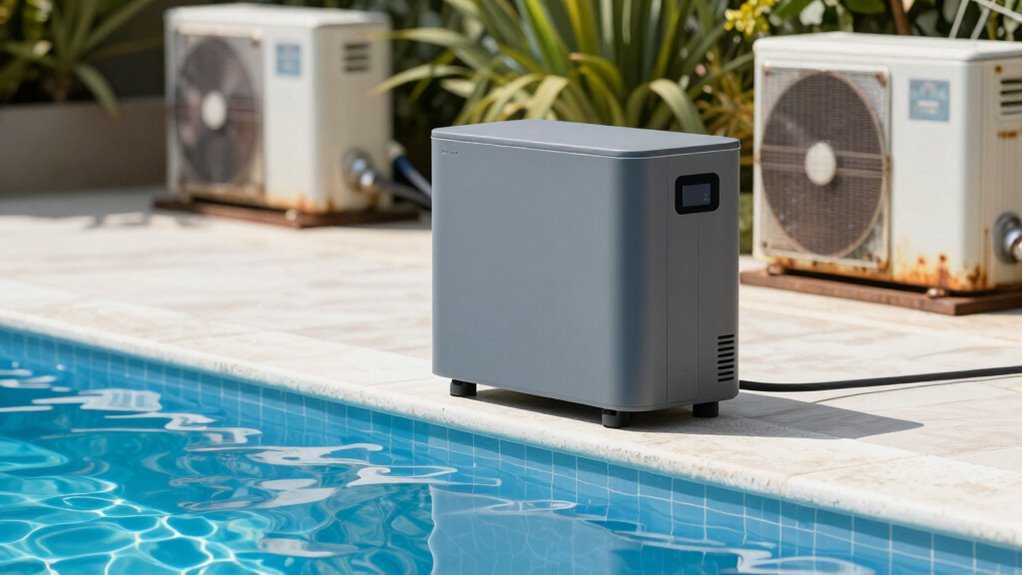
When choosing a heating system for your pool, understanding the differences between heat pumps and gas heaters is essential. Pool heat pumps excel in areas like solar efficiency and environmental impact, making them a popular choice for eco-conscious homeowners. Unlike gas heaters that burn fuel to generate heat, heat pumps transfer heat from the air to your pool water, which means they use significantly less energy. This process makes them highly solar efficient, especially in warmer climates where the air temperature stays relatively high. Because they rely on ambient air, they don’t need to burn fossil fuels, reducing your carbon footprint and overall environmental impact. Additionally, heat pumps often incorporate advanced technology that allows for precise temperature control, enhancing user comfort and energy savings.
Heat pumps transfer air heat to your pool, reducing energy use and environmental impact, especially in warm climates.
In terms of solar efficiency, heat pumps outperform gas heaters by converting a larger portion of energy into usable heat. While gas heaters rely on combustion, which wastes energy and produces emissions, heat pumps operate more like refrigerators running in reverse. They draw heat from the air, even in cooler conditions, and transfer it efficiently into your pool. This efficiency means you spend less on energy bills over time, making heat pumps a cost-effective option in the long run. Plus, their ability to extract heat from the environment makes them more sustainable, especially if you’re aiming to reduce greenhouse gas emissions. The environmental benefits of heat pumps are further amplified when paired with renewable energy sources, making them an even more eco-friendly option. Moreover, advancements in technology continue to improve their performance and reliability across different climates.
Furthermore, the energy efficiency of heat pumps can significantly reduce your overall operational costs, which is a key consideration for many homeowners. In addition to solar efficiency, heat pumps are generally safer and easier to operate. They don’t produce combustion gases, so there’s no risk of carbon monoxide leaks, unlike gas heaters that require proper ventilation. This makes them a more environmentally friendly choice, not just in terms of emissions but also in safety considerations. Maintenance is usually simpler with heat pumps, as they have fewer moving parts and don’t require fuel refilling or combustion chamber cleaning. This simplicity further contributes to their lower environmental impact and helps prolong their lifespan.
However, it’s worth noting that heat pumps perform best in moderate climates where the air temperature stays warm enough for efficient operation. In colder regions, gas heaters might be more effective because they can generate heat regardless of ambient temperature. But if you’re in a suitable climate, a heat pump offers a cleaner, more sustainable way to keep your pool warm, aligning with your eco-friendly goals. Overall, when it comes to solar efficiency and reducing environmental impact, heat pumps clearly have the edge over gas heaters, making them the ideal choice for those prioritizing energy efficiency and sustainability.
As an affiliate, we earn on qualifying purchases.
Frequently Asked Questions
Are Pool Heat Pumps Suitable for All Climate Zones?
Pool heat pumps are suitable for most climate zones, but their efficiency varies with the climate. In moderate and warm areas, they work exceptionally well, providing consistent heating. However, in colder climates, their performance drops, and you might need a backup or alternative heating method. Consider climate adaptability and efficiency variations in your location to guarantee you get the most out of your pool heat pump.
How Long Do Pool Heat Pumps Typically Last?
Pool heat pumps typically last around 10 to 15 years, depending on usage and maintenance. They’re known for their energy efficiency, which helps lower your ongoing costs. Compared to gas heaters, they usually have a higher initial investment but save money over time through lower energy bills. Proper upkeep guarantees you get the most out of your heat pump’s lifespan, making it a cost-effective choice for pool heating.
Do Heat Pumps Require Special Electrical Wiring?
Yes, heat pumps do require special electrical wiring. During installation, you’ll need to meet specific electrical wiring and installation requirements to guarantee safety and proper operation. Typically, this involves a dedicated circuit with the correct voltage and amperage, often 220-240 volts. It’s essential to have a qualified electrician handle the wiring to comply with local codes and prevent issues like overloads or electrical hazards.
Can Heat Pumps Be Used for Indoor Pools?
You can absolutely use heat pumps for indoor pool heating, and they work efficiently indoors just like outdoors. While it might seem like a tall order, modern heat pump systems are designed to handle indoor environments effectively, maintaining comfort without wasting energy. Keep in mind that proper ventilation and humidity control are key to maximizing heat pump efficiency indoors, ensuring your pool stays warm and inviting without breaking the bank.
What Maintenance Is Needed for Pool Heat Pumps?
You need to regularly clean the filter and check the evaporator coil to maintain pool efficiency. Keep the unit free of debris and guarantee proper water flow. It’s also wise to inspect refrigerant levels and electrical connections annually. While maintenance costs are generally lower than gas heaters, staying on top of upkeep extends your heat pump’s lifespan and keeps it running efficiently, making it a cost-effective choice in the long run.
As an affiliate, we earn on qualifying purchases.
Conclusion
In conclusion, pool heat pumps excel in energy efficiency and long-term savings compared to gas heaters. For instance, imagine a homeowner who switches to a heat pump and notices considerably lower electricity bills while maintaining a warm pool throughout the season. Although the initial investment may be higher, the ongoing cost savings and eco-friendly operation make heat pumps a smarter, more sustainable choice for keeping your pool inviting all year round.
As an affiliate, we earn on qualifying purchases.
As an affiliate, we earn on qualifying purchases.
Fall Picks
fall essentials
As an affiliate, we earn on qualifying purchases.