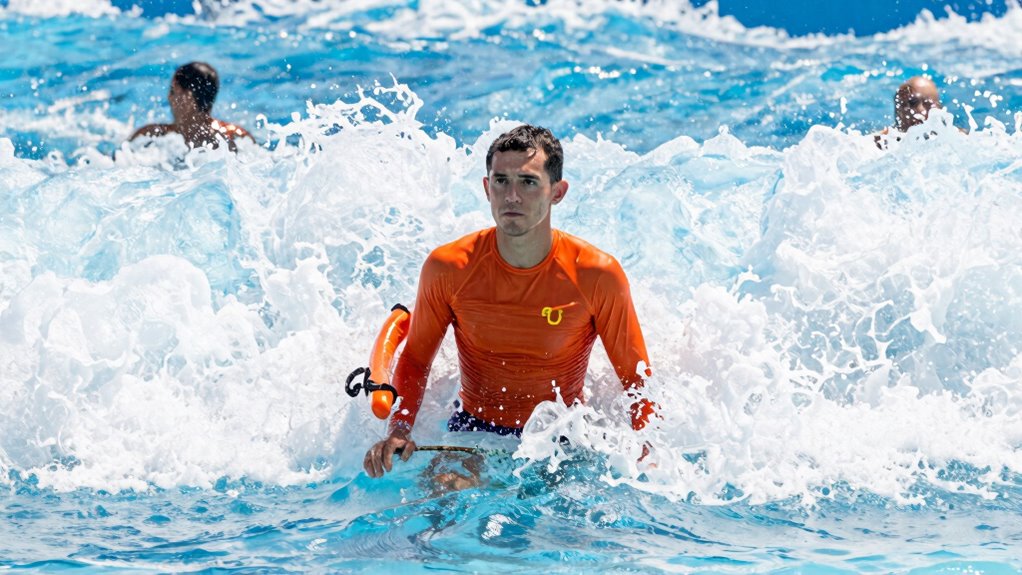

As a lifeguard in a wave pool, you constantly watch for signs of distress like swimmers struggling, disoriented, or exhausted. You scan the water for chaotic situations and increasing wave activity, which can create hazards. It’s essential to monitor swimmer behavior and water quality to prevent infections or illnesses. Staying alert to equipment and environmental safety is key. Keep this up, and you’ll learn more about keeping everyone safe.

Get pool and patio gear delivered free with Prime
- Fast, free delivery on millions of items
- Prime Video, Amazon Music and more included
- Member-only deals all year
Key Takeaways
- Signs of swimmer distress, disorientation, or fatigue to prevent incidents before escalation
- Unusual or chaotic swimmer behavior indicating potential emergencies or safety issues
- Water quality and chemical levels to ensure a healthy, safe environment
- Proper functioning of pool equipment and environment safety hazards
- Immediate response readiness for rip currents, seizures, or exhaustion cases
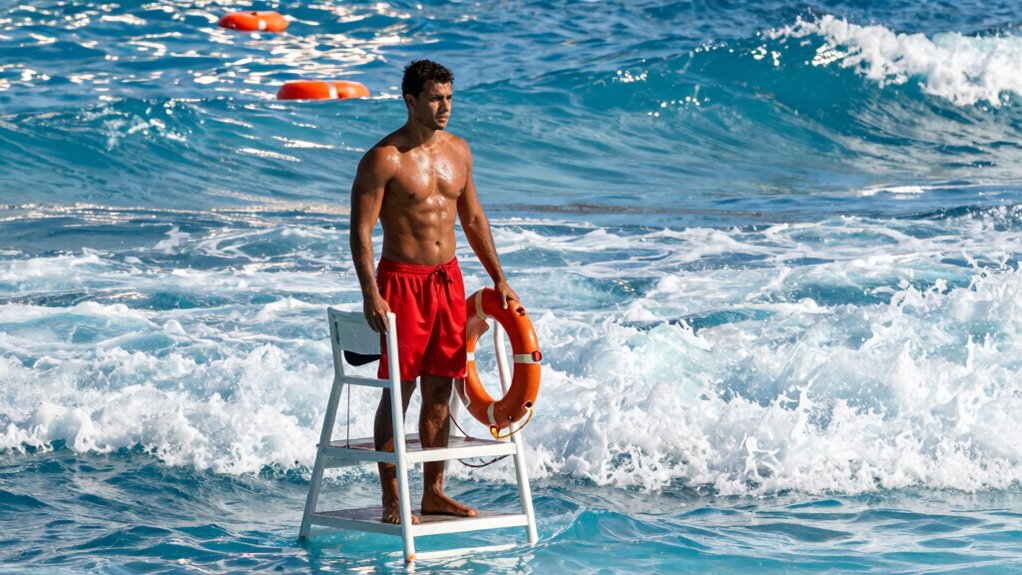
Have you ever wondered how wave pools stay safe despite their exciting, unpredictable waves? It’s a combination of vigilant lifeguards and strict safety protocols that keep everyone secure. As a lifeguard, your primary job is to watch for any signs of trouble, but understanding what to look for goes beyond just spotting someone in distress. You need to be alert to various factors, including emergency response readiness and the water chemistry, which directly impact safety.
Emergency response is your first line of action. You have to stay prepared to act swiftly if someone gets caught in a rip current, experiences a seizure, or shows signs of exhaustion. Quick, calm intervention can prevent a minor incident from turning into a tragedy. You’re trained to recognize the earliest signs of distress, such as a swimmer struggling to stay afloat or appearing disoriented. Once identified, your response must be immediate—rescue, provide first aid if necessary, and communicate with other staff to ensure the situation is managed effectively. Regular drills help sharpen these skills, but staying attentive during operations is essential because waves can quickly create chaotic situations that demand rapid decision-making.
Stay alert for signs of distress and respond quickly to ensure safety in unpredictable wave environments.
Water chemistry is another critical aspect you watch for, even if it seems less obvious. Proper water chemistry ensures the pool remains safe and hygienic, reducing the risk of infections or skin irritations that could impair someone’s ability to swim or react properly. Lifeguards need to be aware of the pool’s chemical balance—pH levels, chlorine concentrations, and overall water quality—to ensure it’s within safe ranges. Poor water chemistry can lead to cloudy water or bacteria growth, which might cause swimmers to get sick unexpectedly. This, in turn, could lead to emergency situations that demand your quick response. Regularly monitoring water quality reports and alerting maintenance staff if anything seems off helps prevent potential hazards before they become emergencies. Additionally, understanding the importance of water chemistry in maintaining a safe environment is essential for overall pool safety. Maintaining proper chemical levels also plays a role in preventing waterborne illnesses, which can be particularly concerning in wave pools where the water is constantly stirred by waves. A comprehensive understanding of water quality and its effects can help you anticipate and prevent issues before they escalate.
While the waves add excitement, they also increase the unpredictability of the environment. You must constantly scan the water, adjusting your focus as waves rise and fall, making sure no one is overwhelmed or caught off guard. This vigilance extends to understanding how water chemistry affects swimmer safety, as it influences the overall health and comfort of pool users. It’s also important to recognize that injury prevention involves not only observing swimmers but also ensuring that the equipment and pool environment are safe and well-maintained. By combining keen observation, quick emergency response, and awareness of water quality, you help create a safe, enjoyable experience for everyone. Your role is crucial—without it, the thrill of the waves could turn dangerous in an instant.
As an affiliate, we earn on qualifying purchases.
Frequently Asked Questions
How Do Lifeguards Identify Subtle Signs of Distress?
You can spot subtle signs of distress by paying close attention to early warning signals and non-verbal cues. Lifeguards look for changes in body language, such as a person struggling to stay afloat or making frantic movements. They also observe for signs like glassy eyes, lack of movement, or drifting away from the group. Recognizing these cues early helps you act quickly before a situation becomes critical.
What Training Do Lifeguards Undergo Specifically for Wave Pools?
You undergo specialized training to handle wave pool hazards, focusing on quick decision-making, rescue techniques, and first aid. Your training includes realistic simulations that mimic wave pool conditions, helping you recognize subtle signs of distress and respond effectively. You learn how to manage unpredictable wave patterns, prevent accidents, and stay alert throughout your shift. This preparation guarantees you’re ready for the unique challenges posed by wave pools, keeping everyone safe.
How Do Lifeguards Communicate During Emergencies in Noisy Wave Pools?
During emergencies in noisy wave pools, you use clear emergency signaling methods like whistles, hand signals, and light gestures to communicate quickly. Visual monitoring is essential; you keep an eye on the entire pool to spot trouble early. When someone needs help, you promptly alert other staff and respond swiftly. This combination of emergency signaling and vigilant visual monitoring guarantees effective communication and quick rescue actions, keeping everyone safe.
Are There Specific Rules for Swimmers in Wave Pools?
Think of wave pool rules as the compass guiding your safe adventure. You should follow wave pool etiquette and safety guidelines, like no running on the deck, staying within designated areas, and avoiding rough play. These rules help prevent accidents and keep everyone safe. By respecting these guidelines, you guarantee fun for all, turning the wave pool into a safe, enjoyable wave-riding haven where everyone can splash happily without worry.
How Do Lifeguards Handle Multiple Emergencies Simultaneously?
When multiple emergencies happen, you see lifeguards quickly prioritize based on severity. They manage the crowd by calmly directing swimmers away from danger and use their equipment, like rescue tubes, effectively. They stay alert, communicate clearly, and work together to control the situation. Regular equipment maintenance guarantees everything functions smoothly, enabling lifeguards to respond swiftly to emergencies, keeping everyone safe even when faced with multiple incidents at once.
water chemistry test kit for pools
As an affiliate, we earn on qualifying purchases.
As an affiliate, we earn on qualifying purchases.
Conclusion
As a lifeguard in a wave pool, you’re the steady lighthouse amid churning waters, guiding swimmers safely through the unpredictable tide. Your vigilant eyes cut through the frothy surface like a lighthouse beam piercing fog, always watching for distress signals. With every wave that crashes, your focus sharpens, transforming chaos into calm. Remember, your watchful gaze is the anchor in this aquatic dance—keeping everyone afloat in the vast, ever-changing sea of the pool.
As an affiliate, we earn on qualifying purchases.
As an affiliate, we earn on qualifying purchases.
Columbus Day / Indigenous Peoples' Day Picks
long weekend sales
As an affiliate, we earn on qualifying purchases.