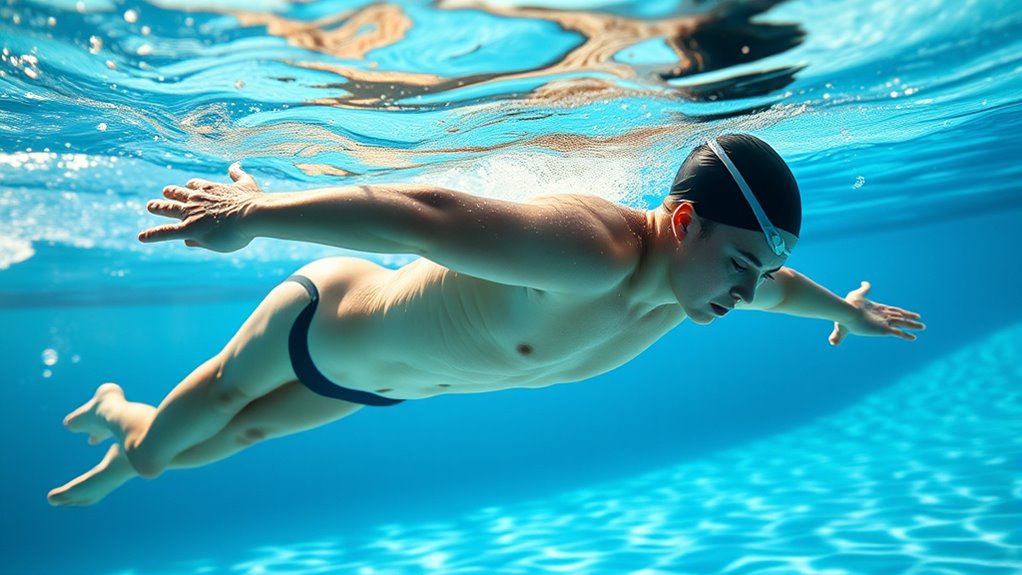

To swim better and hurt less, focus on maintaining proper posture and spinal alignment in the water. Strengthen your core, shoulders, and hips to support your body and prevent imbalances. Use technique adjustments and stretches to reduce tightness and avoid common injuries. Remember, water’s buoyancy helps keep you aligned, minimizes joint stress, and boosts recovery. Keep these strategies in mind, and you’ll discover more ways to improve your swim health and performance.

Get pool and patio gear delivered free with Prime
- Fast, free delivery on millions of items
- Prime Video, Amazon Music and more included
- Member-only deals all year
Key Takeaways
- Strengthen rotator cuff, scapular stabilizers, and core muscles to prevent shoulder injuries and support proper posture during swimming.
- Maintain correct stroke technique and controlled movements to minimize joint strain and promote spinal alignment.
- Use buoyancy, especially in saltwater, to reduce joint stress and help keep the body in a horizontal, balanced position.
- Incorporate stretching and muscle balance exercises for shoulders, hips, and back to counteract tightness and postural deviations.
- Regularly assess your form and training volume to detect early postural issues and avoid overload or musculoskeletal adaptations.
swimming posture correction brace
As an affiliate, we earn on qualifying purchases.
As an affiliate, we earn on qualifying purchases.
Understanding How Swimming Affects Your Posture and Spinal Health

Swimming profoundly influences your posture and spinal health by inducing adaptive changes in spinal curvatures. When you swim regularly, your body adjusts to the unique demands of aquatic movement, affecting curves like thoracic kyphosis and lumbar lordosis. Elite swimmers often develop lumbar hypolordosis, while some show increased thoracic kyphosis, reflecting these adaptive responses. The longer you train, the more your lumbar lordosis decreases, indicating musculoskeletal changes. Although some studies suggest swimming might increase risks of spinal deformities like hyperkyphosis or hyperlordosis, others report benefits, such as improved spinal flexibility and range of motion. These postural changes are your body’s way of compensating for the repetitive, low-impact nature of swimming, ultimately shaping your spinal health and alignment over time. Best Airless Paint Sprayer
As an affiliate, we earn on qualifying purchases.
The Impact of Different Swimming Styles on Balance and Muscle Strength

Different swimming styles target specific muscle groups and influence your balance and muscular development in unique ways. Freestyle emphasizes long-axis rotation, boosting core stability and balance, while engaging your lats, pectorals, deltoids, triceps, and abs. Body rotation activates obliques and deep core muscles, building rotational strength, and promotes bilateral muscle use to reduce asymmetry. Backstroke maintains a horizontal body position, aligning your spine and engaging the trapezius, latissimus dorsi, deltoids, and stabilizers, which enhances shoulder flexibility and overall postural control. Breaststroke relies heavily on leg muscles like quadriceps, hamstrings, and glutes, developing lower body strength and balance through its rhythmic kick. Butterfly involves a full-body effort, strengthening core, back, and hip muscles, improving coordination, explosive power, and neuromuscular efficiency. Water resistance enhances muscle engagement and promotes lean muscle development across all strokes. Additionally, muscle engagement varies depending on stroke technique and intensity, influencing overall muscular adaptation.
core strengthening resistance bands
As an affiliate, we earn on qualifying purchases.
As an affiliate, we earn on qualifying purchases.
Preventing Common Postural Issues in Swimmers: Strategies and Exercises
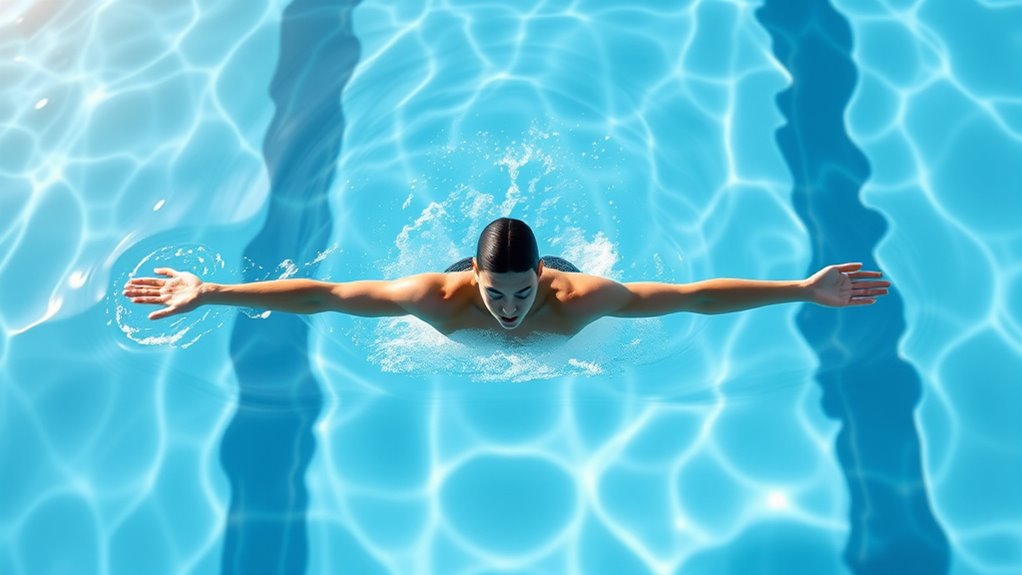
Have you ever wondered how to keep your posture healthy while training? To prevent common issues like swimmer’s shoulder, focus on strengthening your rotator cuff and scapular stabilizers with exercises like prone Y, T, and W raises. Incorporate core and hip exercises such as planks, bridges, and clamshells to improve force transfer and pelvic stability. Regular stretching of the posterior shoulder capsule, pectorals, and hip flexors helps counteract tightness and maintain balanced range of motion. Proper stroke technique minimizes unnecessary joint stress, reducing injury risk. Periodic assessments by coaches or therapists can catch early deviations, while tracking training volume prevents overload. Combining targeted exercises, consistent stretching, and technique refinement keeps your posture aligned and minimizes the chances of developing chronic postural problems. Awareness of resources and tools available can further support injury prevention and training effectiveness.
As an affiliate, we earn on qualifying purchases.
How Water Supports Proper Alignment and Reduces Injury Risks
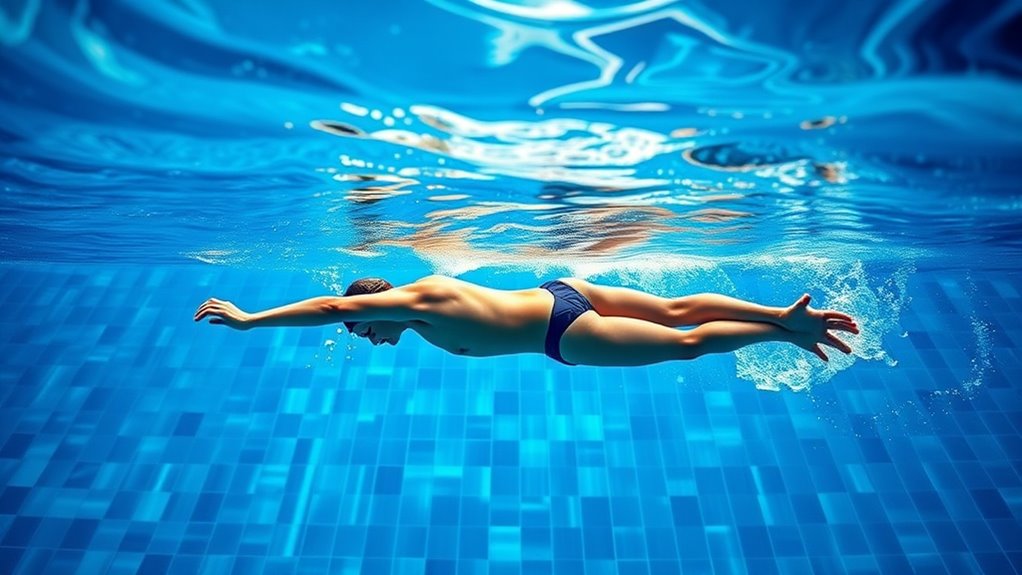
Water’s buoyancy plays a crucial role in supporting proper body alignment during swimming by counteracting gravity and reducing strain on muscles and joints. It results from the upward force equal to the water displaced by your body, with body fat increasing buoyancy and muscle or bone density decreasing it. Properly balanced buoyancy helps keep your body horizontal, preventing legs from sinking and decreasing uneven load on joints. Saltwater enhances buoyancy due to higher density, aiding flotation. Stable buoyancy minimizes muscle strain and joint stress, lowering injury risks. When your body maintains ideal position, resistance decreases, making movement more efficient. By controlling your head and lung position, you leverage lung buoyancy as a fulcrum for stability. This support system helps you stay aligned, reducing fatigue and injury potential during each swim. Understanding how body composition affects buoyancy can help swimmers adjust their technique to optimize alignment and minimize discomfort. Additionally, modern pool design features such as adjustable water currents and temperature control can further assist in maintaining proper buoyancy and alignment.
Avoiding Postural Imbalances: Tips for Healthy Swimming and Recovery
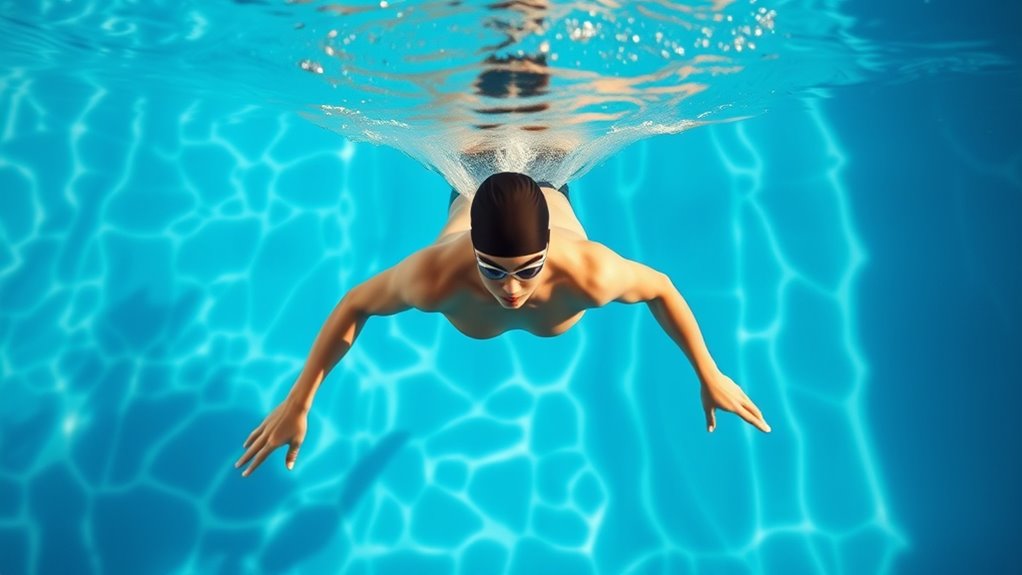
Maintaining proper swimming posture requires awareness of common imbalances and proactive strategies to prevent them. Strengthening core and hip muscles through exercises like bridges and clamshells stabilizes the pelvis, supporting better alignment. Keeping your head aligned with your spine minimizes neck strain and prevents hips from dropping. Focus on controlled body rotation and pelvic tilt to improve stroke efficiency and maintain a streamlined position. Regular foam rolling along the spine helps realign your thoracic and lumbar regions, counteracting poor posture. Additionally, addressing poor habits outside the pool prevents imbalances from developing. Incorporating Kia Tuning options such as suspension upgrades can also enhance overall body stability during swimming. Use the table below to visualize key ideas:
| Imbalance Causes | Prevention Strategies | Recovery Tips |
|---|---|---|
| Hip/leg imbalance | Hip bridges, core work | Foam rolling |
| Rounded shoulders | Posture awareness | Stretch shoulders |
| Head high position | Proper breathing technique | Neck stretches |
| Weak core muscles | Core strengthening | Pelvic tilt exercises |
| Fatigue | Rest and recovery | Postural correction |
Frequently Asked Questions
Can Swimming Help Correct Existing Postural Deformities?
Yes, swimming can help correct existing postural deformities. It strengthens back, shoulder, and core muscles, which support proper alignment. Targeted exercises combined with specific swimming strokes improve posture and reduce imbalances like Forward Head Posture and Rounded Shoulder Posture. Consistent training, along with focused interventions, enhances musculoskeletal balance, alleviates pain, and promotes better posture over time. However,, it’s crucial to incorporate corrective exercises alongside swimming for maximum results.
How Does Swimming Influence Long-Term Spinal Health?
Swimming acts as your body’s gentle architect, shaping long-term spinal health. It boosts flexibility, strengthens core and back muscles, and improves posture through water’s supportive resistance. Regular swims promote better mobility and alignment, reducing stiffness and injury risk. Plus, the rhythmic movements encourage spinal stability over time. By engaging your entire musculoskeletal system, swimming helps you build a resilient, pain-free spine that stands the test of time.
What Are Signs of Postural Imbalance Specific to Swimmers?
You might notice your shoulders rolling forward, with shoulder blades sticking out or uneven. Your upper back could appear rounded or hunched, especially when standing or sitting. Your head may poke forward, giving your neck a “poked” look. You could also feel tightness in your chest muscles and see asymmetry in shoulder height or blade position. These signs indicate postural imbalances common in swimmers, risking pain and injury if unaddressed.
How Should Swimmers Modify Training to Prevent Postural Issues?
You should incorporate core and glute strengthening exercises, both in the water and dryland, to support proper alignment. Focus on maintaining a neutral head position and avoid over-arching your back by practicing pelvic tilt and head control drills. Include flexibility routines for your hamstrings, shoulders, and thoracic spine. Use drills like side kicks and underwater feedback to reinforce correct posture, ensuring your body stays streamlined and reduces strain during each workout.
Are Specific Swimming Drills Better for Improving Posture?
Think of your body as a well-tuned instrument; specific drills fine-tune your posture better than generic workouts. Studies show that posture optimization drills, like leg lifts and kneeling support, markedly boost core stability and range of motion. You’ll notice improvements faster when you focus on these targeted exercises, much like tuning a guitar string precisely. Incorporate these drills thrice weekly, and you’ll swim with greater efficiency and less discomfort.
Conclusion
By paying attention to your posture and alignment in the water, you’ll not only swim more efficiently but also protect yourself from injuries that can feel as devastating as a tidal wave. Incorporate proper techniques, stay mindful of your body’s signals, and use water’s natural support to keep your spine healthy and strong. Mastering these habits can transform your swim, making it feel like you’re gliding on air—faster, safer, and injury-free.
Halloween Picks
halloween
As an affiliate, we earn on qualifying purchases.