When choosing swim diapers, you can pick disposable options like Huggies Little Swimmers or reusable ones made from durable materials like neoprene. Pool and park rules typically require snug-fitting, water-resistant swim diapers to prevent contamination. Proper selection and fit are vital for safety and hygiene. If you want to learn more about different types, features, and how to follow specific regulations, there’s plenty of helpful information available to guide you.
Key Takeaways
- Public pools typically require children to wear snug-fitting, waterproof swim diapers to prevent fecal contamination.
- Disposable swim diapers are convenient and designed to resist swelling, while reusable options are eco-friendly and adjustable.
- Proper fit and secure elastics are essential to prevent leaks and ensure safety during water activities.
- Always change swim diapers at designated stations and dispose of disposable diapers properly to maintain hygiene.
- Follow park and pool rules regarding diaper types, hygiene protocols, and safety measures for a safe swimming environment.

Huggies Little Swimmers Disposable Swim Diapers, Size 3 (16-26 lbs), 20 Ct
Huggies Little Swimmers Diapers: 20 baby swim diapers, size 3 (16-26 lbs)
As an affiliate, we earn on qualifying purchases.
As an affiliate, we earn on qualifying purchases.
Understanding Different Types of Swim Diapers
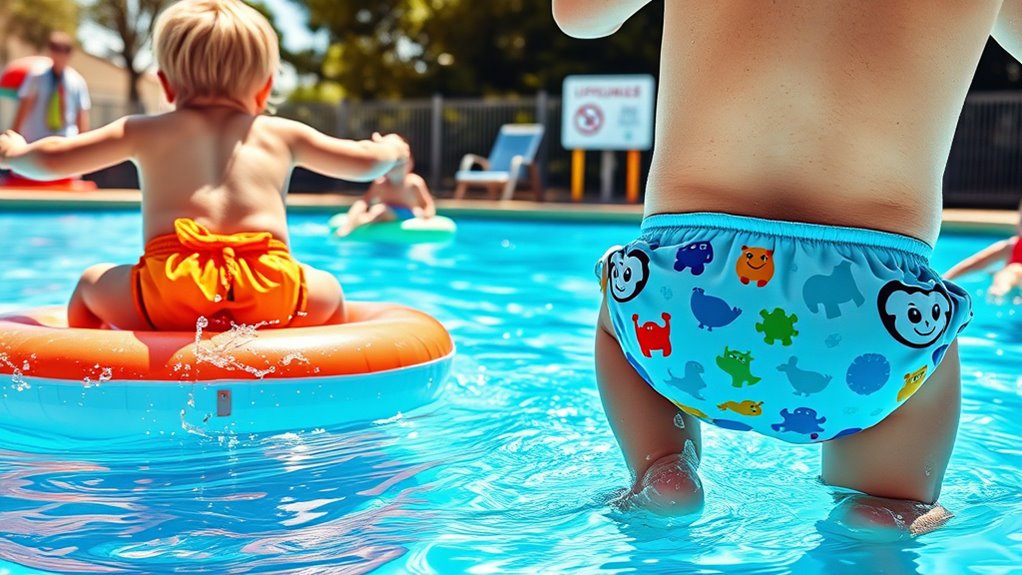
When choosing swim diapers, it’s important to understand the two main types available: disposable and reusable. Disposable swim diapers are designed for single use, featuring water-repellent shells and lightweight linings that resist swelling. They’re convenient for quick changes and travel, with popular brands like Huggies Little Swimmers and Pampers Splashers. Reusable swim diapers, on the other hand, are made from durable, chemical-safe materials like neoprene or waterproof polyester. They often come with adjustable closures or snaps to grow with your child and are eco-friendly, reducing landfill waste. Reusables are available in various fun colors and patterns, making swimming more enjoyable. Both types are accessible at stores like Target and Walmart, but always check pool rules, as some facilities may prefer or require one type over the other. Proper fit and ease of cleaning are additional factors to consider when selecting the right swim diaper for your child. Understanding differing material properties can help you choose the best option for comfort and durability.

Splash About Happy Nappy Reusable Swim Diaper, Lilac, 3-4 Years
The only authentic Happy Nappy. If it doesn't say SplashAbout, It's not a Happy Nappy swim diaper
As an affiliate, we earn on qualifying purchases.
As an affiliate, we earn on qualifying purchases.
Key Features of Disposable Swim Diapers
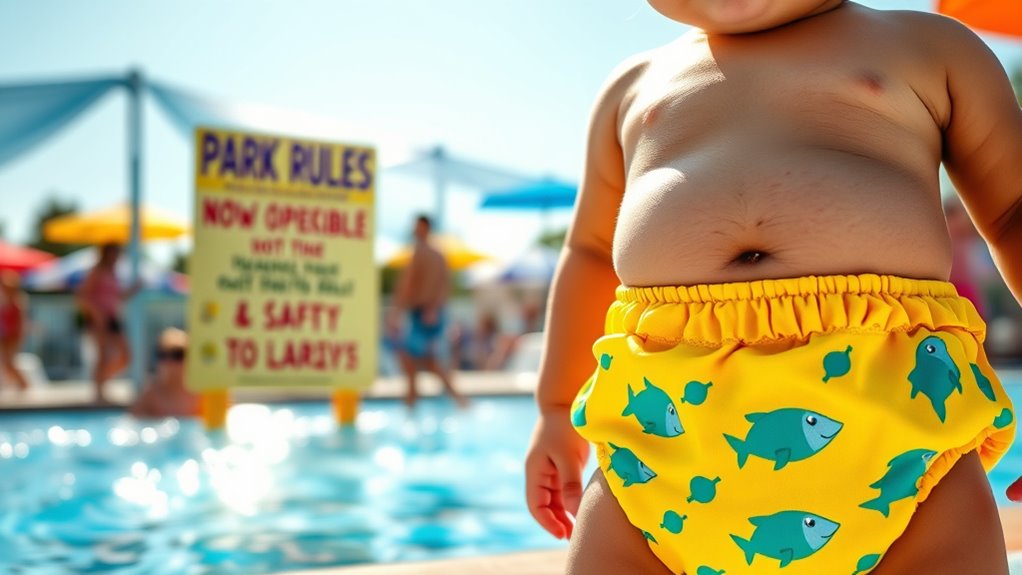
Disposable swim diapers are engineered with durable, water-resistant materials that can withstand active water play without falling apart. They feature soft, flexible fabrics that ensure comfort while providing effective containment. The waterproof outer layer prevents pool water absorption and swelling, maintaining their shape during use. Elastics around the legs and waist secure the fit, minimizing leaks and leaks under stress. These diapers are specifically designed to contain solid waste, with reinforced seals around the waist and legs to prevent contamination. Many include antimicrobial treatments to reduce bacteria and odors. Their lightweight, chemical-free materials allow for unrestricted movement and minimize skin irritation. Additionally, they are designed with easy-to-tear sides for quick and hassle-free changes. These features make disposable swim diapers a hygienic and practical choice for travel and quick changes, supporting hygiene and ease, and making them a practical choice for occasional water outings.

Pampers Swim Diapers – Splashers – Size 5+, 17 Count, Gap-Free Disposable Baby Swimming Pants
HELPS CONTAIN MESS: Pampers Splashers swim diapers are designed to help contain mess
As an affiliate, we earn on qualifying purchases.
As an affiliate, we earn on qualifying purchases.
Advantages of Reusable Swim Diapers
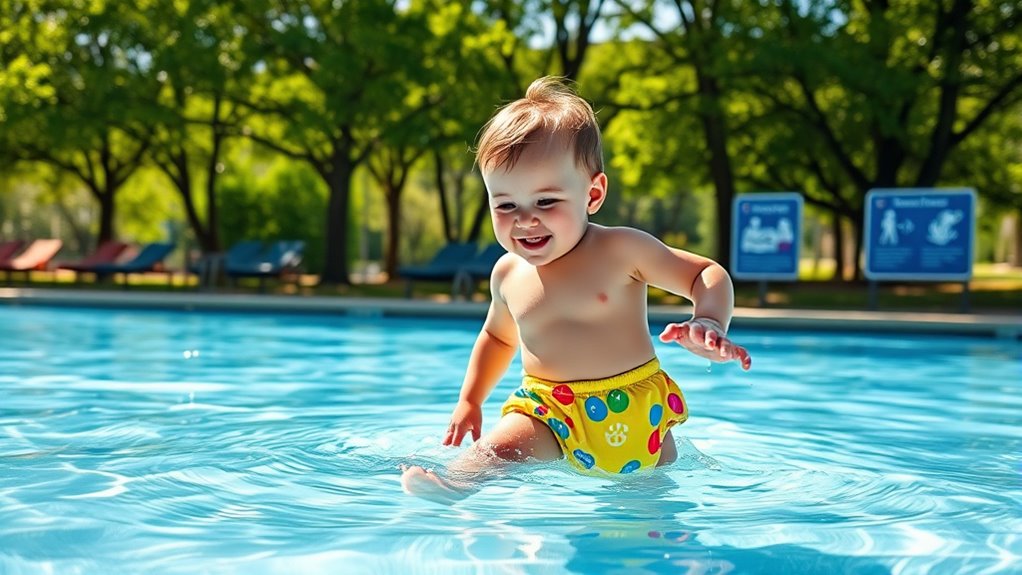
Reusable swim diapers are a smart choice because they save you money over time and are better for the environment. They offer an adjustable, comfortable fit that grows with your child, making swim sessions hassle-free. Plus, their durability means you get more use out of each diaper, reducing waste and ongoing costs. Reusable swim diapers are designed to withstand water and chlorine, providing better protection against leaks compared to disposable options. Additionally, their eco-friendly sustainability benefits make them a responsible choice for environmentally conscious families.
Cost-Effective and Eco-Friendly
Opting for reusable swim diapers offers both cost savings and environmental benefits. They greatly reduce landfill waste because you reuse them multiple times, unlike disposables that pile up after each swim. This also lowers your carbon footprint, as manufacturing, packaging, and transportation are minimized. Although the initial cost is higher, a reusable diaper lasts for months or even years, making it more economical over time—especially if you have multiple children. You won’t need to buy new diapers for every swim session, saving money in the long run. Plus, their durability means fewer trips to the store and less household waste. Reusable swim diapers are designed to withstand multiple washes without losing effectiveness, which further supports their eco-friendly appeal. By choosing reusable options, you contribute to a healthier environment while enjoying a cost-effective solution that adapts to frequent swimming.
Adjustable and Comfortable Fit
One of the key benefits of reusable swim diapers is their adjustable and comfortable fit, which can be customized to suit your child’s changing size and shape. With features like snap closures or Velcro, you can easily tighten or loosen the fit for perfect comfort. Multiple rise settings, such as 3×5 snaps, allow you to adapt as your child grows, extending the diaper’s usability. The snug fit, aided by secure waist and leg cuffs, prevents leaks and keeps the diaper in place during active swimming. Soft, breathable materials like neoprene and jersey ensure your child remains comfortable during long water sessions, reducing irritation. The adjustable closures make it simple to check and modify the fit as needed, providing a secure, snug, and comfortable experience every time your kid hits the pool. Proper fit is essential to prevent leaks and ensure the diaper functions effectively during swimming activities. Additionally, self-adjusting features can help accommodate movement and ensure consistent comfort throughout water play.

Babygoal Baby & Toddler Boy and Girl Swim Diapers, Reusable Adjustable Washable One Size Fits 6M-3T Gifts and Swimming Lessons 3 Pack 3ZSD07
2 Sizes fit for 0-8M Babies or 8M-3T Toddlers: Babygoal reusable swim diapers have small size and large…
As an affiliate, we earn on qualifying purchases.
As an affiliate, we earn on qualifying purchases.
Safety and Eco-Friendly Ingredients in Swim Diapers

Safety is a top priority when choosing swim diapers, as they must effectively contain solid waste to prevent pool contamination while minimizing skin irritation. Look for hypoallergenic, non-toxic materials that reduce allergy risks and skin irritation. Leak-proof barriers and adjustable closures help prevent accidents and make changing easier, maintaining hygiene. Eco-friendly options use recycled polyester, plant-based fibers, or water-based inks, lowering environmental impact. Certifications like OEKO-TEX® guarantee textiles are free from harmful chemicals such as parabens, phthalates, and formaldehyde. Reusable diapers made from recycled materials like REPREVE® reduce landfill waste and carbon footprint. Additionally, biodegradable fabrics are gaining popularity for their ability to break down more quickly in the environment, further supporting sustainability. Always check ingredient lists and certifications to safeguard your child’s safety. Reusability and eco-friendly swim diapers support both health and environmental sustainability while providing effective containment.
Pool and Park Rules Regarding Swim Diaper Use
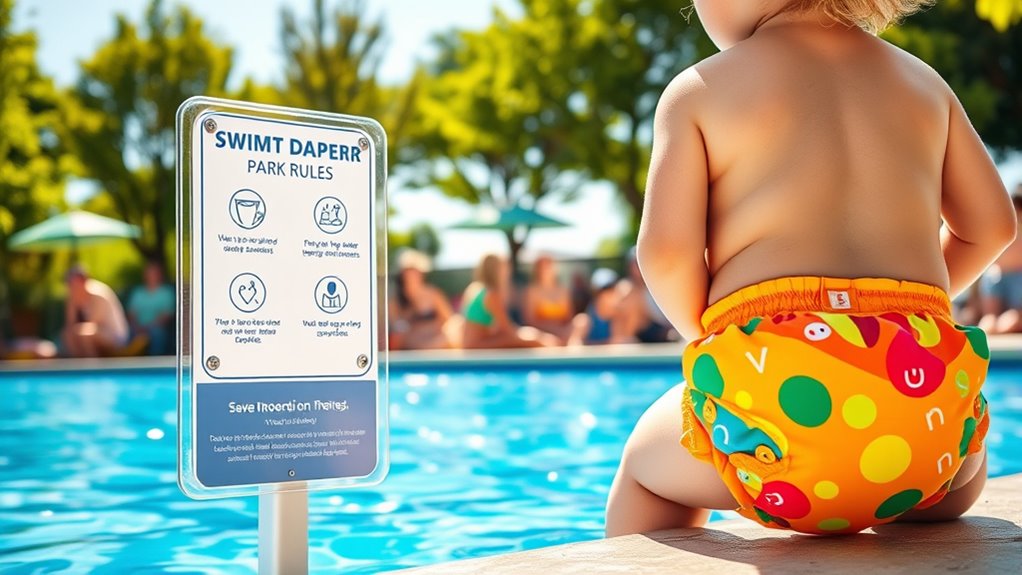
Before taking your child to the pool or park, check the specific rules about swim diapers, as many facilities require close-fitting, plastic outer layers and elastic openings. You’ll also need to follow hygiene and disposal protocols, like changing diapers frequently and using designated stations. Keep in mind that swim diapers aren’t foolproof, so monitoring your child and practicing good hygiene are essential to prevent contamination. Regular diaper checks help minimize the risk of fecal contamination and ensure a safe swimming environment for everyone. It’s also helpful to understand the different types of swim diapers available to choose the most effective option for your child.
Diaper Type Regulations
Many public pools and aquatic centers require children who aren’t fully toilet trained to wear swim diapers to prevent contamination. Regulations typically ban regular diapers because they disintegrate and risk contaminating the water. Some facilities mandate two layers: a disposable swim diaper under a reusable one, especially for children under 3. Others require vinyl pants over disposable swim diapers as an alternative. Enforcement is strict; staff often check for compliance before allowing entry, and failure to follow the rules can lead to denial. Allowed diaper types include disposable and reusable swim diapers, both designed specifically for swimming. Proper fit is essential to prevent leaks. Additionally, selecting appropriate materials can help reduce the risk of leaks and discomfort. Here’s a quick overview:
| Diaper Type | Allowed Features | Restrictions |
|---|---|---|
| Disposable | Swimsuit-specific, snug fit | Not regular diapers, not absorbent |
| Reusable | Eco-friendly, adjustable fit | Must be designed for swimming |
| Vinyl Pants | Over disposable swim diapers | Not a substitute for proper swim diapers |
Hygiene and Safety Protocols
To maintain a clean and safe swimming environment, pool and park facilities enforce strict hygiene protocols regarding swim diaper use. You must shower before entering the pool to minimize contamination. Children who aren’t fully toilet trained are required to wear swim diapers, which must be put on before entering water to prevent fecal contamination. Changing diapers on the pool deck or near the poolside is strictly prohibited to maintain hygiene standards. While swim diapers contain solid waste, they’re not leak-proof against urine or diarrhea-causing pathogens, so frequent checks and changes are essential. Properly fitted swim diapers are required to prevent leaks and maintain hygiene standards. Staff and lifeguards may enforce directives related to diaper use and pool safety. If fecal contamination occurs, the pool will be evacuated and superchlorinated, causing temporary closure to ensure everyone’s safety. Properly fitted swim diapers are required to prevent leaks and maintain hygiene standards. Additionally, understanding the importance of hygiene practices helps ensure a safe swimming environment for all attendees.
Change and Disposal Guidelines
You must follow specific procedures for changing and disposing of swim diapers to maintain a hygienic environment. Always use designated changing stations or restrooms, never poolside, to prevent contamination. Make sure to clean the area thoroughly before and after each change with provided sanitation supplies. When removing a disposable swim diaper, roll it up securely and dispose of it in designated trash bins—these diapers won’t dissolve in water and need proper disposal. Reusable swim diapers should be rinsed immediately with cold water, placed in waterproof bags, and washed according to manufacturer instructions. Proper disposal prevents the spread of germs and ensures a clean environment for all swimmers. Wash your hands thoroughly after each change to prevent germs from spreading. Following these guidelines helps keep the pool safe and hygienic for everyone.
Choosing the Right Swim Diaper for Your Child
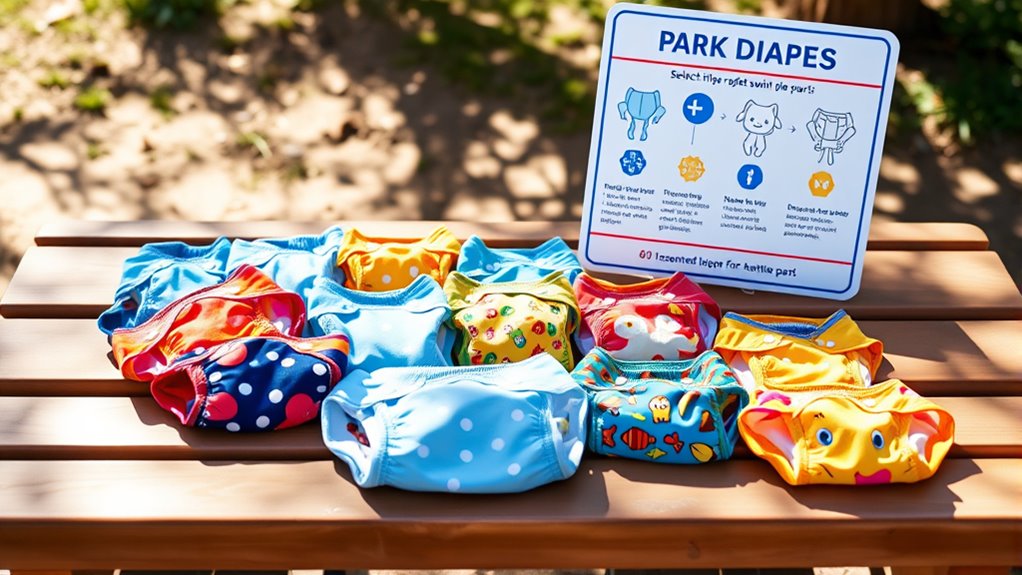
Choosing the right swim diaper for your child involves considering their age, activity level, and toilet training status. You want a diaper that fits snugly but comfortably, preventing leaks while allowing movement. Proper sizing and fit are critical to prevent leaks and ensure comfort. Sizing charts are essential to find the best fit for your child’s specific measurements. Additionally, understanding the history of pinball machines can inspire creative ways to think about play and safety in water activities.
Selecting a swim diaper that fits comfortably and securely is key to water safety and leak prevention.
- Imagine a disposable diaper that’s easy to toss after a quick swim, perfect for on-the-go.
- Visualize a reusable cloth diaper with adjustable snaps, growing with your child.
- Think of a colorful, fun-patterned diaper that your child will enjoy wearing.
- Picture a snug cover that adds extra protection over a cloth diaper, especially for active kids.
Your choice depends on convenience, environmental impact, and comfort. Always check sizing charts and ensure the fit is secure to contain solids effectively. Proper fit makes all the difference in water safety.
Top Brands for Disposable and Reusable Swim Diapers
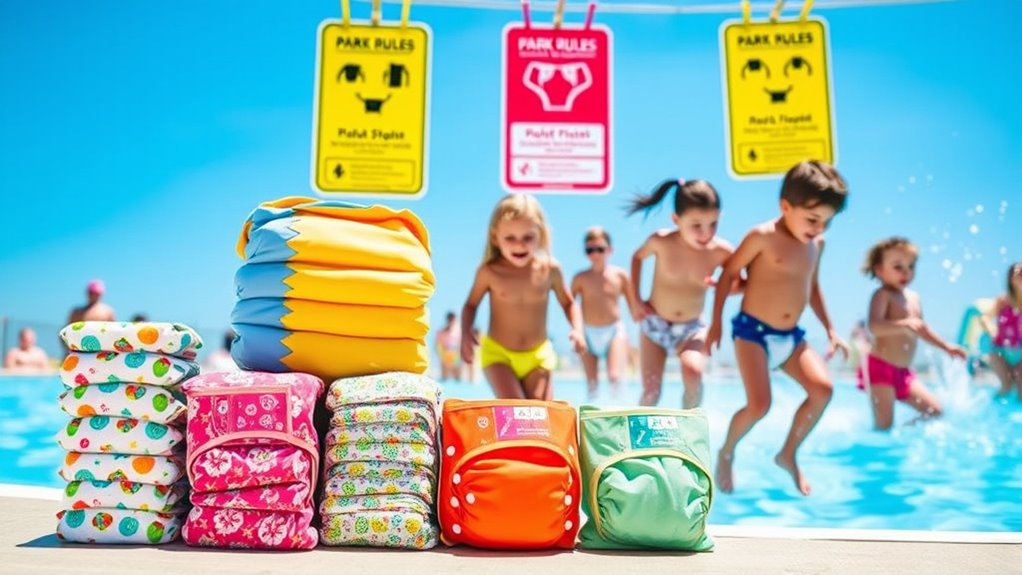
When selecting swim diapers, several top brands stand out for their quality, comfort, and convenience. For disposables, Huggies Little Swimmers offer fun Finding Nemo designs, easy pull-on features, and leak guards, fitting babies 16-32+ lbs. Pampers Splashers are highly absorbent, fitting like swimwear without swelling. Hello Bello provides stretchy waistbands for comfort, especially on chubbier toddlers, and is budget-friendly. Coterie’s premium diapers are hypoallergenic, plant-based, and feature artistic prints with a secure stretch waistband. Organic brands like HealthyBaby Organic and Ecoriginals prioritize eco-friendliness, offering compostable and plastic-neutral options. Reusable brands such as EcoNaps and Charlie Banana excel in durability, quick drying, and adjustable fits, combining eco-consciousness with comfort. These brands ensure effective containment and water-friendly performance during your child’s swimming adventures. Swim diapers are designed to be water-resistant to prevent leaks and contain accidents without swelling or becoming heavy when wet. Additionally, choosing swim diapers with water-resistant materials can help prevent leaks and provide a more secure fit during water activities.
Tips for Proper Swim Diaper Management and Maintenance
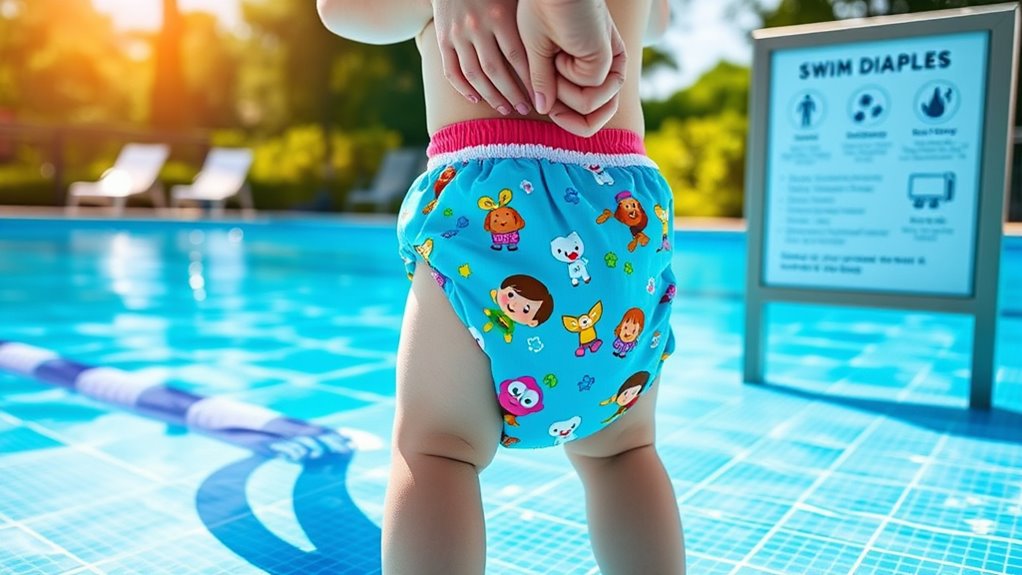
Proper management and maintenance of swim diapers are essential to guarantee hygiene, prevent leaks, and protect water quality. To do this effectively, follow these tips:
- Rinse reusable swim diapers under cool water immediately after use to remove debris and chlorine or salt residues. Rinsing promptly helps prevent buildup and maintains diaper integrity. Regular rinsing also helps extend the lifespan of the diaper materials.
- Hand wash with a mild detergent or use a cold machine wash, avoiding bleach and fabric softeners.
- Air-dry in shaded areas and store fully dry to prevent mold and odors.
- Always check elastic seals and replace worn diapers before leaks or skin irritation occur. Additionally, understanding GMC tuning can help you customize your vehicle for optimal performance and safety.
Additionally, change diapers immediately after soiling, use waterproof bags for transport, and follow park or pool rules. These steps help assure a clean, safe swimming environment for everyone.
Frequently Asked Questions
Can Swim Diapers Be Reused Across Multiple Swimming Sessions?
Yes, you can reuse swim diapers across multiple swimming sessions if they’re reusable. Make sure to wash them thoroughly after each use, following the brand’s instructions. Check for any damage or wear before reusing, and guarantee they fit snugly to prevent leaks. Proper cleaning and inspection will help maintain hygiene and prolong their lifespan, making them a cost-effective and eco-friendly choice for frequent swimmers.
Are There Eco-Friendly Disposable Swim Diaper Options Available?
Yes, eco-friendly disposable swim diapers are available. You can find brands like Coterie and HealthyBaby that use recycled polyester, plant-based cores, and certified safe materials. These diapers reduce environmental impact by incorporating biodegradable components and avoiding harmful chemicals. While they’re more expensive, they offer a sustainable option for your child’s swimming needs. Just remember, they balance eco-consciousness with effective containment, making them a better choice for eco-minded parents.
How Do I Know the Correct Size of Swim Diaper for My Child?
To find the right size, you’ll need to measure your child’s waist and thighs at the fullest points. Use a flexible tape to get accurate measurements, then compare them to the brand’s size chart. Remember, the diaper should fit snugly without leaving marks. When in doubt, opt for the larger size if measurements fall between two options, ensuring comfort and preventing leaks.
Do All Public Pools Enforce the Same Swim Diaper Rules?
You might think all pools are on the same page, but that’s not the case—rules vary from place to place. Some pools strictly require waterproof swim diapers and ban regular ones, while others focus on approved brands or specific types. Enforcement depends on local health regulations and management policies. To stay safe and avoid surprises, always check the pool’s rules before you go. Better safe than sorry!
What Should I Do if My Child Has a Diaper Blowout in the Pool?
If your child has a diaper blowout in the pool, immediately remove them from the water to prevent contamination. Notify a lifeguard or staff about the incident. Carefully take off the soiled swim diaper and clothing, sealing them in a plastic bag. Use the designated changing area for cleanup, not the poolside. Wash your hands thoroughly afterward. Follow any specific park or pool rules for handling such incidents to guarantee safety and hygiene.
Conclusion
Just like Odysseus trusted his ship to safely navigate treacherous waters, choosing the right swim diaper guarantees your little one stays comfortable and leak-free. Whether you prefer disposables or reusables, understanding their features helps you make confident decisions. Keep park rules in mind, and you’ll both enjoy splashing around with peace of mind. With the right gear, you’re ready to conquer any aquatic adventure—just like a seasoned sailor steering through familiar seas.