
Cashless parks can save you time with faster transactions, improve security by reducing cash theft, and cut operational costs for the park. You’ll enjoy quick entry, seamless purchases, and less hassle with fewer crowds. However, some people might face challenges if they lack credit cards, smartphones, or internet access. Privacy concerns and technology gaps could make it harder for vulnerable groups. If you want to explore both sides, keep going to see more details.

Get pool and patio gear delivered free with Prime
- Fast, free delivery on millions of items
- Prime Video, Amazon Music and more included
- Member-only deals all year
Key Takeaways
- Speed and convenience are increased with contactless payments, reducing wait times and streamlining transactions.
- Security is enhanced by eliminating cash, lowering theft and fraud risks at entry points and throughout the park.
- Operational costs decrease through reduced cash handling, logistics, and staff time spent on manual transactions.
- Accessibility challenges arise for unbanked, elderly, or low-tech visitors who lack digital payment methods or internet access.
- Environmental benefits include reduced waste, less litter, and improved hygiene by minimizing contact points and physical materials.
As an affiliate, we earn on qualifying purchases.
Advantages of Speed and Convenience

Cashless parks considerably enhance speed and convenience by streamlining payment processes. You’ll notice transactions at entry, exit, and concession points happen up to 70% faster, thanks to contactless payments and mobile apps. These allow you to pay in seconds, avoiding delays caused by coin counting or change. Automated systems can handle multiple transactions simultaneously, especially during busy times, speeding up service. RFID wristbands and prepaid cards let you make instant purchases at food, beverage, and merchandise spots. Digital platforms also reduce errors and manual reconciliation, making operations smoother. Overall, cashless systems cut down on waiting times, shorten queues, and improve your experience by enabling quick, seamless payments throughout your visit. Additionally, understanding the practical tools involved can help you better navigate the system and maximize its benefits.
As an affiliate, we earn on qualifying purchases.
Enhanced Security and Theft Prevention
By eliminating physical cash, parks substantially improve security and reduce theft risks. Without on-site cash storage, the chances of theft from parking machines, ticket booths, or staff drop markedly. This also means fewer opportunities for armed robberies or employee theft at entry points. Security incidents like break-ins or assaults related to cash collection are minimized, and thefts of cash from crowded areas become less likely. Additionally, cashless operations reduce the need for armored vehicle pickups, lowering associated dangers. Digital payment systems use encryption and secure protocols, making transactions safer from fraud. RFID wristbands and cards linked to user accounts are hard to clone or skim, and lost devices can be deactivated instantly. encryption and secure protocols further enhance transaction security, giving visitors and staff peace of mind. Overall, cashless systems create a safer environment for visitors and staff alike.
As an affiliate, we earn on qualifying purchases.
Cost Efficiency and Operational Gains
Eliminating physical cash not only enhances security but also delivers significant cost savings and operational improvements. With digital payments, you reduce expenses related to cash handling, such as armored truck services, staff hours for counting and reconciling, bank fees, and deposit delays. For example:
- You save on costly logistics, like transporting cash — Death Valley National Park spends around $40,000 annually on cash processing.
- Staff can focus more on visitor services instead of manual cash management, freeing up to 8.5 hours daily during peak season.
- Transactions speed up, decreasing wait times and improving visitor flow, which enhances overall satisfaction.
- Digital payments also reduce the risk of theft or counterfeit bills, further lowering security concerns and associated costs. Additionally, adopting digital payment systems can improve data collection and reporting accuracy, aiding in better operational decision-making.
Digital systems streamline processes, minimize errors, and lower infrastructure costs, making operations more efficient and revenue more accurate.
digital ticketing systems for parks
As an affiliate, we earn on qualifying purchases.
As an affiliate, we earn on qualifying purchases.
Accessibility and Equity Challenges
While digital payment systems offer many benefits, they also create significant barriers for unbanked, underbanked, and technologically limited populations. About 25 million Americans lack access to debit or credit cards, making it hard to enter cashless parks. Elderly users and low-income groups often don’t own smartphones or have reliable internet, which further restricts their access. These systems also demand digital literacy, excluding those unfamiliar with technology. Without cash acceptance, individuals who rely solely on physical currency are left out, undermining fairness. Legal disputes and policies conflict with the notion of money as legal tender. Additionally, older adults and marginalized groups face challenges adapting to new tech, reducing their park experiences and widening social gaps. Privacy concerns also discourage some from digital payments, deepening inequities. Limited infrastructure in some areas can make digital transactions unreliable, further disadvantaging vulnerable populations. Furthermore, some regions lack the necessary digital infrastructure, making it difficult to implement reliable cashless systems everywhere.
Environmental and Hygiene Improvements
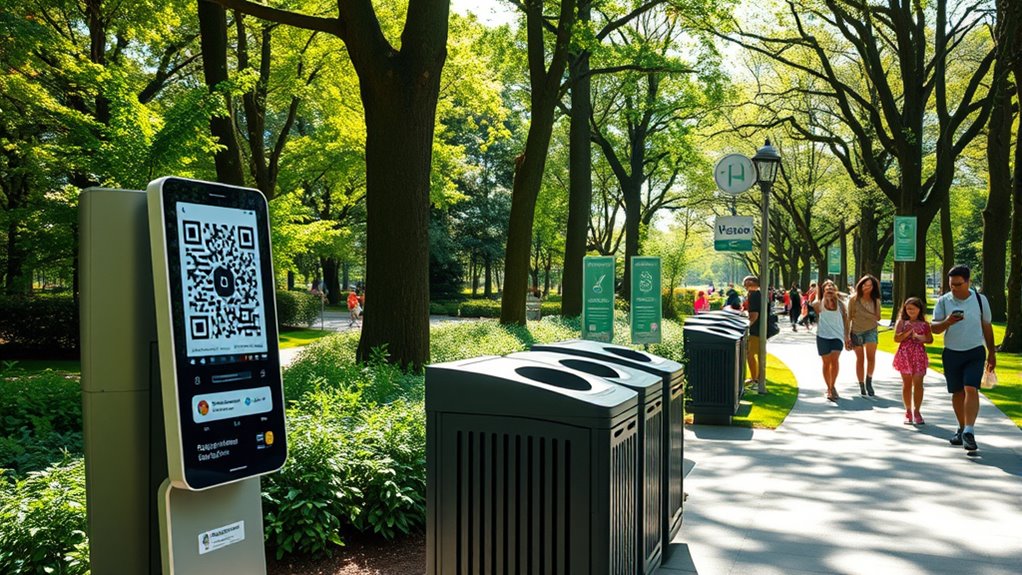
Cashless systems considerably improve park cleanliness and hygiene by reducing physical waste and touchpoints. Without paper tickets, receipts, or brochures, you’ll notice less litter and fewer discarded items harming wildlife and ecosystems. Digital entry and payment methods eliminate the need for trash receptacles at gates, easing park maintenance. This leads to several benefits:
- Less physical waste lowers the burden on cleaning staff and infrastructure.
- Reduced contact points decrease the spread of germs and infectious diseases.
- Fewer surfaces like ticket machines and cash registers require cleaning, allowing staff to focus on overall park hygiene.
- Digital payment methods also promote a more efficient visitor experience, reducing wait times and congestion at entry points, which can further improve safety and sanitation. Additionally, the elimination of physical tickets decreases the need for manual handling and reduces potential contamination sources.
Frequently Asked Questions
How Do Cashless Parks Handle Technical Failures or System Outages?
When a cashless park experiences technical failures or system outages, you’re often left unable to pay digitally. To avoid fines, you should carry a backup payment method, like cash or a second card, and monitor your signal before parking. Some systems offer offline options or support, but they’re limited. Staying prepared with multiple apps or payment options helps make sure you can still pay and avoid penalties during outages.
What Privacy Measures Protect Guest Data in Cashless Payment Systems?
You might think your data is safe in cashless parks, but don’t be so sure. They use privacy by design, end-to-end encryption, and AI fraud detection to safeguard your info. Tokenization and anonymization conceal sensitive details, while strict access controls limit who sees your data. Plus, compliance with laws guarantees your rights are protected. Ironically, all these measures aim to keep your info private—yet you’re still trusting a digital system.
Are There Options for Visitors Who Prefer Cash Payments?
If you prefer cash payments, many parks still accept cash at select locations like gift shops, restaurants, or lodges. You can also use cash-to-card kiosks to convert your cash into prepaid cards, which work throughout the park and at other Visa-accepting sites. Keep in mind, kiosk hours and availability might be limited, so it’s good to plan ahead or carry some cash for convenience.
How Do Cashless Systems Impact Small Vendors and Concessionaires?
Cashless systems can be a double-edged sword for small vendors and concessionaires. They speed up transactions like a well-oiled machine, boosting efficiency and customer flow. But, they also introduce new costs, such as card fees, and create barriers for cash-only customers. Limited access to affordable technology and high setup costs can leave small vendors struggling to stay afloat, risking exclusion from the cashless shift.
What Strategies Are Used to Prevent Digital Exclusion of Unbanked Guests?
To prevent digital exclusion of unbanked guests, parks implement inclusive strategies like cash-to-card kiosks, reloadable prepaid cards, and accepting multiple payment methods, including mobile wallets and RFID wearables. They also invest in user education, multilingual instructions, and staff support to help guests navigate digital payments. Reliable Wi-Fi and backup systems guarantee smooth transactions, while policies mandate cash acceptance, ensuring everyone can access park services regardless of banking status.
Conclusion
Switching to cashless parks can make your visits faster, safer, and more convenient, with 90% of users reporting smoother transactions. Plus, you benefit from improved hygiene and security while parks save on cash handling costs. However, it’s important to contemplate that nearly 20% of people might face accessibility issues. Overall, embracing cashless systems can enhance your experience, but ensuring inclusivity is key to making these parks truly enjoyable for everyone.
Halloween Picks
halloween
As an affiliate, we earn on qualifying purchases.