In the pool, core exercises like planks, tucks, and twists help you boost stability, improve technique, and prevent injuries. Using water’s resistance and buoyancy, you can perform static and dynamic movements that target your abs, obliques, and overall core strength. These exercises also support better body alignment and streamline during swims. To discover more effective techniques and tips, keep exploring ways to incorporate these movements into your training routine.

Get pool and patio gear delivered free with Prime
- Fast, free delivery on millions of items
- Prime Video, Amazon Music and more included
- Member-only deals all year
Key Takeaways
- Pool exercises like planks, tucks, and twists enhance core stability, improving swimming performance and technique.
- Water resistance increases muscle engagement and time-under-tension during static and dynamic core movements.
- Using pool noodles for support maintains proper alignment during planks and side holds, reducing injury risk.
- Twists and tucks in water promote rotational strength and body control, aiding flip turns and streamline efficiency.
- Water-based core work offers low-impact, joint-friendly options ideal for injury prevention and rehabilitation.
As an affiliate, we earn on qualifying purchases.
Benefits of Pool-Based Core Exercises for Swimmers
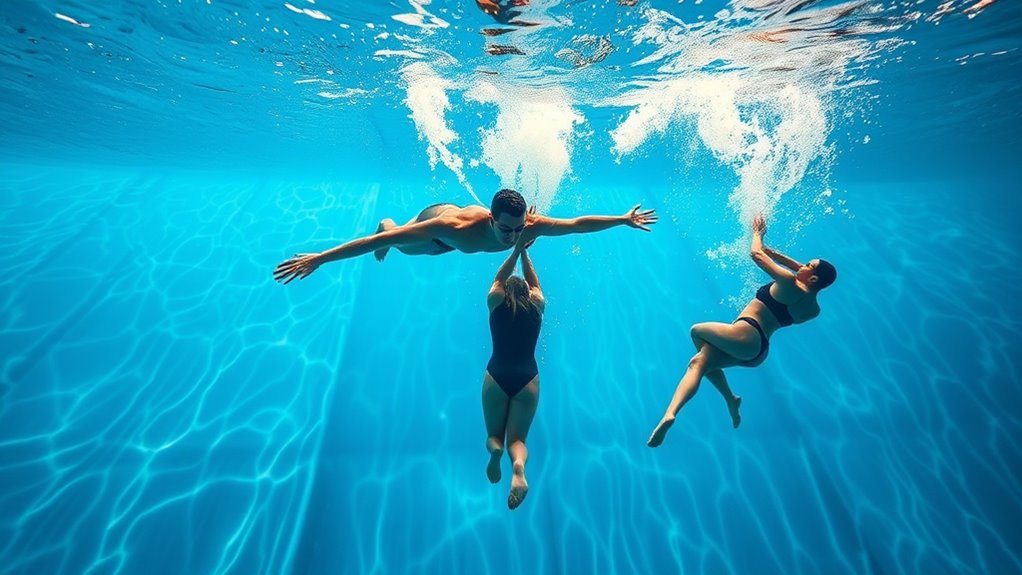
Pool-based core exercises offer swimmers a targeted way to boost performance and efficiency in the water. By dedicating 6 to 12 weeks to core training, you can see measurable improvements in your speed, with 50-meter times dropping by 0.3 to 1.4 seconds. Strengthening your core enhances neuromuscular properties like contraction time and muscle elasticity, which directly translate into better freestyle performance. It also improves power transfer during strokes, giving you more propulsion against water resistance. A solid core stabilizes your body, maintaining proper alignment and streamlining. This leads to better technique, especially during starts and turns. Consistent core work reduces fatigue, helping you sustain speed and form longer, making your entire swim more efficient and effective. Research shows that core training can also decrease the risk of injury by supporting proper biomechanics and reducing strain on the back and shoulders. Incorporating targeted exercises can further optimize your core strength for swimming.
As an affiliate, we earn on qualifying purchases.
Incorporating Plank Variations in Water Training
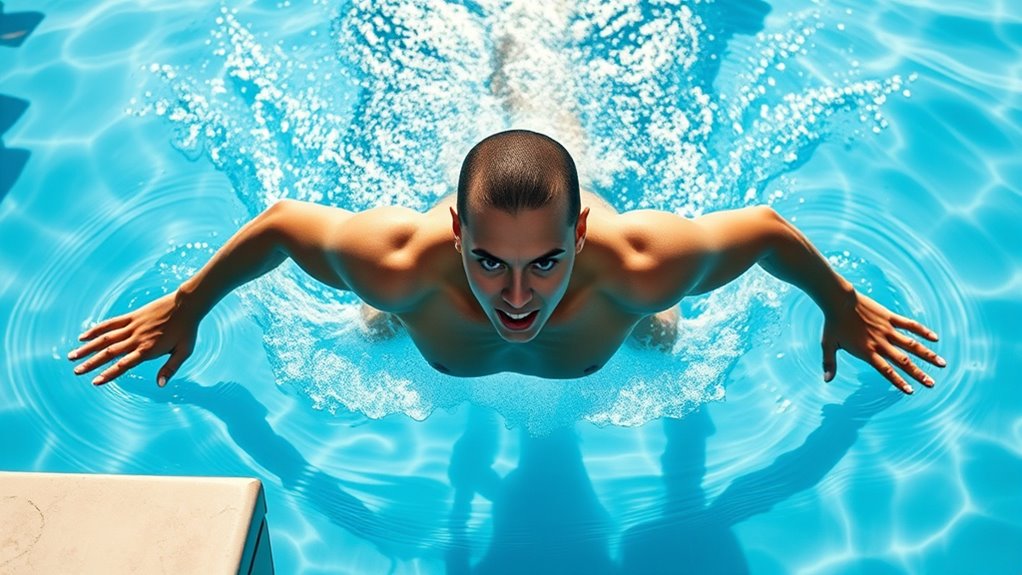
Incorporating plank variations into your water training enhances core stability and overall strength by leveraging the unique resistance and buoyancy of the pool. Using pool noodles for support helps maintain proper alignment while engaging muscles through water resistance, which increases time-under-tension even in short holds. You can perform front planks with hands on the pool edge or noodles to challenge static core strength. Side planks, executed with noodles or torso rotation, target obliques and spinal stability. Dynamic variations like flutter kicks, leg curls, or plank with rotation promote functional strength and coordination. Balance is further improved through unilateral limb lifts or toe taps, which activate stabilizers and improve proprioception. Progressively integrating these variations enhances core endurance, stability, and muscular engagement in a low-impact environment. Water properties such as buoyancy and resistance support safe, effective core training, especially for individuals with joint issues or those in rehabilitation. Additionally, choosing the appropriate soil mix can optimize recovery and strength gains in related physical activities.
As an affiliate, we earn on qualifying purchases.
Enhancing Rotation and Stability With Tucks and Twists
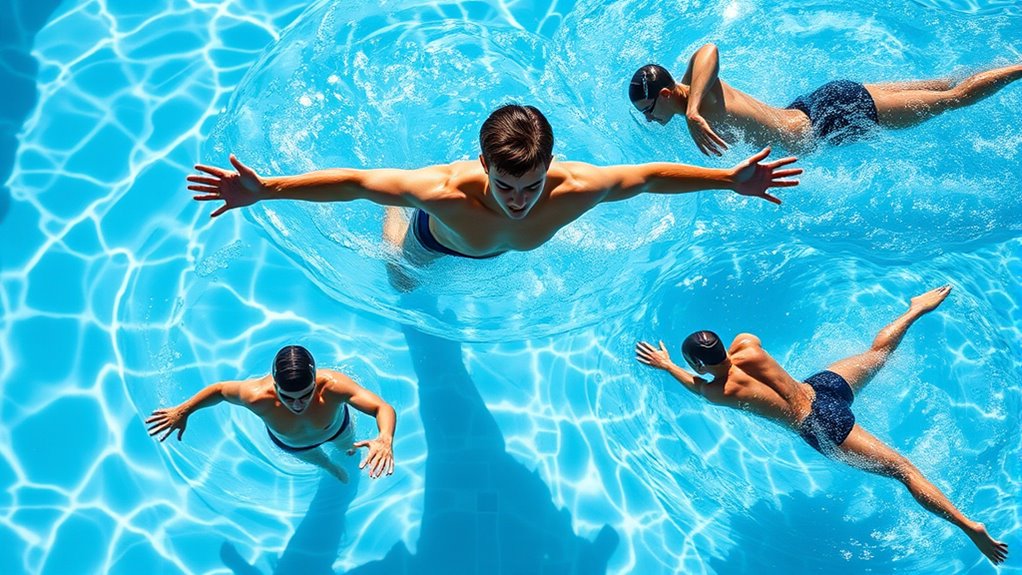
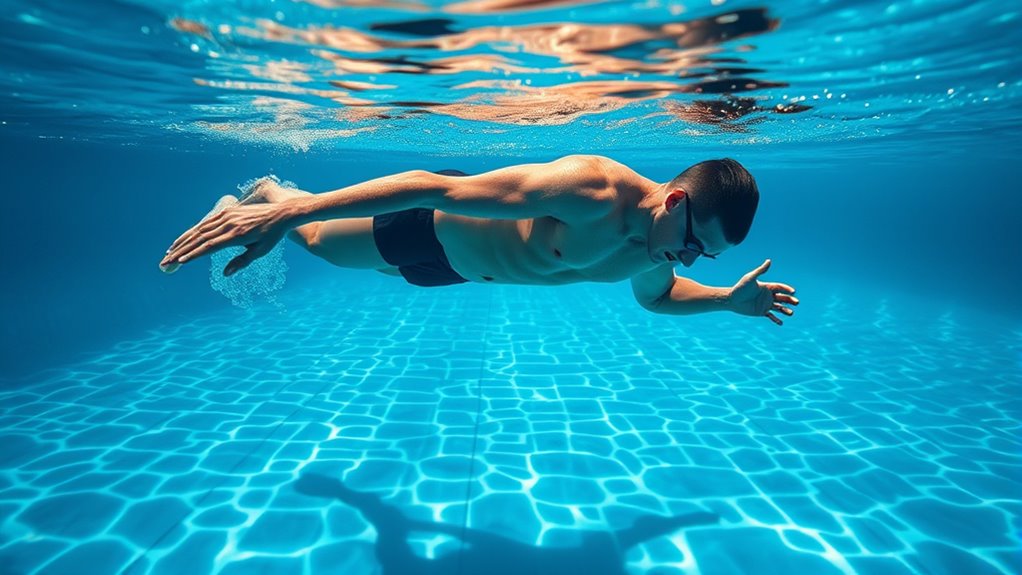
Have you ever wondered how controlled tucks and twists can boost your swimming efficiency? When you tuck your chin close to your chest during strokes, you reduce resistance by avoiding bow wave collision, helping you move faster. Controlled twisting rotations improve your body’s alignment, making your movements more streamlined. These twists also help you shift smoothly during flip turns, preserving momentum and speed. Engaging your core muscles stabilizes your torso, preventing unnecessary lateral movement that wastes energy. Timing your tucks with arm movements, especially during propulsion phases, creates a continuous rotational flow that enhances endurance and speed. Incorporating proper body positioning**** ensures you maximize these benefits and maintain a consistent, effective rhythm throughout your swim. Practicing these movements strengthens your core, improves coordination, and optimizes body positioning, all of which contribute to more efficient, powerful swimming.
As an affiliate, we earn on qualifying purchases.
Frequently Asked Questions
How Often Should Swimmers Perform Pool Core Exercises for Optimal Results?
You should perform pool core exercises about 2 to 3 times a week for ideal results. Consistency is key, so stick to this schedule over 6 to 8 weeks, gradually increasing intensity and volume. Keep sessions around 30 minutes to avoid fatigue and maximize gains. Combining these workouts with your regular swimming sessions will enhance core strength, stability, and overall swimming performance.
Are Pool-Based Core Exercises Suitable for Beginner Swimmers?
Yes, pool-based core exercises are suitable for beginner swimmers. Water’s buoyancy reduces joint stress, making exercises safer and more comfortable. You can start with simple moves like flutter kicks, planks, and twists, using pool edges or floats for support. Begin with short sessions, focusing on proper form, and gradually increase intensity as your strength improves. This low-impact approach boosts confidence, improves posture, and enhances swimming performance over time.
Can Core Workouts in the Pool Prevent Common Swimming Injuries?
Ever wonder how you can avoid common swimming injuries? Pool core workouts strengthen your muscles, improve stability, and enhance body alignment, which all help prevent overuse injuries like shoulder impingement or lower back pain. By engaging stabilizers and promoting neuromuscular control, these exercises make your movements more efficient and safer. Regular core training in water creates a supportive environment that minimizes impact and builds resilience, ultimately keeping you healthier and in the water longer.
What Equipment Is Needed to Perform Planks, Tucks, and Twists in Water?
You’ll need essential flotation equipment like adjustable belts to keep your body upright, pool noodles for balance, and kickboards for stability during planks, tucks, and twists. Resistance tools such as aquatic dumbbells, resistance cuffs, and webbed gloves help amplify intensity. Support devices like jogging belts and non-slip surfaces guarantee stability. Basic gear like goggles, swimwear, and towels make your workout comfortable and safe. These tools help you perform core exercises effectively in water.
How Do Water Temperature and Pool Conditions Affect Core Exercise Effectiveness?
Water temperature and pool conditions directly impact how effective your core exercises are. When the water is within the ideal 83–86°F range, you maintain proper physiological responses, improving muscle activation and endurance. Cooler water can enhance recovery, while warmer water might cause overheating, reducing performance. Clear, clean pools help you stay focused and comfortable, enabling you to maximize each workout. Adjust temperature and conditions when needed to get the most out of your core training.
Conclusion
Think of your core as the anchor of a mighty ship, steady amid choppy waters. By incorporating pool-based planks, tucks, and twists, you strengthen that anchor, ensuring your vessel remains balanced and powerful. Each exercise is a essential rope securing your stability and rotation. Keep tending to this anchor, and you’ll navigate every stroke with confidence and grace, transforming challenges into smooth sailing. Your strongest voyage starts with the core beneath you.
Evergreen bestsellers Picks
bestsellers
As an affiliate, we earn on qualifying purchases.